
If you have arrived at this page, you have probably already tried the standard advice. Breathe deeply. Meditate. Think positive thoughts. Challenge your irrational beliefs. If you are still reading, it is because none of that worked — or at least, not for long. The reason is not a personal failure. The reason is mechanical.
Anxiety, in its persistent and debilitating form, is not primarily a disorder of thought. It is a disorder of safety signal processing. Your nervous system has lost the ability to distinguish between real danger and the memory of danger, between a present threat and a past one. No amount of cognitive reframing can fix a system that is mechanically stuck in overdrive.
To understand why you feel anxious, and more importantly what you can do about it, you need to understand the nervous system regulation framework that underpins everything we teach at Medai Wellness. This hub is the central resource for anxiety relief through nervous system mechanics — not psychology, not pharmacology, but the raw physiological infrastructure that determines whether you feel safe or under siege.
What Is Anxiety? A Nervous System Perspective
Conventional medicine categorizes anxiety through the DSM-5 — the Diagnostic and Statistical Manual of Mental Disorders. While useful for clinical diagnosis and insurance billing, this framework describes symptoms, not mechanisms. It tells you what anxiety looks like from the outside. It does not tell you what is happening inside the body when anxiety takes hold.
From the perspective of autonomic regulation, anxiety is a state of sympathetic hyperactivation — the fight-or-flight branch of your nervous system is stuck in the "on" position. The alarm has been pulled, and nobody knows how to reset it. The system keeps blasting cortisol and adrenaline into your bloodstream, preparing your body for a threat that either does not exist or has already passed.
The Amygdala and the Alarm System
The amygdala is a small, almond-shaped cluster of nuclei deep in the brain's temporal lobe. It functions as a threat-detection system — a smoke alarm that fires before your conscious mind even registers what is happening. When the amygdala detects a threat (a loud noise, a sudden movement, a thought that triggers a memory of danger), it sends an emergency signal to the hypothalamus, which activates the sympathetic nervous system.
In a healthy nervous system, this alarm is brief. The vagus nerve — specifically the ventral vagal complex — should kick in within seconds to slow the heart, deepen the breath, and signal to the brain that the environment is safe. This is the parasympathetic brake. In chronic anxiety, this brake is broken. The alarm fires, and the system has no way to turn it off.
Worse, the physiological symptoms of the alarm itself — a racing heart, shallow breathing, muscle tension — get fed back to the brain as new evidence of danger. The brain interprets these physical sensations as proof that the threat is real, which triggers another round of sympathetic activation. This is the positive feedback loop that turns a momentary startle into hours of anxiety [VERIFICAR FONTE: neurobiological mechanism of fear-of-fear feedback loop in panic disorder, including interoceptive conditioning models].
Autonomic Nervous System & Fight-or-Flight
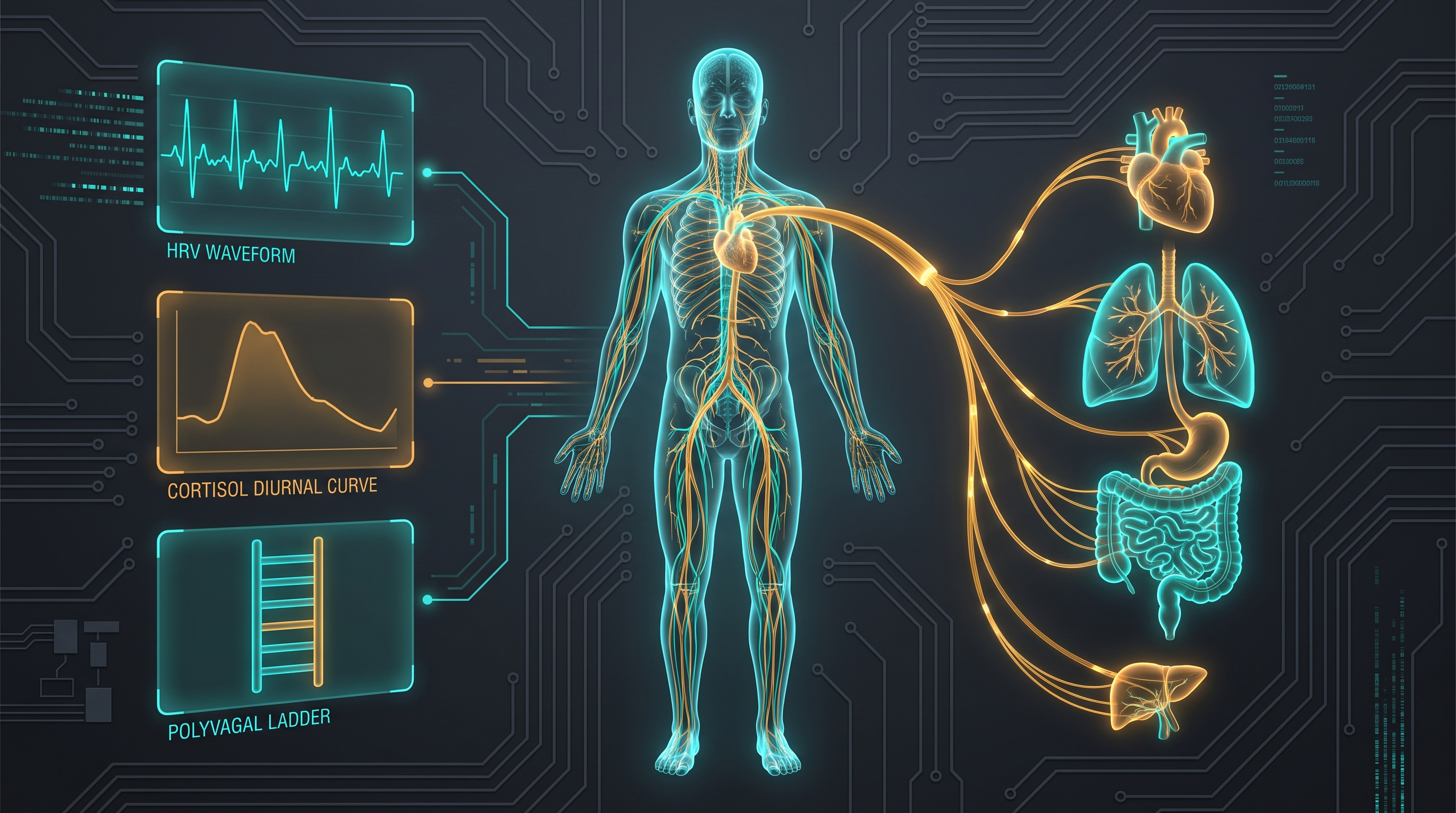
The Autonomic Nervous System (ANS) has two primary branches. The sympathetic branch accelerates the system — increasing heart rate, dilating airways, diverting blood from digestion to muscles, and releasing stress hormones. The parasympathetic branch (primarily the vagus nerve) decelerates the system — slowing the heart, stimulating digestion, and promoting recovery.
In anxiety, the sympathetic branch dominates chronically. The vagus nerve — the body's primary parasympathetic pathway — loses its ability to counter-regulate. This is not a character flaw, a weak will, or a chemical imbalance in the simplistic sense. It is a mechanical failure of the braking system, and it can be repaired.
Why Traditional Anxiety Treatments Often Miss the Mark
The most common approaches to anxiety are Cognitive Behavioral Therapy (CBT) and pharmacology (primarily SSRIs and benzodiazepines). Both can be effective for many people. But both operate on a fundamental assumption: that anxiety can be "thought" away or "drug" away.
CBT asks you to identify irrational thoughts and replace them with rational ones. This approach assumes your prefrontal cortex — the rational, logical part of your brain — has the authority to override your emotional brain. But neurobiology tells a different story. When the amygdala is in full sympathetic activation, blood flow to the prefrontal cortex is reduced. Your rational brain is literally offline. You cannot think your way out of a state of autonomic seizure, because the part of your brain that does the thinking is not in charge.
You cannot argue with a nervous system in survival mode. The system does not process logic during autonomic activation — it processes threat. Return the system to safety first, and rational thought becomes possible again.
The conscious mind cannot veto the autonomic nervous system. You cannot simply decide to stop being afraid, any more than you can decide to stop digesting. The system operates below the threshold of conscious control — but it responds to mechanical signals, and that is where the leverage exists.
The pharmacological approach has a different limitation. SSRIs alter serotonin reuptake across the entire brain, affecting mood, sleep, appetite, and sexual function simultaneously. Benzodiazepines directly enhance GABA, the brain's inhibitory neurotransmitter, which does produce rapid calm but at the cost of dependence and tolerance. Neither approach addresses the underlying mechanical problem: the vagus nerve has lost its ability to regulate the autonomic system. The brake is still broken, even if the alarm has been chemically muted.
The approach we advocate is neither anti-medication nor anti-therapy. It is complementary. The breathing protocol operates on the principle that you must restore the body's mechanical ability to signal safety before cognitive or pharmacological interventions can reach their full potential. Regulation first, cognition second.
Top Physical Symptoms of Anxiety (And Why They Happen)
Anxiety manifesting physically is not a sign that you are "making it up" or that the anxiety is "all in your head." Every physical symptom of anxiety has a direct physiological cause — the sympathetic nervous system is preparing your body for violent physical action, and when that action does not occur, the energy has nowhere to go.
1. Racing Heart (Palpitations)
The sympathetic nervous system dumps adrenaline and noradrenaline into the bloodstream, which bind to beta-1 receptors in the heart, increasing both rate and contractility. Your heart is literally preparing to pump blood to your muscles so you can run or fight. When you are sitting still in a chair and your heart is pounding at 120 beats per minute, the excess energy becomes a symptom.
2. Chest Tightness
The intercostal muscles — the muscles between your ribs — tighten to protect the chest cavity and prepare for physical exertion. Chronic tension in these muscles creates a band of pressure around the chest that can mimic cardiac pain. This is also why anxiety chest pain is one of the most common reasons for emergency room visits.
3. Shortness of Breath (Air Hunger)
Sympathetic activation shifts breathing from slow, deep, diaphragmatic breaths to rapid, shallow, upper-chest breaths. This hyperventilation reduces blood CO2 levels (hypocapnia), which paradoxically makes you feel like you cannot get enough air — even though your blood is fully oxygenated. The result is the terrifying sensation of air hunger that drives further panic.
4. Digestive Issues
The vagus nerve controls peristalsis — the wave-like muscle contractions that move food through your digestive tract. During sympathetic activation, the vagus nerve is suppressed, and digestion effectively stops. Food sits in the stomach, fermenting, causing bloating, acid reflux, and nausea. This is the mechanical basis for physical symptoms of anxiety in the gut.
5. Dizziness and Brain Fog
Hyperventilation-induced hypocapnia constricts cerebral blood vessels, reducing blood flow to the brain. This produces dizziness, lightheadedness, visual disturbances, and a sense of being "unreal" or detached from your surroundings (derealization). Brain fog also stems from chronically elevated cortisol, which impairs prefrontal cortex function and reduces cognitive flexibility.
6. Muscle Tension (Shoulders, Jaw, Neck)
The body braces for impact. The trapezius, masseter (jaw), and scalene muscles contract to protect the spine and vital organs. Chronic tension in these areas is one of the most reliable physical markers of nervous system dysregulation, and it is intimately connected to vagus nerve function.
7. Numbness and Tingling (Paresthesia)
Hyperventilation also shifts the balance of calcium ions in the blood, which affects nerve conduction. This produces tingling in the fingers, toes, lips, and face. It is harmless but terrifying — and because it is neurological in nature, it is frequently misinterpreted as a sign of a stroke or seizure.
How to Regulate Your Nervous System for Anxiety Relief
This is the core of what we teach. If anxiety is a mechanical failure of the braking system, then relief comes from mechanically restoring the brake. The vagus nerve can be stimulated, toned, and trained. This is not a metaphor — it is physiology. Heart rate variability (HRV), a direct measure of vagal tone, can be improved within days of consistent practice.
The 9 steps below are the foundation of the breathing protocol, distilled from decades of archived research. For the expanded version, see our comprehensive guide on how to regulate your nervous system.
Step 1: Interoception (Develop Body Awareness)
Interoception is the brain's ability to perceive internal body signals — heartbeat, breathing, temperature, hunger. Most people with chronic anxiety have impaired interoception: they do not notice rising tension until it has already become a full-blown panic attack. Training interoception — through body scans, heartbeat perception, and mindful breathing — gives the brain earlier warning of sympathetic activation, creating a window for intervention before the alarm becomes uncontrollable.
Step 2: Vagus Nerve Stimulation Through Extended Exhale
The vagus nerve is mechanically activated by the diaphragm during exhalation. When you exhale slowly and fully, the diaphragm pushes against the vagus nerve, which runs through the diaphragmatic hiatus. The breathing protocol uses a 4-6 ratio: inhale for 4 seconds, exhale for 6 seconds. This extended exhale directly stimulates the vagal pathway and has been shown to increase HRV measurably. This is the same mechanism described in our vagus nerve breathing 4-6 guide.
Step 3: Diaphragmatic Breathing
Most people with chronic anxiety are chest-breathers. Their diaphragm is underutilized, and the vagus nerve passing through it receives insufficient mechanical stimulation. Diaphragmatic breathing — breathing into the belly rather than the chest — not only improves oxygen exchange but also mechanically activates the vagus nerve on every breath. This is foundational, and it is the entry point for every other technique we teach.
Step 4: Cold Exposure (The Dive Reflex)
Cold water on the face triggers the mammalian dive reflex, an evolutionary mechanism that slows the heart rate and activates the vagus nerve through the trigeminal nerve. A splash of cold water (approximately 50-60°F / 10-15°C) on the face can reduce heart rate within seconds. This is the most reliable rapid intervention for acute sympathetic activation [VERIFICAR FONTE: studies on mammalian dive reflex and vagal activation in humans, including trigeminal-vagal pathway research].
Step 5: Somatic Tracking and Body Scanning
Somatic tracking is the practice of systematically scanning the body for tension, holding patterns, and areas of numbness. This builds interoception (Step 1) and also creates direct neural feedback that helps the brain update its body map. Chronic tension in the jaw, shoulders, or pelvis is often the nervous system's way of "bracing" — somatic tracking teaches the brain that it is safe to release.
Step 6: Social Engagement System Activation
According to polyvagal theory, the ventral vagal complex — the most evolved branch of the vagus nerve — is activated through social connection. Eye contact, prosodic voice (calm, melodic speech), and facial expressiveness all stimulate the ventral vagal pathway. This is why talking to a trusted friend, holding a pet, or even just watching a video of someone speaking warmly can reduce anxiety. The nervous system reads social signals as evidence of safety.
Step 7: Low-Intensity Movement (Zone 2 Cardio)
High-intensity exercise can actually spike cortisol and reinforce sympathetic dominance. Low-intensity movement — walking, gentle cycling, Zone 2 cardio — trains the nervous system to alternate between activation and recovery. This builds vagal tone over time. The key is consistency: 20-30 minutes of low-intensity movement daily produces measurable HRV improvements within weeks. See our guide on exercise and vagal tone for protocols.
Step 8: Sleep Hygiene for Autonomic Recovery
Sleep is when the nervous system does its repair work. During deep sleep, the parasympathetic system dominates and the glymphatic system clears metabolic waste from the brain. Poor sleep keeps cortisol elevated and blocks vagal recovery. Sleep is not optional — it is the foundation upon which every other step depends.
Step 9: Consistent Daily Practice (The Protocol)
The most important step. None of the above works if it is practiced once a week during a panic attack. The breathing protocol is designed as a daily practice — 15 minutes of regulated breathing, 5 minutes of cold exposure, and mindful interoceptive scanning. Consistency is what builds vagal tone. The nervous system learns through repetition, not intensity.
When Anxiety Becomes a Panic Attack
There is a mechanical distinction between the gradual crescendo of anxiety and the catastrophic onset of a panic attack. Anxiety is a sustained state of sympathetic overdrive; panic is a complete sympathetic seizure. The system hits its maximum capacity and collapses into a full autonomic event.
During a panic attack, the ventral vagal complex is entirely suppressed. The body shifts from the social engagement state directly into the fight-or-flight state, and if the threat cannot be escaped or fought, it drops further into the dorsal vagal freeze state. This is why panic attacks are often followed by exhaustion, emotional numbness, and dissociation — you have fallen through the polyvagal ladder.
Understanding this progression is critical. If you experience panic attacks, read our detailed comparison of anxiety attack vs panic attack and our 5-minute emergency protocol for stopping a panic attack.
Building Resilience Against Future Anxiety
Resilience does not mean never feeling anxious again. It means recovering from sympathetic activation faster and with less collateral damage. The key concept is Window of Tolerance — the range of arousal within which your nervous system can function effectively. When you are inside your window, you can think, feel, and respond flexibly. When you are outside it (either too activated or too shut down), you lose access to your rational mind.
The breathing protocol expands the window of tolerance through controlled exposure to mild stress (hormesis). Cold exposure, extended exhale breathing under load, and interoceptive practice all train the nervous system to stay regulated under pressure. Over time, the window widens. A stimulus that once triggered a full panic attack now produces only a brief moment of alert. This is the physiological basis of resilience.
You can learn more about the window of tolerance and how to expand it in our dedicated guide on the topic.
Lifestyle Changes for Sustained Calm
Blood Sugar Stability
Each spike and crash in blood glucose triggers an autonomic response. A rapid drop in blood sugar is interpreted by the body as a threat, triggering cortisol and adrenaline release. Eating protein and fat with every meal, avoiding refined carbohydrates alone, and not skipping meals creates a stable metabolic foundation that prevents false alarms. See our analysis of blood sugar and cravings for the full mechanism.
Reducing Stimulant Load
Caffeine directly stimulates the sympathetic nervous system by blocking adenosine receptors. For someone with already-low vagal tone, a single cup of coffee can be enough to tip the system into anxiety. This is not a moral judgment on coffee — it is a mechanical fact about how caffeine interacts with an already-dysregulated system. Track your anxiety in relation to your caffeine intake and adjust accordingly.
Social Connection
The ventral vagal complex evolved to respond to social cues. Isolation shuts it down. Regular, safe, face-to-face social interaction is not a luxury — it is a biological requirement for nervous system regulation. This does not mean attending parties; it means having even one relationship where you feel genuinely seen and safe.
Reducing Information Overload
The constant barrage of notifications, news, and social media inputs keeps the sympathetic system on low-grade alert perpetually. Your brain cannot distinguish between a real threat and a perceived one delivered through a screen. Periodic digital fasting — even two hours without screens — gives the nervous system permission to power down.
The Bottom Line
Anxiety relief is not about thinking harder, breathing into a paper bag, or taking a pill. It is about understanding that your nervous system is a machine, and that machine has a braking system. The vagus nerve is that brake. When it works, anxiety is a brief, adaptive signal that comes and goes. When it does not work, anxiety is a chronic, debilitating state that controls your life.
The 9 steps outlined above are not a quick fix. They are a protocol. Applied consistently, they restore the mechanical braking capacity of your nervous system — not through willpower, but through physiological adaptation. The vagus nerve can be trained. HRV can be increased. The window of tolerance can be widened. But it requires daily practice, not occasional effort.
Educational content only. This article is for informational purposes and does not constitute medical advice. Consult a qualified healthcare professional before making changes to your health routine.
Frequently Asked Questions
Can anxiety be permanently cured?
Anxiety is a biological response, not a disease to be cured. The goal of nervous system regulation is not to eliminate anxiety — which is necessary for survival — but to reduce its intensity and duration so it no longer controls your life. Most people learn to self-regulate within weeks of consistent practice.
How long does it take to feel relief?
Physiological changes in heart rate variability can occur within minutes of vagal breathing exercises. However, reversing chronic dysregulation requires daily consistency, with significant changes typically observed in 14 to 30 days of practice.
What is the connection between anxiety and the vagus nerve?
The vagus nerve is the primary parasympathetic pathway. When vagal tone is low, the brain does not receive safety signals from the body, keeping the amygdala in a constant state of alert. Restoring vagal tone mechanically reactivates the body's natural brake system.
Why do I feel anxious even when nothing is wrong?
The autonomic nervous system operates below conscious awareness. Internal factors like blood sugar instability, systemic inflammation, poor sleep quality, or stored trauma can signal danger to your nervous system regardless of what your rational mind perceives.
Can I stop a panic attack without medication?
Yes. Panic attacks are autonomic seizures. Fast physiological interventions like the mammalian dive reflex (cold water on the face) or extended exhale breathing can interrupt the panic feedback loop by forcing the vagus nerve to reactivate.
Do physical anxiety symptoms mean there is a real medical problem?
Physical symptoms of anxiety are real physiological events. However, you should always consult a healthcare professional to rule out underlying medical conditions, especially for cardiac or digestive symptoms, before attributing them solely to nervous system dysregulation.
Is there a normal level of anxiety?
Normal anxiety allows you to react to real danger and return quickly to calm. What is pathological is not the feeling of anxiety itself, but the inability of the nervous system to return to a resting state after the threat has passed.