
Your heart pounds out of nowhere. A beat flutters, pauses, then returns with a thump that you can feel in your throat. You check your pulse. It is racing. The thought arrives instantly: is something wrong with my heart?
The answer is sometimes yes — and sometimes the palpitations are coming from the same system that makes your heart race when you are excited, frightened, or running for a train. That system is your autonomic nervous system, and it is intimately connected to both anxiety and the rhythm of your heartbeat.
This article explains why anxiety can cause heart palpitations even when your heart is healthy, what the sensations feel like, how nervous-system palpitations differ from concerning arrhythmias, and — critically — when palpitations should never be dismissed as anxiety.
Key Takeaways
- Anxiety raises sympathetic drive and lowers vagal tone, which can produce real palpitations
- Common anxiety palpitations include a pounding heartbeat, a racing pulse, and occasional "skipped beat" flutter
- Palpitations are not inherently dangerous, but they are only one possible explanation — never assume
- Palpitations with chest pain, fainting, or very fast sustained rhythm need urgent evaluation
- Raising baseline vagal tone is the long-term strategy for reducing stress-driven palpitations
Last updated: August 10, 2026 · Reviewed by Dr. Thomas Whitaker, MD, PhD, Medai Wellness Research Editor
What Heart Palpitations Actually Are
Heart palpitations are the perception of your own heartbeat — a pounding, racing, fluttering, or briefly "skipped" sensation in the chest, throat, or neck (Mayo Clinic, 2025). The key word is perception. Under stress those beats genuinely change — faster, stronger, occasionally irregular — and your brain becomes more attuned to noticing them.
Palpitations are extraordinarily common. Most people experience them at some point, and the large majority are harmless, especially in young people with no underlying heart disease. But "most are harmless" is not the same as "all are harmless." The safest framing is medical: a clinician decides whether palpitations need investigation, not a search page.
Why Anxiety Causes Heart Palpitations
Anxiety alters your heartbeat through two simultaneous mechanisms that are worth understanding separately.
Sympathetic Activation: The Accelerator
Anxiety activates the sympathetic nervous system — the branch that prepares the body for fight or flight. It releases adrenaline and noradrenaline, which bind to receptors in the heart and increase both heart rate and the force of each contraction (NHLBI, 2025). That is why a pounding, powerful heartbeat is a hallmark of acute anxiety and panic.
Vagal Withdrawal: The Brake Letting Go
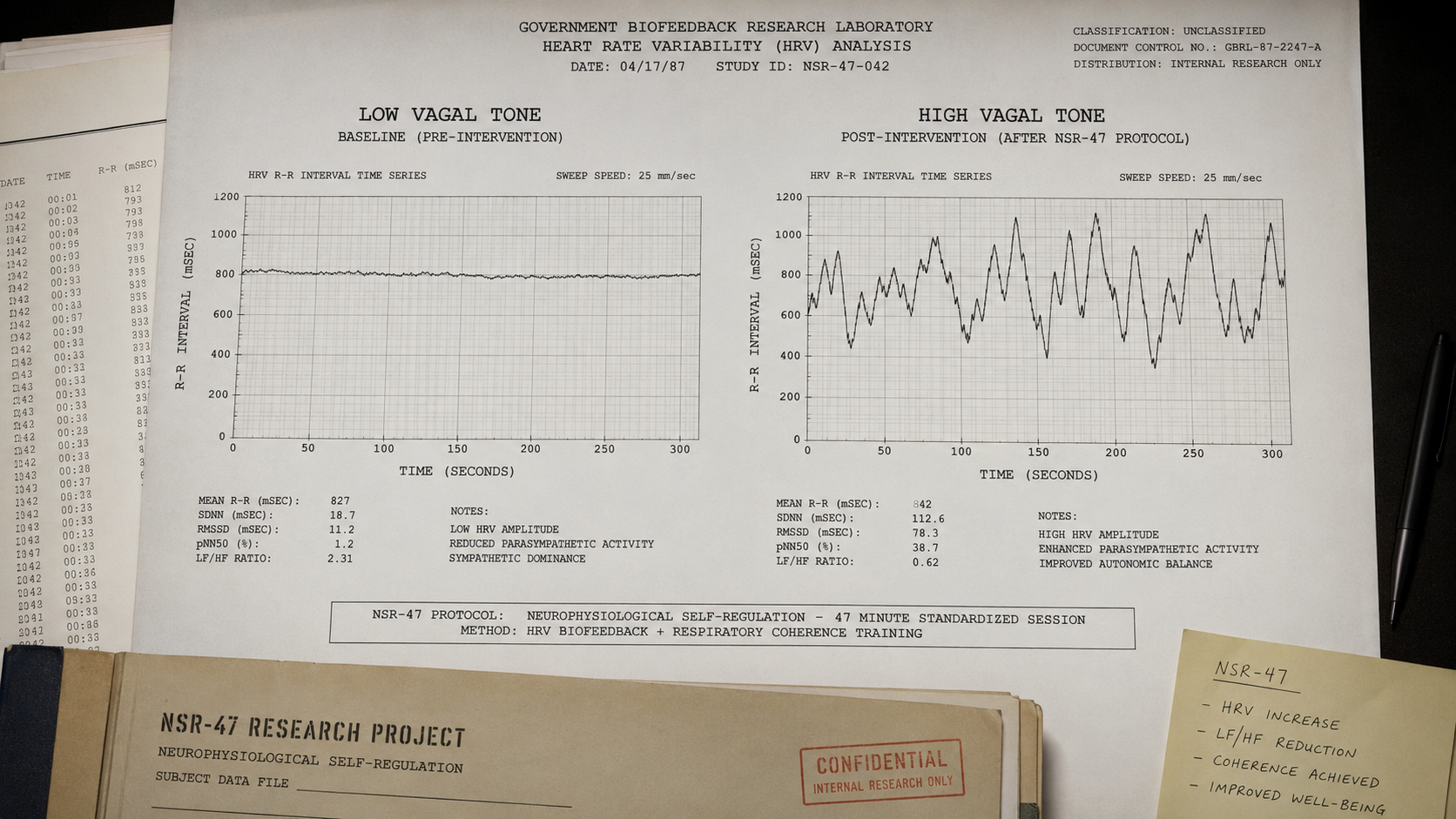
Normally the vagus nerve acts as a resting brake on the heart, keeping it slow and steady. Under chronic stress, vagal tone drops, so less braking is available. The heartbeat becomes faster and less smooth, and the occasional low-frequency "skipped beat" that everyone gets is perceived more sharply. Heart rate variability — the beat-to-beat flexibility you can measure — is directly tied to this vagal brake (see our HRV guide).
What Anxiety Palpitations Feel Like
People describe stress-driven palpitations in a few recurring ways:
- A pounding or throbbing heartbeat, often felt in the chest, throat, or neck
- A racing pulse that starts suddenly, often during stress or panic
- A sense of a flip, flutter, or brief pause — usually a single mis-timed beat
- A heartbeat that feels more noticeable when lying down at night or when trying to sleep
- Palpitations that come with other anxiety symptoms, such as a tight chest, shallow breathing, or warm flushes
None of these features proves a cause. The same sensations can occur with caffeine, dehydration, thyroid changes, medications, or genuine rhythm problems. Recognizing the pattern is useful — diagnosing the cause is a clinician's job.
Anxiety Palpitations vs. Concerning Arrhythmias
| Feature | More likely stress-related | Needs evaluation |
|---|---|---|
| Onset | Tied to stress, panic, or noticed at rest | Sudden, sustained, or during light exertion |
| Rhythm | Usually regular; occasional single flutter | Prolonged irregular or very fast (>150 bpm) racing |
| Duration | Comes and goes over minutes | Persistent, not resolving with rest |
| Associated | Anxiety, shallow breathing, tension | Chest pain, fainting or near-fainting, severe breathlessness |
| Context | Stressful periods, caffeine, poor sleep | New, unpredictable, or linked to known heart disease |
Use this table as a rough guide only. It is not a substitute for an evaluation, and it cannot tell you what is happening inside your own chest.
Palpitations During Panic Attacks
Panic attacks cause some of the most intense palpitations people experience. During a panic episode, the body releases a surge of stress hormones that can drive heart rate up sharply, producing a pounding heartbeat that feels — and partially is — real (see panic attack symptoms). If this pattern is happening to you, our guide on how to stop a panic attack explains the breathing and nervous-system steps used in the moment.
Other Causes of Palpitations to Remember
Anxiety is one explanation among many. Others include:
- Caffeine, nicotine, or stimulant supplements
- Dehydration and electrolyte shifts
- Poor sleep and exhaustion
- Thyroid disorders
- Anemia
- Certain medications, including some asthma and cold treatments
- Genuine cardiac rhythm disorders
Because the possibilities overlap, and because some are important, "it is probably anxiety" is a conclusion to reach only with a doctor who has examined you.
When Palpitations Deserve Urgent Attention
Seek emergency care for palpitations accompanied by any of the following, regardless of how strongly you suspect anxiety:
- Chest pain, pressure, or tightness, especially if it radiates to the arm, jaw, or back
- Fainting or near-fainting (dizziness is covered separately in our anxiety and dizziness guide)
- Severe shortness of breath at rest
- A very fast heartbeat that stays fast for many minutes
- Palpitations that occur during exercise and reliably on each session
- Known heart disease, or strong risk factors such as diabetes or high blood pressure
If you are unsure, the safe move is to be evaluated. An emergency visit for reassurance is never a mistake if the alternative is an unrecognized cardiac problem.
What Helps With Anxiety-Driven Palpitations
Once a clinician has cleared you, these approaches address the nervous-system side:
- Slow extended-exhale breathing — breathe in for 4 seconds and out for 6-8 seconds for a few minutes. The extended exhale directly increases vagal braking on the heart.
- Cold water on the face — 20-30 seconds activates the dive reflex, which can slow a racing heart within seconds.
- Reduce caffeine, especially after noon, since caffeine amplifies sympathetic drive.
- Regular low-intensity exercise and adequate sleep, which slowly raise baseline vagal tone.
- HRV-informed practice — daily breathing and recovery habits are the same levers described across the nervous system approach to anxiety.
None of these replaces a medical evaluation. They are tools for the time after your doctor has confirmed the heart is clear.
Heart Palpitations FAQ
Can anxiety cause heart palpitations?
Yes. Anxiety raises sympathetic activity and lowers vagal tone, which can produce real palpitations: pounding, racing, fluttering, or brief skipped-beat sensations. They are genuine physiological events, not imagined, and they are common even in people with structurally healthy hearts.
Why do I get heart palpitations when lying down?
At rest you notice your heartbeat more, and sympathetic activity can remain elevated after a long day. A pounding heart when you lie down is a common anxiety pattern — see racing heart at night for the full mechanism.
Can a panic attack cause heart palpitations?
Yes. Panic attacks involve intense adrenaline surges that can drive heart rate up abruptly, often with chest tightness, shortness of breath, and dizziness — one reason panic is so often mistaken for a cardiac event.
How do I know if my palpitations are dangerous?
You cannot reliably judge this yourself. Palpitations with chest pain, fainting, severe breathlessness, a fast sustained rhythm, or that happen during exercise deserve urgent evaluation regardless of how anxiety-related they feel.
What helps stop anxiety heart palpitations?
After a doctor has cleared you, slow extended-exhale breathing, cold water on the face, less caffeine, and regular exercise help lower sympathetic drive. Raising vagal tone over weeks of daily practice is the longer-term strategy.
How the breathing protocol Relates to Stress-Driven Palpitations
Medai Wellness provides educational resources focused on nervous-system regulation and practical techniques for managing stress-related symptoms. The breathing protocol is built around 28 days of guided vagal-tone training — extended-exhale breathing, cold exposure, and structured recovery — which address the same autonomic pathway that drives stress-related palpitations. It is a wellness education tool, not a treatment, and it should never replace a cardiac evaluation.
When to See a Doctor
Any new, frequent, or unexplained palpitations deserve an evaluation, including an ECG and often basic blood tests. If the tests are normal and palpitations still bother you, work with your clinician on the stress side — vagal training, anxiety treatment, sleep, and caffeine. Never assume palpitations are "just anxiety" without that confirmation.