
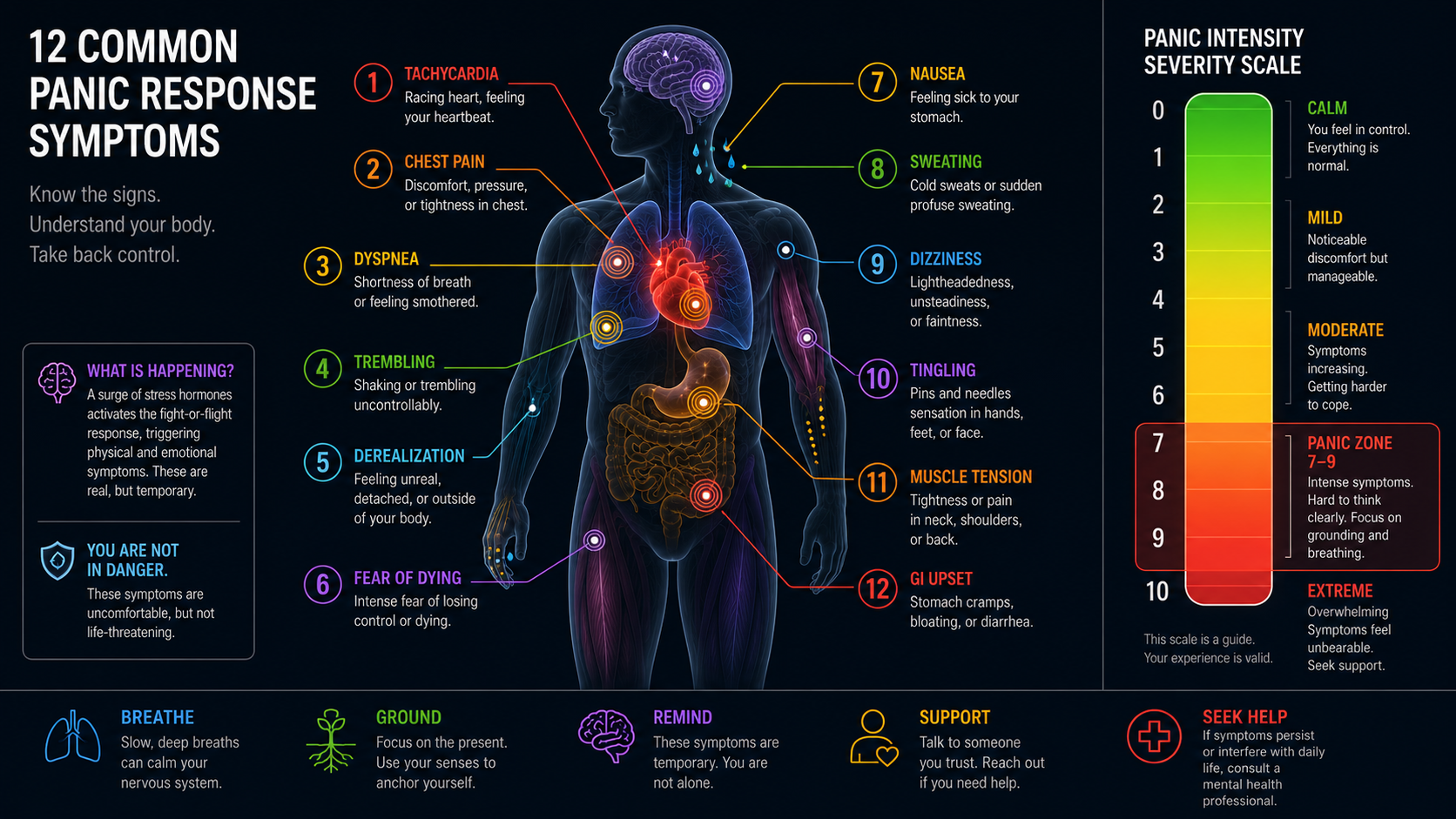
When a panic attack begins, the nervous system shifts from a baseline of calm to a state of acute sympathetic discharge within seconds. This shift is not merely emotional; it is a cascade of physiological events that engage multiple organ systems simultaneously. The experience is best understood as a constellation of measurable bodily changes, each a direct consequence of the body's fight-or-flight response being activated without a genuine external threat.
Below is a systematic checklist of the most common panic-attack symptoms. Recognizing each component can help differentiate a panic attack from other medical conditions, guide appropriate self-intervention, and inform clinical discussions with healthcare professionals.
Cardiovascular Manifestations
The heart is often the first organ to betray the onset of panic. Typical cardiovascular symptoms include:
- Palpitations: Subjective awareness of an accelerated or irregular heartbeat. Patients often describe a "fluttering" or "pounding" sensation in the chest.
- Tachycardia: A measurable increase in heart rate, typically exceeding 100 beats per minute (bpm) and sometimes reaching 150-180 bpm.
- Chest Pain or Discomfort: Sharp, stabbing, or pressure-like sensations that can mimic angina. The pain is usually localized to the precordial region and may radiate to the arms, jaw, or back.
- Hypertension: Spike in systolic blood pressure driven by catecholamine release.
Respiratory Signs
Breathing patterns shift dramatically during panic. The respiratory symptom profile includes:
- Dyspnea: Subjective shortness of breath or a feeling of being unable to take a full breath.
- Hyperventilation: Rapid, shallow breathing that often leads to light-headedness, tingling, or numbness in the extremities.
- Chest Tightness: A constricting sensation that can be mistaken for a heart attack.
- Air Hunger: An overwhelming need to inhale deeper than normal, despite adequate oxygen saturation.
Neurological and Cognitive Effects
During a panic attack, higher-order brain regions are temporarily suppressed, resulting in distinctive cognitive symptoms:
- Derealization or Depersonalization: Feelings of unreality or being detached from oneself.
- Fear of Dying or Losing Control: An irrational conviction that imminent catastrophe is imminent, often accompanied by catastrophic thoughts.
- Difficulty Concentrating: Inability to focus on external stimuli or internal thoughts.
- Tunnel Vision: Narrowed attention toward threat-related cues, while peripheral awareness diminishes.
Musculoskeletal Symptoms
The muscular system reacts to sympathetic overdrive, manifesting as:
- Tremors: Involuntary shaking of the hands, legs, or whole body.
- Muscle Tension: Persistent contraction of the neck, shoulders, and jaw, sometimes leading to headaches.
- Somatic Hyper-awareness: Heightened awareness of bodily sensations, often interpreted as alarming signs.
Gastrointestinal and Autonomic Symptoms
Although less obvious, GI and autonomic symptoms are frequently reported:
- Nausea or Upset Stomach: A queasy feeling that can lead to dry-heaving.
- Diarrhea or Constipation: Rapid changes in bowel habits due to altered gut motility.
- Sweating: Either localized (palms, forehead) or generalized perspiration.
- Dizziness or Light-Headedness: Often secondary to hyperventilation or rapid blood pressure fluctuations.
Symptom Severity Scale
Clinicians and researchers have developed a severity rating to quantify panic intensity. The scale ranges from 0 (no symptoms) to 10 (extreme, life-threatening perception). Typical panic-attack scores fall between 7 and 9, reflecting the intense physiological arousal combined with a sense of imminent catastrophe.
| Score | Description |
|---|---|
| 0-2 | Minor physiological arousal; no catastrophic interpretation. |
| 3-4 | Moderate arousal; mild concern, but cognition remains intact. |
| 5-6 | Significant arousal; intrusive fear begins to dominate thoughts. |
| 7-9 | Severe arousal; full sense of doom, often with physical immobilization. |
| 10 | Maximum perceived threat; possible emergency presentation. |
Differentiating Panic from Other Conditions
Because several panic symptoms overlap with cardiac, respiratory, and endocrine disorders, accurate differentiation is vital:
- Cardiac Evaluation: ECG and troponin testing can rule out acute myocardial infarction. Panic-related chest pain typically lasts < 20 minutes and resolves with vagal interventions.
- Respiratory Assessment: Spirometry and pulse oximetry differentiate hyperventilation-induced light-headedness from asthma exacerbations.
- Endocrine Work-up: Thyroid function tests exclude hyperthyroidism, which can mimic panic with tachycardia and anxiety.
- Psychological Screening: Structured interviews (e.g., SCID-5) help confirm a panic disorder diagnosis when attacks are recurrent and unpredictable.
Understanding the exact symptom profile equips patients with concrete language for medical visits, reducing the likelihood of misdiagnosis and ensuring timely, appropriate care.
Early Warning Signs to Watch For
Panic attacks often begin with subtle physical cues that precede the full symptom cluster. Recognizing these pre-emptive signals can allow early application of the 5-minute protocol before the situation escalates. Common early warnings include:
- A sudden, unexplained increase in heart rate.
- Brief episodes of light-headedness or "brain fog."
- Uncharacteristic irritability or restlessness.
- Sudden cravings for cold water or a desire to splash the face.
- Mild tremor or shaking of the hands.
When any of these appear, initiate step 1 of the protocol (cold facial immersion) immediately.
Practical Checklist for the Reader
Print or save this checklist and keep it on a phone, notebook, or fridge. When a panic attack strikes, run through the items in order:
- Identify heart racing or palpitations.
- Assess breathing – are you hyperventilating?
- Check for chest tightness or pain.
- Notice any tingling or numbness in extremities.
- Observe tremor or muscle tension.
- Log any gastrointestinal upset.
- Ask yourself "Am I fearing death or loss of control?"
- Begin the 5-step vagal reset protocol.
Educational content only. This article is for informational purposes and does not constitute medical advice. Consult a qualified healthcare professional before making changes to your health routine.