
The Gut-Brain Axis: How the Vagus Nerve Links Stress and Digestion
How vagal tone connects the nervous system to digestive function, and what the research says about stress-related digestive symptoms.
Published: July 20, 2026 · Updated: July 28, 2026
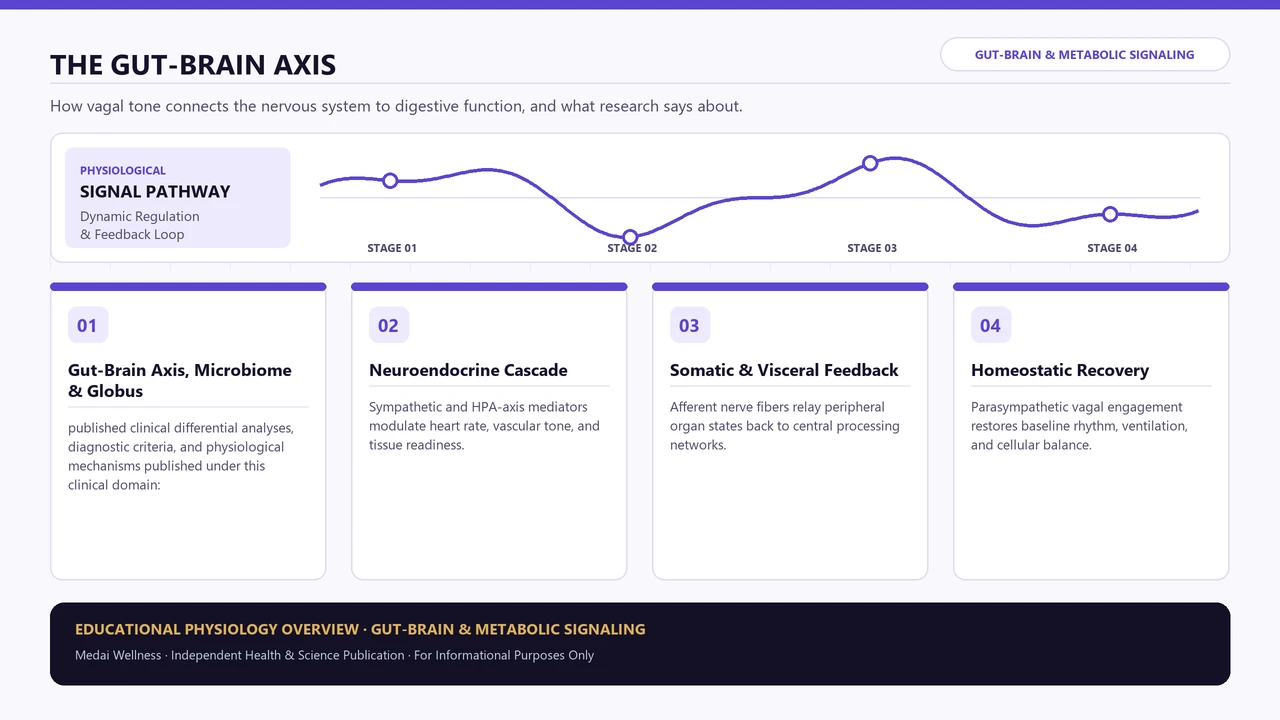
Gut-Brain Axis, Microbiome & Globus Educational Article Directory
Educational guides, physiological mechanisms, and evidence-informed overviews published in this topic area:
References
- Breit S, Kupferberg A, Rogler G, Hasler G. Vagus Nerve as Modulator of the Brain-Gut Axis in Psychiatric and Inflammatory Disorders. Front Psychiatry. 2018;9:44. PubMed
- Porges SW. The polyvagal theory: New insights into adaptive reactions of the autonomic nervous system. Clevel Clin J Med. 2009;76(Suppl 2):S86-S90. PMID: 19376991
Integrating Autonomic Observation With Medical Evaluation
When evaluating persistent visceral or somatic symptoms—whether involving upper gastrointestinal motility, postprandial nausea, orthostatic shifts, or stress-related tension—clinicians distinguish between structural pathology and functional autonomic dysregulation. In clinical gastroenterology and neurogastroenterology, disorders of gut-brain interaction (DGBIs) involve altered bidirectional signaling between the enteric nervous system (ENS), the dorsal motor nucleus of the vagus (DMV), and central interoceptive networks in the insula and anterior cingulate cortex.
Because peripheral symptoms such as delayed gastric accommodation, early satiety, nausea after meals, or epigastric fullness overlap across metabolic, endocrine, infectious, and functional conditions, objective medical evaluation remains essential. Standard clinical workups typically review medication side effects (such as anticholinergics, opioids, or GLP-1 receptor agonists), glycemic control, thyroid function, celiac serology, and structural imaging or endoscopy before attributing symptoms to functional vagal or stress-mediated pathways.
Practical Tracking for Healthcare Appointments
- Symptom Timing and Meal Composition: Record whether symptoms occur immediately upon eating (suggesting impaired fundic accommodation or heightened visceral mechanosensitivity) or several hours postprandially (often discussed in the context of delayed antral emptying).
- Autonomic and Postural Context: Note whether symptoms co-occur with lightheadedness upon standing, heat intolerance, unrefreshing sleep, or periods of heightened psychological stress.
- Supportive Self-Regulation: Gentle post-meal upright posture, smaller low-fat and low-fiber meal portions during acute flares, and slow diaphragmatic breathing can support parasympathetic tone while medical evaluation is underway.