
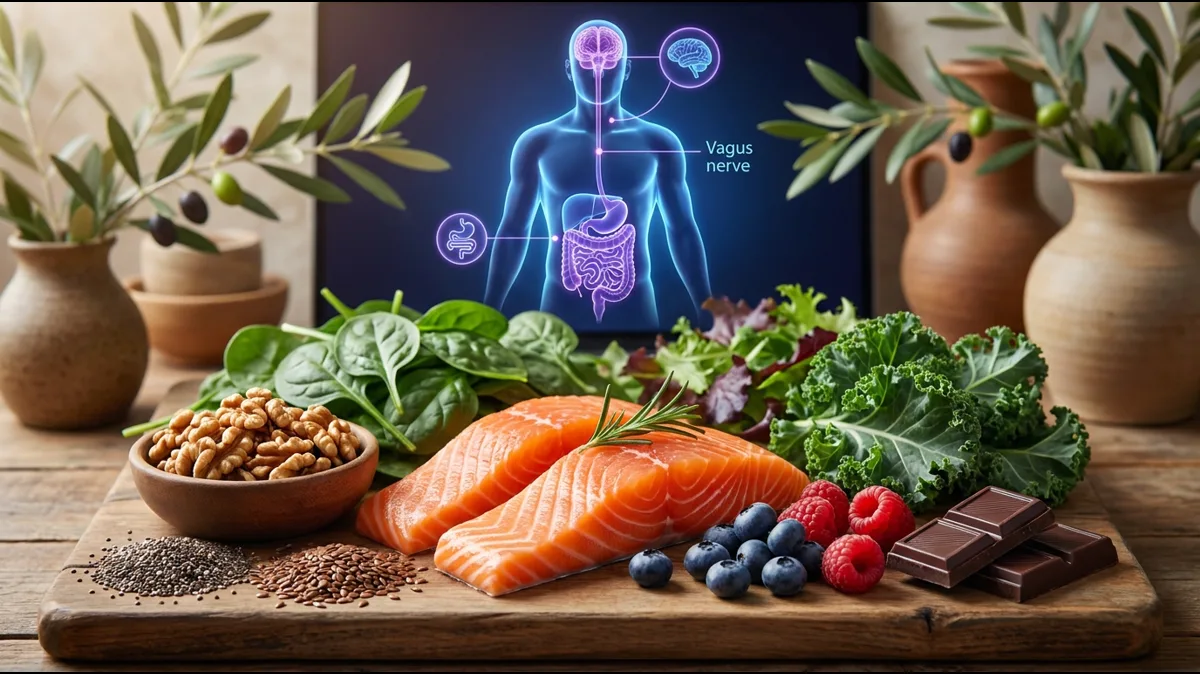
1. Vagal Afferent Neurobiology: How the Gut Communicates with the Brain
The human gastrointestinal tract encompasses over 300 square meters of mucosal surface area, continuously exposed to ingested nutrients, commensal microbes, and potential pathogens. To maintain physiological homeostasis, the nervous system monitors this vast surface primarily through the vagus nerve (Cranial Nerve X).
Contrary to the common conception of the vagus nerve as solely a "rest-and-digest" motor pathway, 80% to 90% of its fibers are primary visceral afferents with cell bodies located in the nodose (inferior vagal) ganglion. These bipolar sensory neurons project specialized terminal endings into the gut wall:
- Intraganglionic Laminar Endings (IGLEs): Located within the myenteric plexus between longitudinal and circular muscle layers, acting as precision mechanoreceptors that detect gut wall distension, volume load, and peristaltic shear stress.
- Mucosal Afferent Terminals: Located directly beneath the epithelial basement membrane, adjacent to enteroendocrine cells (EECs). These terminals express specific G-protein-coupled receptors (GPCRs) that detect luminal peptides, including cholecystokinin (CCK), glucagon-like peptide-1 (GLP-1), peptide YY (PYY), and serotonin ($5-HT$).
When food enters the duodenum, nutrient-sensing enteroendocrine cells release signaling molecules that bind to receptors on adjacent vagal afferent fibers. This sensory signal ascends via the nodose ganglion into the nucleus tractus solitarius (NTS) in the medulla oblongata, which integrates gut sensory data and orchestrates systemic autonomic adjustments, neuroendocrine secretions, and subjective satiety.
2. Omega-3 Fatty Acids: Neuronal Membrane Fluidity & Acetylcholine Sensitivity
Long-chain polyunsaturated fatty acids (PUFAs)—specifically eicosapentaenoic acid (EPA) and docosahexaenoic acid (DHA)—are fundamental structural constituents of neuronal phospholipid bilayers. DHA constitutes approximately 30% of all structural lipids in mammalian brain and neural membranes, playing an indispensable role in maintaining biophysical membrane fluidity and receptor mobility.
In autonomic cardiology, multiple randomized controlled clinical trials have demonstrated that dietary omega-3 intake elevates heart rate variability (HRV), particularly high-frequency power (HF-HRV) and the root mean square of successive differences (RMSSD)—the primary validated non-invasive indices of cardiac vagal tone. Mechanistically, incorporating DHA into cardiac sinoatrial (SA) node pacemaker cells and vagal motor terminals enhances the binding affinity and signal transduction of muscarinic M2 acetylcholine receptors.
Furthermore, EPA and DHA serve as biological substrates for the enzymatic synthesis of specialized pro-resolving mediators (SPMs), including resolvins, protectins, and maresins. These bioactive lipid mediators actively extinguish peripheral inflammatory cascades, protecting vagal nerve endings from cytokine-induced desensitization.
3. Magnesium & Essential Trace Minerals: Enzymatic Co-Factors for Autonomic Stability
Vagal transmission and parasympathetic signaling depend upon precision ion fluxes and enzymatic cofactors that require adequate dietary mineral intake:
- Magnesium ($Mg^{2+}$): Functions as a physiological voltage-gated channel blocker in postsynaptic NMDA receptors, preventing excitotoxic neuronal over-activation. Within the autonomic nervous system, magnesium supports the parasympathetic nervous system by regulating acetylcholine synthesis and release, while downregulating excessive adrenal catecholamine secretion. Bioavailable chelates such as magnesium glycinate and magnesium L-threonate demonstrate superior bioavailability and gastrointestinal tolerance compared to inorganic magnesium oxide.
- Zinc ($Zn^{2+}$): Highly concentrated within synaptic vesicles throughout autonomic brainstem nuclei. Zinc modulates inhibitory GABAergic neurotransmission and acts as an obligate cofactor for superoxide dismutase (Cu/Zn-SOD), protecting vagal sensory fibers from chronic oxidative stress.
- Vitamin B-Complex Co-Factors: Thiamine (Vitamin B1) is an essential cofactor for choline acetyltransferase (ChAT), the rate-limiting enzyme that synthesizes acetylcholine from choline and acetyl-CoA. Pyridoxal-5-phosphate (active Vitamin B6) is required by glutamate decarboxylase (GAD) to synthesize inhibitory GABA. Deficiencies in these vitamins directly impair vagal neurotransmitter availability.
4. The Microbiome Axis: Probiotics, Fermented Foods & Short-Chain Fatty Acids
The gut microbiome communicates continuously with the central nervous system through a bidirectional network known as the microbiota-gut-brain axis, with the vagus nerve acting as the primary high-speed conduit. Landmark studies have demonstrated that administering specific probiotic strains—such as Lactobacillus rhamnosus (JB-1) and Bifidobacterium longum—reduces anxiety-like behaviors and normalizes stress-induced corticosterone elevations in animal models. When the vagus nerve is surgically sectioned (subdiaphragmatic vagotomy), these neurochemical and behavioral benefits are entirely eliminated, confirming the absolute requirement of vagal continuity.
In addition to direct bacterial-receptor interactions, commensal gut bacteria ferment non-digestible dietary fibers into short-chain fatty acids (SCFAs): acetate, propionate, and butyrate. SCFAs bind to free fatty acid receptors 2 and 3 (FFAR2/3) expressed on enteroendocrine cells and vagal afferents. In particular, sodium butyrate acts as a natural histone deacetylase (HDAC) inhibitor, strengthening intestinal tight junction integrity, reducing systemic lipopolysaccharide (LPS) translocation, and activating vagal afferent pathways that trigger central neuroprotective responses.
5. Key Dietary Modulators of Vagal Function (Comparison Matrix)
The following evidence-based table summarizes how specific dietary patterns and individual nutrients interact with vagal neurophysiology:
| Nutrient / Dietary Factor | Primary Dietary Sources | Vagal & Autonomic Mechanism | Clinical Biomarker Impact |
|---|---|---|---|
| Long-Chain Omega-3s (EPA/DHA) | Wild salmon, sardines, mackerel, anchovies, algae oil | Increases sinoatrial membrane fluidity; boosts M2 muscarinic receptor sensitivity | Statistically significant increase in RMSSD and HF-HRV power |
| Bioavailable Magnesium | Leafy greens, pumpkin seeds, almonds, magnesium glycinate | Buffers NMDA excitotoxicity; co-factor for acetylcholine release; supports GABA | Reduces nocturnal resting heart rate; supports nocturnal autonomic dipping |
| Prebiotic Soluble Fiber | Acacia fiber, inulin, oats, asparagus, cooked and cooled potatoes | Fermented by commensal anaerobes into short-chain fatty acids (butyrate, acetate) | Decreases systemic endotoxin (LPS) levels; activates mucosal vagal FFAR receptors |
| Fermented Probiotic Foods | Traditional kefir, raw sauerkraut, kimchi, unsweetened yogurt | Supplies live commensals that stimulate vagal mucosal sensory terminals | Attenuates cortisol response to acute physiological stressors |
| Dietary Polyphenols | Extra virgin olive oil, green tea (EGCG), dark berries, rosemary | Neutralizes gut oxidative stress; activates the cholinergic anti-inflammatory pathway | Downregulates serum hs-CRP, IL-6, and TNF-alpha inflammatory cytokines |
6. Dietary Patterns That Suppress Vagal Tone: Ultra-Processed Foods & Dysbiosis
Just as whole, nutrient-dense foods support vagal neurophysiology, specific dietary components actively impair autonomic tone:
- Ultra-Processed Formulations & Emulsifiers: Dietary emulsifiers (such as carboxymethylcellulose and polysorbate-80) degrade the protective colonic mucus layer, allowing bacteria to contact the gut epithelium directly. This induces low-grade mucosal inflammation, desensitizing mucosal vagal endings.
- High Glycemic Load & Refined Sugars: Acute postprandial hyperglycemia generates spikes in reactive oxygen species and advanced glycation end-products (AGEs). Each glycemic spike provokes a transient burst of sympathetic vasoconstrictor output, temporarily suppressing parasympathetic heart rate variability for hours post-ingestion.
- Excess Alcohol Consumption: While small amounts of red wine polyphenols have been studied in cardiovascular literature, alcohol consumption—especially within 3 to 4 hours of sleep—causes pronounced nocturnal sympathetic hyperactivity, suppresses slow-wave NREM sleep, and blunts high-frequency HRV.
7. Clinical Safety: When to Seek Medical Evaluation for Digestive Symptoms
When to Seek Prompt Medical Evaluation (Clinical Red Flags)
While dietary optimization supports general autonomic and gut-brain wellness, gastrointestinal symptoms can represent serious structural, metabolic, or infectious medical conditions that require formal diagnostic workup by a gastroenterologist or physician. Seek prompt medical care if you experience any of the following warning signs:
- Progressive Dysphagia: Difficulty swallowing solid foods or liquids, or sensation of food becoming physically lodged in the esophagus.
- Unexplained Weight Loss: Involuntary loss of body weight without intentional caloric restriction.
- Gastrointestinal Bleeding: Vomiting blood or material resembling coffee grounds, black or tarry stools, or visible blood in the stool.
- Severe or Persistent Abdominal Pain: Localized, severe, or worsening abdominal tenderness, especially when accompanied by fever, chills, or persistent nausea.
- Refractory Vomiting: Inability to tolerate oral fluids for more than 24 hours, leading to signs of dehydration or electrolyte imbalance.
- New Symptoms Over Age 50: Sudden, unexplained changes in bowel habits, chronic bloating, or persistent early satiety in adults over age 50 without prior history.
Never disregard persistent physical gastrointestinal symptoms as "stress" or "low vagal tone" without thorough medical evaluation by a licensed healthcare provider.