
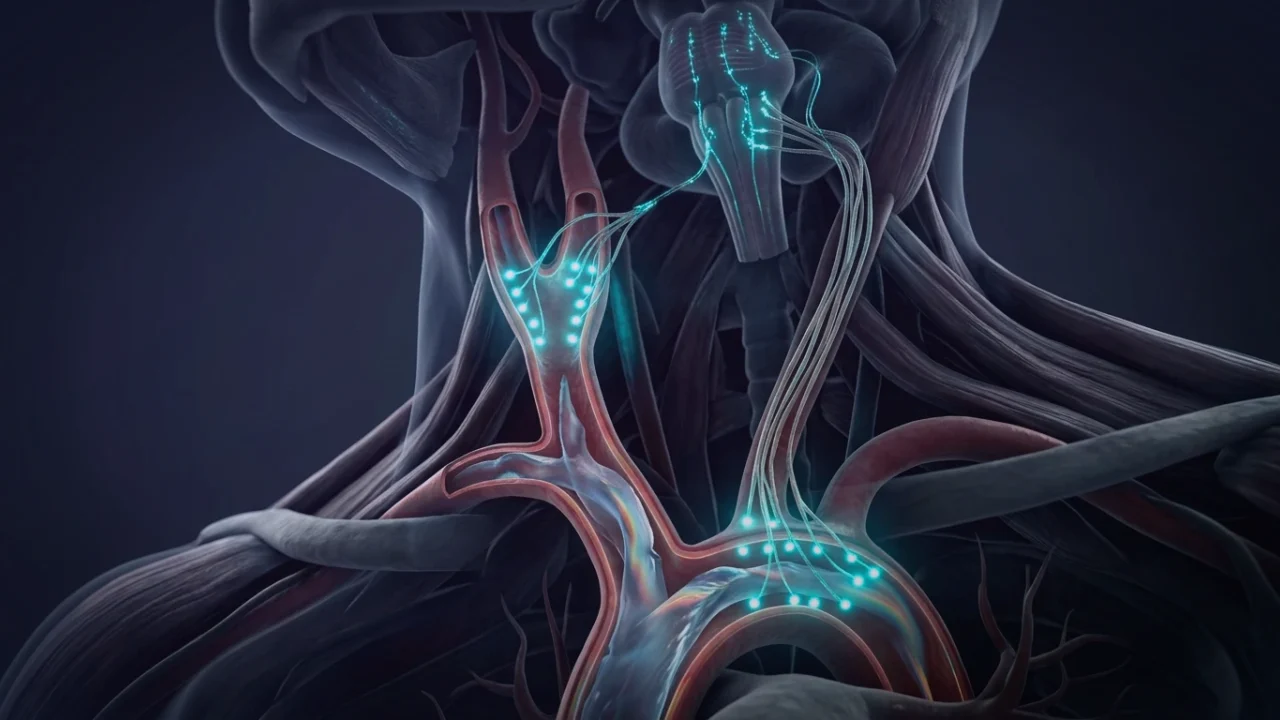
1. What Is Vasovagal Pre-Syncope? The Reflex Arc
Vasovagal syncope is the most prevalent form of transient loss of consciousness, accounting for over 50% of all fainting episodes. The condition is mediated by an abnormal autonomic reflex involving the vagus nerve and the vasomotor centers of the medulla oblongata.
During a vasovagal event, the autonomic nervous system suffers a biphasic malfunction:
- Phase 1 (Sympathetic Surge): Triggered by orthostatic pooling (prolonged standing), emotional distress, blood-injury phobia, or intense visceral pain, the sympathetic system initially fires, increasing heart rate and contractility.
- Phase 2 (Parasympathetic Crash): Suddenly, the central nervous system reverses course. A massive discharge of vagal acetylcholine slows the heart down (cardioinhibitory response), while sympathetic vasoconstrictor tone to skeletal muscle blood vessels is abruptly withdrawn (vasodepressor response).
Blood immediately pools into the large capacitance veins of the abdomen and lower extremities. Systemic blood pressure plummets, cerebral perfusion falls below the critical threshold required to maintain consciousness, and syncope occurs.
2. The Bezold-Jarisch Reflex: Why the Heart Suddenly Drops
At the center of this paradoxical crash lies the Bezold-Jarisch reflex. When an individual stands for prolonged periods in a warm room or when mildly dehydrated, gravity traps venous blood in the lower limbs, decreasing the volume of blood entering the left ventricle.
In an effort to maintain arterial pressure, the brain commands the sympathetic nervous system to squeeze the ventricle with intense contractile force. However, because the chamber is relatively empty, the walls of the ventricle squeeze forcefully against each other. This mechanical friction irritates unmyelinated cardiac sensory C-fibers in the inferoposterior ventricular myocardium.
These sensory fibers send frantic signals via the afferent vagus nerve to the medulla, tricking the brainstem into believing that the heart is experiencing dangerously high intraventricular pressures. In a misplaced attempt to protect the heart from rupture, the brain triggers a colossal parasympathetic override, dropping heart rate and dilating peripheral arteries.
3. Decoding the Prodrome: The Body’s 30-Second Alarm
Unlike sudden arrhythmic fainting, vasovagal episodes are almost universally preceded by a characteristic neuro-vegetative prodrome lasting anywhere from 15 to 90 seconds. Recognizing these early autonomic signals is life-saving:
- Facial Pallor & Cold Diaphoresis: Sympathetic vasoconstriction in cutaneous microvessels pulls blood away from the skin, leaving the face ghostly pale while autonomic dysregulation triggers profuse cold sweating.
- Gastric Nausea & Yawning: Parasympathetic vagal activation of the enteric nervous system provokes sudden stomach churning, hyper-salivation, and repetitive involuntary yawning.
- Sensory Attenuation: As cerebral cortex perfusion falters, retinal photoreceptor ischemia causes “graying out” or tunnel vision, accompanied by tinnitus or a sensation of listening to sounds underwater.
- Extreme Lightheadedness: A profound subjective sensation of weakness in the knees and an inability to maintain upright balance.
4. Differentiating Syncope: Vasovagal vs. Cardiac Syncope
Clinical evaluation must confirm whether transient loss of consciousness stems from benign neurocardiogenic reflexes or life-threatening structural cardiac disease. In our clinical framework comparing vasovagal syncope causes and autonomic reflex reset, key differential factors include:
| Clinical Feature | Vasovagal Pre-Syncope / Syncope | Cardiac Arrhythmic Syncope |
|---|---|---|
| Warning Prodrome | Prolonged (15–60 sec): nausea, sweat, tunnel vision | Instantaneous (< 3 sec), zero warning ("drop attack") |
| Postural Trigger | Occurs while standing or prolonged sitting | Can occur while lying completely flat or during peak exercise |
| Recovery State | Lingering fatigue, pale skin, weakness for 1–2 hours | Rapid lucid awakening, but high recurrence risk |
| Red Flag Overlap | No associated crushing angina | Often accompanied by cardiac syncope vs anxiety dizziness |
5. Physical Counter-Pressure Maneuvers: Aborting the Reflex
Randomized clinical trials (such as the landmark PC-Trial published in JACC) demonstrate that Physical Counter-Pressure Maneuvers (PCMs) abort syncope in over 90% of episodes if initiated immediately upon prodromal recognition:
- Leg Crossing with Muscle Tensing (PCM 1): Cross one leg over the other while standing or sitting, and forcefully contract the thigh, gluteal, and abdominal muscles simultaneously for 30 seconds. This mechanical compression squeezes up to 500 mL of pooled blood out of the venous beds back into the central circulation, instantly boosting systolic pressure by 15 to 25 mmHg.
- Handgrip Isometric Contraction (PCM 2): Tightly grip both hands together or clench a rubber ball with maximum force while pulling the arms apart against locked fingers. Isometric arm tensing triggers a reflex sympathetic discharge that raises peripheral vascular resistance.
- Squatting Maneuver: If standing, immediately drop into a full squat. Squatting completely compresses the femoral and popliteal veins, instantly elevating cardiac preload and restoring cerebral perfusion.
The Golden Rule: Never Try to "Walk It Off"
The most dangerous mistake patients make during pre-syncope is attempting to walk to another room, climb stairs, or step into a cold shower. Ambulation demands additional blood flow to working leg muscles, accelerating cerebral ischemia. If PCMs do not immediately clear vision, lie flat on the floor with legs elevated at 45 degrees.
6. Long-Term Autonomic Resilience and Tilt Prevention
Preventing future vasovagal episodes involves conditioning the autonomic system and ensuring adequate blood volume:
- Intravascular Salt & Water Expansion: Maintaining high-normal hydration (2.5 to 3 liters daily with 3,000–5,000 mg of sodium) keeps the ventricles well-filled, preventing the Bezold-Jarisch reflex from triggering.
- Graded Orthostatic Tilt Training: Standing upright with shoulders against a wall without moving for 10 to 30 minutes daily conditions baroreceptors to tolerate venous pooling.
- Graduated Compression Garments: Waist-high compression leggings (20–30 mmHg) mechanically inhibit venous capacitance pooling in the splanchnic and lower limb vascular territories.