
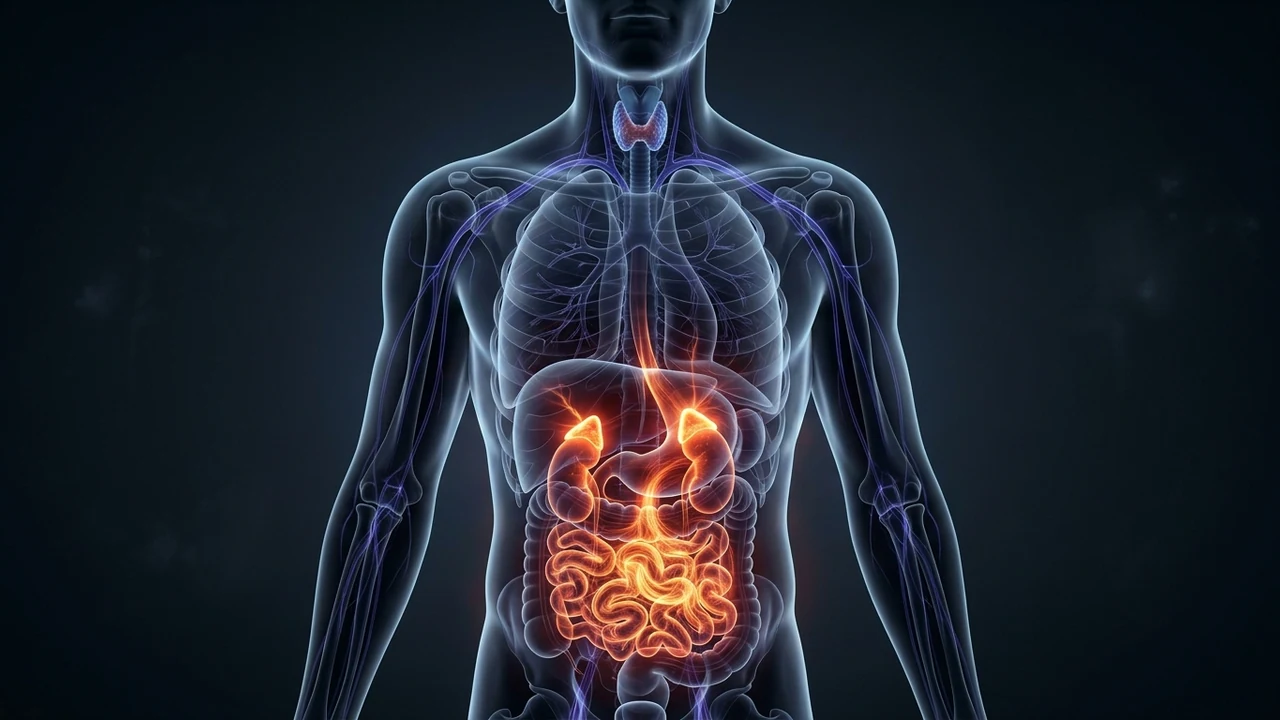
1. The Myth of the Pure Thermodynamic Deficit
The standard thermodynamic model posits that body weight is governed strictly by calories in versus calories out (CICO). While the laws of physics are inviolable, the human metabolism is an adaptive, non-linear neuroendocrine system. The "calories out" variable is dynamically regulated by the autonomic nervous system, thyroid hormones, leptin, and glucocorticoids.
When caloric restriction fails to yield fat loss, patients frequently wonder why belly fat is not reducing despite calorie restriction. The biological answer lies in stress-induced adaptive thermogenesis: when cortisol is elevated, severe caloric restriction triggers a protective metabolic shutdown that reduces energy expenditure to match or undercut caloric intake.
2. The Thyroid-Adrenal Disconnect: The Reverse T3 (rT3) Trap
The thyroid gland produces primarily thyroxine (T4), an inactive pro-hormone. For cells to burn energy and generate heat, T4 must be converted by peripheral 5'-deiodinase enzymes into active triiodothyronine (T3). Cortisol exerts a dramatic suppressive effect on this enzymatic cascade:
- Inhibition of 5'-Deiodinase: High circulating cortisol inhibits the enzyme responsible for converting T4 into active T3 in the liver and skeletal muscle.
- Activation of 5-Deiodinase: Simultaneously, cortisol upregulates 5-deiodinase, which converts T4 into Reverse T3 (rT3). Reverse T3 is an inactive isomer that acts as an antagonistic blocker at the cellular thyroid receptor level.
Consequently, blood panels often report "normal TSH" and "normal T4," yet the patient suffers from severe functional intracellular hypothyroidism. With active T3 suppressed by rT3, mitochondrial oxidative phosphorylation drops, core body temperature falls, and visceral fat burning ceases.
3. The Components of Adaptive Thermogenesis
Total daily energy expenditure (TDEE) is divided into four distinct compartments, each of which is suppressed when cortisol is chronically elevated during a calorie deficit:
| Metabolic Compartment | Percentage of TDEE | Impact of Elevated Cortisol During Calorie Restriction |
|---|---|---|
| Basal Metabolic Rate (BMR) | 60% – 70% | Drops by 15% – 35% via suppressed active T3 and mitochondrial decoupling. |
| NEAT (Non-Exercise Activity) | 15% – 25% | Subconsciously slashed by 40% – 60% (fidgeting stops, posture collapses, spontaneous movement drops). |
| Thermic Effect of Food (TEF) | 8% – 10% | Directly reduced as food volume decreases, especially if protein intake is insufficient. |
| Exercise Activity (EAT) | 5% – 10% | Efficiency paradox: muscles adapt to consume fewer calories per unit of mechanical work. |
4. Skeletal Muscle Proteolysis & Visceral Defense
When an individual with high basal cortisol enters an aggressive calorie deficit, cortisol promotes muscle proteolysis via the ubiquitin-proteasome pathway. Skeletal muscle proteins are dismantled into amino acids (alanine and glutamine) and transported to the liver for gluconeogenesis.
The patient sees the scale drop, but body composition is rapidly deteriorating: they are losing lean contractile mass while retaining stubborn visceral fat. Because skeletal muscle is the primary site of glucose disposal and resting metabolic burn, each pound of lost muscle further depresses BMR, ensuring that the moment normal eating resumes, calories are rapidly shuttled directly into visceral fat stores.
5. Clinical Signs You Are in Stress-Induced Metabolic Adaptation
If you have been in a calorie deficit for more than 4 weeks and fat loss has completely flatlined, assess for these clinical symptoms of autonomic-endocrine adaptation:
- Depressed Waking Body Temperature: Basal oral temperature consistently below 97.4°F (36.3°C) upon waking indicates down-regulated mitochondrial heat generation.
- Loss of Nocturnal HRV Baseline: Resting RMSSD drops by 30% or more, and nocturnal resting heart rate rises by 5–10 bpm, signaling persistent sympathetic overdrive.
- Afternoon Severe Lethargy Followed by 10 PM Insomnia: A reversed diurnal cortisol rhythm where morning cortisol is blunted and evening cortisol surges.
- Cold Extremities and Fluid Retention: Hands and feet remain cold even in warm rooms, accompanied by subcutaneous water retention driven by elevated aldosterone and cortisol cross-binding to mineralocorticoid receptors.
6. The "Reverse Dieting" & Autonomic Recovery Protocol
To break through a cortisol-induced weight loss plateau, the patient must restore neuroendocrine safety before fat loss can resume:
- Step 1: The Caloric Refeed Bridge: Increase daily calories back to estimated true maintenance for 14 to 21 days, prioritizing slow-digesting carbohydrates (sweet potatoes, oats, root vegetables) to signal the hypothalamus that starvation is not occurring, suppressing rT3.
- Step 2: Elimination of High-Intensity Cardio: Replace grueling HIIT and metabolic conditioning with daily 45-minute Zone 2 nasal-breathing walks in natural sunlight to clear systemic cortisol.
- Step 3: Micronutrient Re-sensitization: Supplement with zinc picolinate (30 mg), selenium as selenomethionine (200 mcg), and magnesium bisglycinate (400 mg) to support peripheral 5'-deiodinase enzyme activity.
- Step 4: Sleep Optimization: Ensure at least 8 hours in bed with dark, cold conditions (65°F/18°C) to facilitate slow-wave sleep and pulsatile growth hormone restoration.