
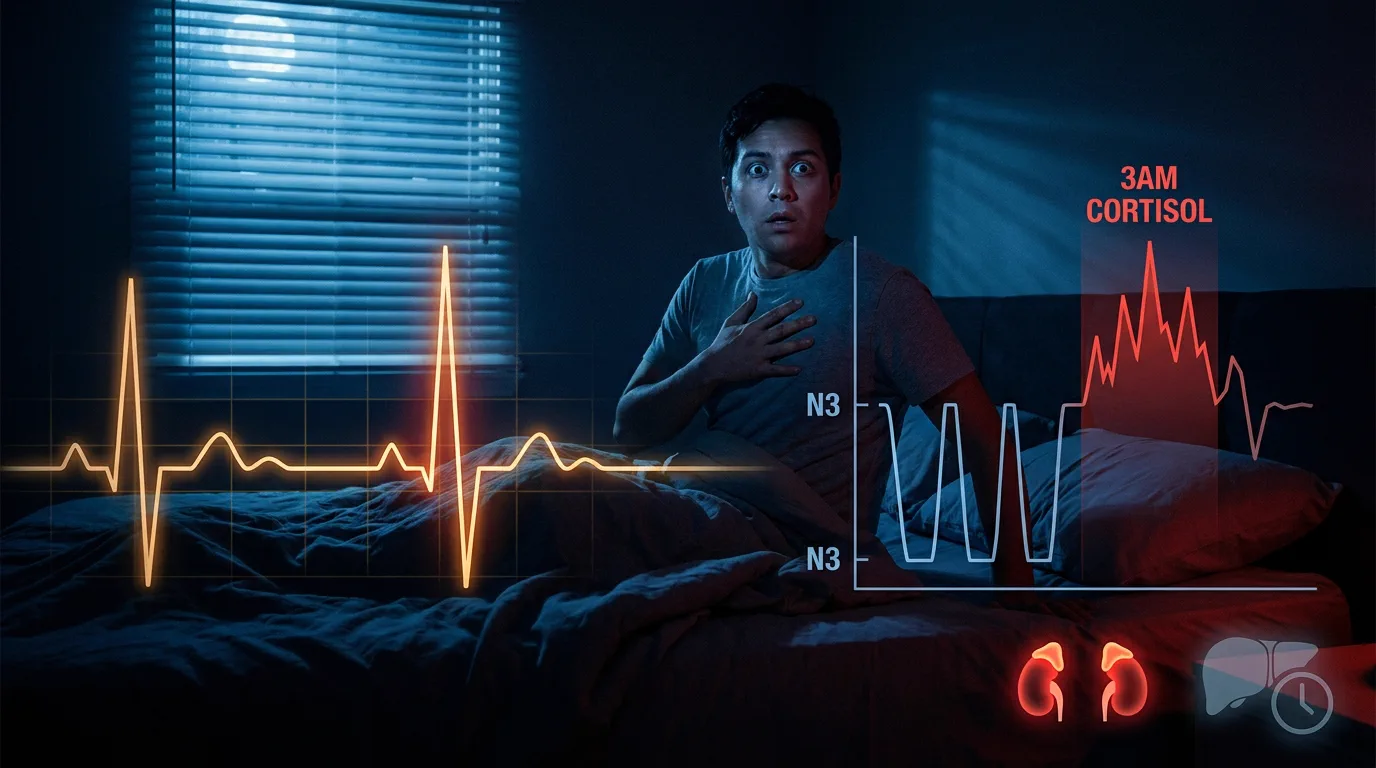
The culprit is not insomnia per se, but a premature cortisol awakening response driven by HPA axis dysregulation, blood sugar instability, and autonomic inflexibility. Understanding the neuroendocrine mechanics allows you to intervene at the source rather than chasing symptoms.
The Physiology of the 3am Wake-Up
Sleep architecture cycles through 90-minute ultradian rhythms. Around the 3–4 AM mark, you transition from deep slow-wave sleep (N3) into longer REM cycles. This transition requires a subtle cortisol rise to maintain cerebral glucose supply and facilitate REM-related synaptic pruning.
In a healthy system, this rise is gradual and sub-threshold for consciousness. In a dysregulated HPA axis, the adrenal glands release an exaggerated cortisol pulse—often 2–3x baseline—triggering full sympathetic arousal. Research in Psychoneuroendocrinology confirms that individuals with high perceived stress show blunted diurnal cortisol slopes and amplified nocturnal spikes.
Sleep Architecture & the 3am Transition
Normal sleep architecture:
- 11 PM – 2 AM: N3 (deep slow-wave) dominance. Growth hormone release, physical repair, glymphatic clearance.
- 2 AM – 4 AM: Transition period. N3 decreases, REM increases. Cortisol begins rising to support cerebral glucose for REM.
- 4 AM – 7 AM: REM dominance. Memory consolidation, emotional processing. Cortisol peaks at waking (CAR).
The 2–4 AM transition is a vulnerable window. The brainstem must coordinate autonomic shift from parasympathetic-dominant (N3) to sympathetic-active (REM). If HPA axis feedback is impaired, this coordination fails.
| Mechanism | Trigger | Resulting Awakening Pattern | Key Biomarkers |
|---|---|---|---|
| Cortisol Awakening Response (CAR) Dysregulation | Chronic stress, HPA axis hyperactivity, GR resistance | Abrupt waking, racing mind, alert but exhausted, "wired but tired" | Elevated midnight cortisol, blunted diurnal slope, high CAR |
| Nocturnal Hypoglycemia | High-carb dinner, insulin resistance, skipped meals, alcohol | Waking with hunger, sweating, palpitations, anxiety, tremor | Low 3am glucose, high insulin, high adrenaline/cortisol |
| Liver Detoxification Load (TCM 1–3am Window) | Alcohol, medications, environmental toxins, fatty liver | Waking feeling hot, thirsty, or with mild nausea, irritability | Elevated GGT, ALT; high toxic burden questionnaires |
| Sympathetic Overdrive / Vagal Withdrawal | Daytime stress accumulation, no evening wind-down, screen exposure | Waking with muscle tension, jaw clenching, rapid heart rate, heat | Low HRV, high resting HR, low BRS |
| Progesterone/Allopregnanolone Decline | Perimenopause, luteal phase defect, chronic stress (pregnenolone steal) | Waking with anxiety, heat, inability to return to sleep | Low progesterone, low allopregnanolone, high FSH |
Why Cortisol Spikes at 3am: The HPA Axis Feedback Loop
The HPA axis operates on negative feedback: rising cortisol signals the hypothalamus and pituitary to reduce CRH and ACTH production. Chronic stress desensitizes glucocorticoid receptors (GR) in the hippocampus and prefrontal cortex, impairing this feedback brake.
When feedback fails, the pituitary continues secreting ACTH unchecked. The adrenals respond with cortisol pulses that are poorly timed—often peaking during the vulnerable sleep transition window. This is not "adrenal fatigue" (a non-medical term); it is HPA axis dysregulation with GR resistance.
The Pregnenolone Steal: How Stress Steals Sleep Hormones
Under chronic stress, the adrenal cortex preferentially shunts pregnenolone toward cortisol synthesis (survival priority) at the expense of progesterone, DHEA, and testosterone. This "pregnenolone steal" depletes the very hormones that promote sleep:
- Progesterone → Allopregnanolone: Potent GABA-A positive modulator (sedative, anxiolytic)
- DHEA: Counter-regulates cortisol, supports REM density
- Testosterone/Estrogen: Modulate sleep architecture and thermoregulation
Blood Sugar & The Adrenaline-Cortisol Tango
If you eat a high-glycemic dinner (pasta, bread, dessert) at 7 PM, insulin spikes and crashes blood glucose by midnight. The brain detects this drop as a metabolic emergency, triggering adrenaline first (via sympathetic adrenal medulla), then cortisol (via HPA axis) to stimulate hepatic gluconeogenesis.
The adrenaline surge is what wakes you—heart racing, mind alert, sweating. Cortisol follows to sustain glucose output. A 2022 study in Nutrients found that a pre-sleep protein-fat snack (e.g., 10g collagen + 1 tsp MCT oil) reduced 3am awakenings by 68% in adults with sleep maintenance insomnia.
The Reactive Hypoglycemia Cycle
- High-carb dinner → large insulin spike
- Midnight: glucose crashes below 70 mg/dL
- Adrenal medulla releases adrenaline (sympathetic surge)
- HPA axis releases cortisol (gluconeogenesis)
- 3 AM: Full awakening with catecholamine symptoms
- Morning: High fasting glucose (cortisol-induced gluconeogenesis)
Liver Detoxification & The 1–3 AM Window
In Traditional Chinese Medicine (TCM), 1–3 AM is the Liver meridian's peak activity window. Modern physiology corroborates: the liver's cytochrome P450 detoxification enzymes (CYP3A4, CYP2D6, CYP2E1) show circadian expression peaking in early morning hours.
When the liver is overburdened—by alcohol (CYP2E1 induction), medications (polypharmacy), environmental toxins (xenobiotics), or non-alcoholic fatty liver disease (NAFLD)—the detoxification demand creates oxidative stress and inflammatory signaling (NF-κB, TNF-α) that can disrupt sleep via vagal afferents and systemic cytokines.
Supporting the Liver Window
- Alcohol cessation after 6 PM: Alcohol metabolism competes with endogenous detoxification.
- N-acetylcysteine (NAC) 600mg at dinner: Precursor to glutathione, supports Phase II conjugation.
- Milk Thistle (silymarin) 150mg: Stabilizes hepatocyte membranes, enhances glutathione.
- Cruciferous vegetables at dinner: Sulforaphane induces Phase II enzymes (GST, NQO1).
- Hydration: 500ml water between dinner and bed supports renal clearance of conjugates.
Somatic & Nutritional Protocols to Sleep Through the Night
Protocol 1: Bedtime Blood Sugar Stabilizer (Most Impactful)
30 minutes before bed, consume 10–15g protein + 5–10g healthy fat (e.g., Greek yogurt with walnuts, collagen peptide with MCT oil, hard-boiled egg with avocado). This provides slow-release amino acids and ketones to maintain cerebral glucose without insulin spike.
Protocol 2: sleep-support formula (4-6 Breathing + Humming)
10 minutes of guided extended exhale breathing with low-frequency humming directly stimulates the vagus nerve, dampening HPA axis output before sleep. The humming adds pharyngeal vagal stimulation; the 4-6 ratio maximizes cardiac vagal brake.
Protocol 3: Morning Sunlight Within 30 Minutes of Waking
Bright light (10,000+ lux) anchors your circadian cortisol peak to morning, flattening the nocturnal curve. This is the single most powerful circadian entrainment signal. Even on cloudy days, outdoor light (2,000–5,000 lux) is sufficient.
Protocol 4: Vagal Toning Before Bed (2 minutes)
- Tragus ear massage (60 sec)
- Cold face splash or ice pack to cheeks (30 sec)
- Suboccipital release / neck slide (30 sec)
This shifts the autonomic state from sympathetic-dominant to ventral vagal before sleep onset.
Protocol 5: Magnesium Glycinate + Glycine (Sleep Biochemistry)
Magnesium glycinate 200–400mg + Glycine 3g at bedtime. Magnesium supports GABAergic inhibition and muscle relaxation; glycine lowers core body temperature (sleep onset signal) and acts as inhibitory neurotransmitter in spinal cord/brainstem.
Special Populations: Perimenopause & Andropause
Hormonal transitions dramatically increase 3am waking prevalence:
| Population | Hormonal Mechanism | Targeted Intervention |
|---|---|---|
| Perimenopause | Progesterone ↓ → allopregnanolone ↓ → GABA tone ↓; Estrogen fluctuation → thermoregulation instability | Progesterone (bioidentical, 100-200mg nightly if indicated); Magnesium glycinate; Cooling bedding; Phytoestrogens |
| Andropause (Low T) | Testosterone ↓ → reduced sleep efficiency, increased cortisol reactivity | Sleep hygiene optimization; DHEA if low (test first); Resistance training; Weight loss if overweight |
| Thyroid Dysfunction | Hypothyroid: low metabolic rate → poor glucose stability; Hyper: adrenergic excess | Optimize thyroid medication timing (T4 morning, T3 split); Selenium 200mcg; Iron/ferritin optimization |
When to Investigate Further
If 3am waking persists despite 3–4 weeks of consistent protocol implementation, consider testing:
- 4-point salivary cortisol curve (diurnal rhythm + CAR)
- Fasting insulin & HOMA-IR (insulin resistance)
- Comprehensive metabolic panel (liver function: ALT, AST, GGT, ALP, bilirubin)
- Hormone panel: progesterone, estradiol, testosterone, DHEA-S, FSH/LH
- Thyroid panel: TSH, free T3, free T4, reverse T3, antibodies
- Sleep study (rule out apnea, periodic limb movement, UARS)
- Nutrient panel: RBC magnesium, Vitamin D, B12, ferritin, zinc
Clinical Patterns: How These Mechanisms Show Up
Rather than individual success stories, the patterns below describe the typical clinical presentations reported in the waking-at-3am literature. Individual results vary widely, and no protocol here should be read as a promise of a specific outcome.
Pattern: Perimenopausal 3am Waking
Around menopause, dropping progesterone can destabilize sleep architecture, producing 3am waking with heat and anxiety. The clinical picture is hormonal, and responses in the literature typically involve both medical support (hormone therapy, when appropriate) and behavioral work: magnesium glycinate, consistent bedtime wind-down, and extended-exhale breathing to ease the transition back to sleep. Improvement is gradual and varies widely by individual.
Pattern: Reactive Hypoglycemia 3am Waking
A high-carbohydrate dinner followed by wine can drive a blood-sugar dip in the early morning, waking you with a racing heart, hunger, and anxiety. The clinical pattern is metabolic: shifting the evening meal toward protein and vegetables, avoiding late alcohol, and adding morning sunlight exposure supports steadier overnight glucose. Some people find a few minutes of extended-exhale breathing helps settle the arousal while the metabolic pattern corrects over weeks.
Medical Disclaimer: This article is for informational purposes only. Persistent sleep maintenance insomnia may indicate sleep apnea, hormonal disorders, or medication side effects. Consult a sleep specialist or endocrinologist for persistent symptoms. Hormone therapy requires medical supervision.