
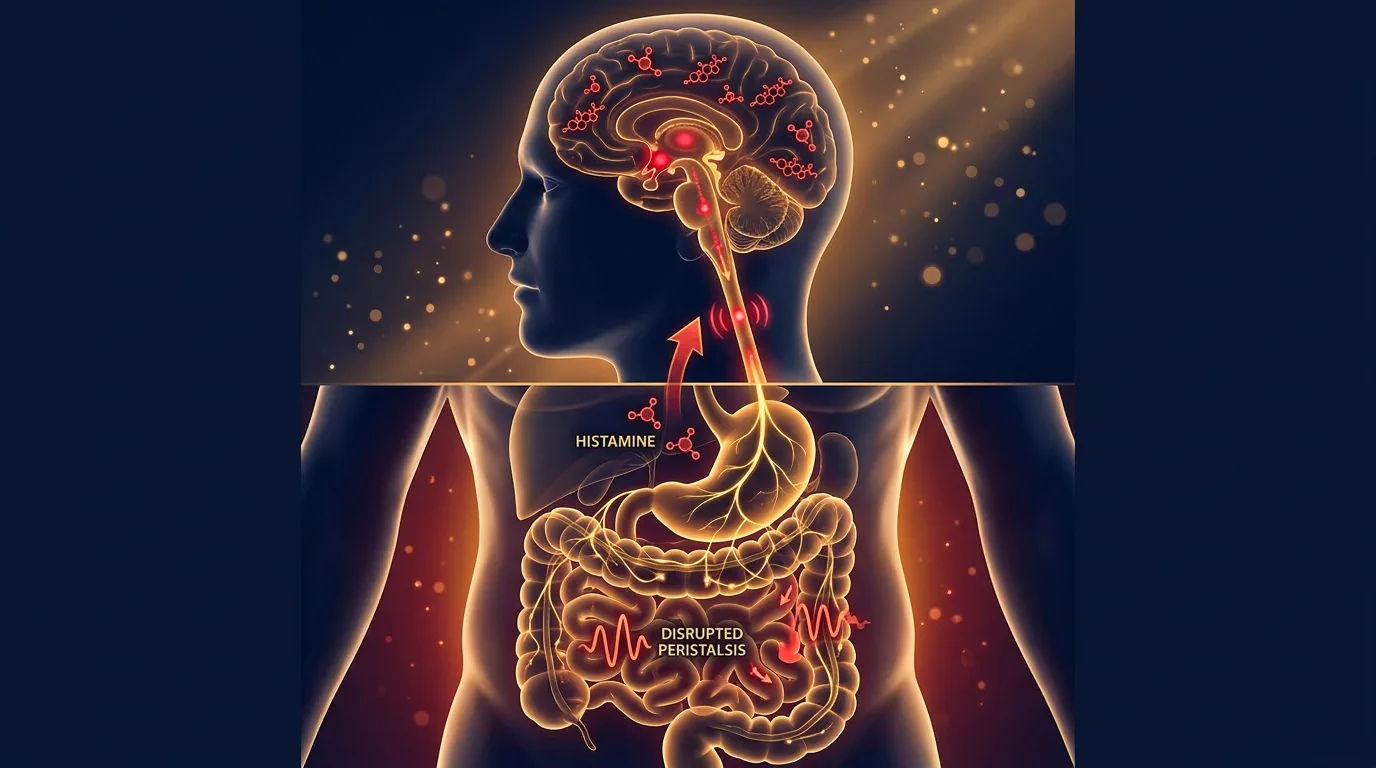
Modern neurogastroenterology confirms that IBS is not purely a gut disorder; it is a disorder of gut-brain interaction (DGBI). The vagus nerve serves as the primary communication highway, and when autonomic dysregulation keeps the body in sympathetic overdrive, the gut becomes a collateral victim. This article provides the complete neurobiological framework and somatic intervention protocols.
The Vagus-Gut Axis: Your Internal Communication Superhighway
The vagus nerve innervates the entire gastrointestinal tract—from the upper esophageal sphincter to the splenic flexure of the colon—via the subdiaphragmatic vagal plexus. Through this pathway, the brainstem receives 80% afferent sensory data about gut distension, nutrient composition, microbial metabolites, and inflammatory signals.
According to research in Nature Reviews Gastroenterology & Hepatology, vagal tone directly predicts IBS symptom severity: lower resting HRV (a proxy for vagal tone) correlates with higher pain scores and more frequent flares. A 2022 study in Gastroenterology found that IBS patients had 40% lower cardiac vagal tone (HF-HRV) compared to healthy controls, and this deficit correlated with symptom severity (r = -0.52).
Anatomy of the Vagus-Gut Connection
The vagus nerve provides parasympathetic innervation to the GI tract through distinct branches:
- Anterior & Posterior Gastric Branches: From left & right vagus, control gastric acid secretion, fundic accommodation, and pyloric tone.
- Celiac Branch: From right vagus, innervates liver, pancreas, proximal small intestine (duodenum/jejunum).
- Hepatic Branch: Regulates bile flow, glucose metabolism, hepatic blood flow.
- Intestinal Branches: To midgut (jejunum to splenic flexure), controlling peristalsis, secretion, blood flow.
- Absent from hindgut: Descending/sigmoid colon and rectum receive pelvic splanchnic (S2-S4) parasympathetic input, not vagal.
| Stress Pathway | Gut Consequence | Primary Vagal Mechanism | IBS Subtype Association |
|---|---|---|---|
| Sympathetic Overdrive (Fight/Flight) | Reduced blood flow to gut, inhibited peristalsis, increased permeability | Vagal withdrawal → loss of cholinergic motor drive | IBS-C (constipation), IBS-M (mixed) |
| HPA Axis Activation (Cortisol) | Increased intestinal permeability ("leaky gut"), mast cell activation | Cortisol downregulates vagal anti-inflammatory pathway | IBS-D (diarrhea), post-infectious IBS |
| Dorsal Vagal Shutdown (Freeze) | Severe constipation, gastroparesis-like slowing, nausea | Unmyelinated dorsal vagal dominance → motor arrest | IBS-C, functional dyspepsia overlap |
| Fawn/Social Engagement (Chronic) | Disordered eating patterns, aerophagia, reflux | Sympathetic arousal + forced ventral vagal = dyscoordination | Functional dyspepsia, globus, reflux |
How Stress Rewires the IBS Gut
1. Visceral Hypersensitivity: The Amplified Pain Signal
Chronic stress sensitizes spinal afferent neurons (via NMDA receptor upregulation in dorsal horn) and vagal afferents, lowering the pain threshold for normal gut distension. What should register as mild fullness (15–20 mmHg balloon distension) is interpreted by the brain as severe pain. fMRI studies show IBS patients have amplified anterior cingulate and insular activation to rectal distension—identical to the neural signature of chronic pain syndromes.
2. Altered Gut Motility: The Chaos of Dyscoordination
Sympathetic dominance slows small bowel transit (causing bloating, SIBO risk, malabsorption) while paradoxically accelerating colonic transit in some individuals (causing urgency, diarrhea). The Migrating Motor Complex (MMC)—the 90-minute fasting "cleaning wave" controlled by vagal motilin signaling—is disrupted, permitting bacterial overgrowth and fermentation.
3. Microbiome Dysbiosis: The Microbial Stress Response
Stress hormones (catecholamines: norepinephrine, epinephrine) directly stimulate pathogenic bacterial growth (E. coli, Pseudomonas, Salmonella) via bacterial adrenergic receptors (QseC/QseE), while reducing beneficial Lactobacillus and Bifidobacterium species. This dysbiosis perpetuates inflammation, barrier dysfunction, and vagal afferent sensitization—a self-sustaining loop.
4. Immune Activation & Low-Grade Inflammation
Mast cell infiltration near enteric nerves (within 5 microns) releases histamine, tryptase, and proteases that directly sensitize vagal afferents and spinal afferents, creating a self-sustaining pain loop. The cholinergic anti-inflammatory pathway (vagal efferent → α7nAChR on macrophages → TNF-α/IL-6 suppression) is impaired in low vagal tone states, permitting unchecked mucosal inflammation.
5. Intestinal Barrier Dysfunction ("Leaky Gut")
Cortisol and catecholamines redistribute tight junction proteins (claudin-1, occludin, ZO-1), increasing paracellular permeability. Luminal antigens (LPS, food proteins) translocate, triggering immune activation and further vagal afferent signaling. Serum zonulin (barrier marker) correlates with IBS severity and psychological stress scores.
Somatic Protocols to Rebalance the Vagus-Gut Axis
Targeting the nervous system first yields downstream gut benefits without relying solely on dietary restriction or medications. These protocols address the root autonomic dysregulation rather than just managing symptoms.
Phase 1: Acute Flare Management (During Symptoms)
- Diaphragmatic 4-6 Breathing (5 min): The mechanical descent of the diaphragm massages the stomach and proximal small intestine while stimulating subdiaphragmatic vagal endings. Practice before meals and during flares.
- Cold Vagal Stimulation (30 sec): Brief cold water facial immersion or 30-second cold shower finish activates the mammalian diving reflex, boosting vagal tone and gut motility.
- Vocal Humming Post-Meal (2 min): Low-frequency humming for 2 minutes after eating enhances gastric accommodation via pharyngeal vagal branches.
- Suboccipital Release (1 min): Gentle neck release techniques decompress the vagus nerve at the jugular foramen, restoring cervical vagal flow.
Phase 2: Daily Baseline Toning (Between Flares)
- Morning: 5 min 4-6 breathing + 1 min Rosenberg Basic Exercise (before breakfast).
- Pre-Meal (3× daily): 3 humming exhales to prime gastric secretion and vagal tone.
- Post-Meal: 5 min left lateral recumbent position (promotes gastric emptying via gravity + vagal).
- Evening: guided sleep audio (10 min) + 2 min tragus ear massage.
Phase 3: Microbiome-Vagus Synergy
Combine somatic practices with microbiome support for compounding effects:
- Prebiotic Timing: Consume prebiotic fibers (inulin, GOS, resistant starch) at breakfast when vagal tone is rising—enhances fermentation and SCFA production.
- Fermented Foods: 1 serving daily (kefir, sauerkraut, kimchi) provides live microbes that stimulate vagal afferents via microbial metabolites.
- Polyphenols: Green tea (EGCG), pomegranate, berries—polyphenols are metabolized by gut bacteria into vagal-stimulating metabolites (urolithins, equol).
IBS Subtype-Specific Protocols
| IBS Subtype | Dominant Autonomic Pattern | Priority Somatic Practice | Dietary Timing |
|---|---|---|---|
| IBS-C (Constipation) | Dorsal vagal dominance / sympathetic withdrawal | Cold stimulation, shaking/tremoring, 4-6 breathing | Prebiotic at breakfast; magnesium glycinate at night |
| IBS-D (Diarrhea) | Sympathetic overdrive / HPA hyperactivity | Extended exhale (4-6), weighted compression, orienting | Low FODMAP during flares; soluble fiber (psyllium) daily |
| IBS-M (Mixed) | Autonomic lability (oscillation) | Coherent breathing (5.5/5.5), HRV biofeedback | Consistent meal timing; avoid large meals |
| Post-Infectious IBS | Persistent immune activation + vagal withdrawal | Cold exposure, humming, tVNS if available | Anti-inflammatory diet; consider SIBO testing |
Clinical Patterns: How These Mechanisms Show Up
Rather than individual success stories, the patterns below describe the typical clinical presentations reported in the IBS-vagus literature. Individual results vary widely, and no protocol here should be read as a promise of a specific outcome.
Pattern: IBS-D with Health Anxiety
This presentation combines diarrhea-predominant IBS with anxiety amplified by symptom monitoring. Chronic sympathetic activation keeps the gut in a hyper-responsive state, and the health anxiety feeds a loop of vigilance that sustains it. The clinical response is typically slow and cumulative - days to weeks of consistent vagal practice (extended-exhale breathing, humming) alongside dietary adjustment, with realistic expectations rather than dramatic overnight change.
Pattern: IBS-C with Freeze Response
Constipation-predominant IBS often overlaps with a dorsal-vagal (freeze) presentation: sluggish motility, bloating, and fatigue rather than urgency. Practitioners typically combine gentle movement and somatic awareness with extended-exhale breathing to shift out of immobilization, plus consistent magnesium glycinate and hydration. Improvement is gradual and tied to regularity of practice, not intensity.
Discover more somatic practices in our Gut-Brain Axis Hub.
Clinical Summary: The Nervous System First Approach
IBS is a disorder of miscommunication between an overprotective brain and a hypersensitive gut. By restoring ventral vagal regulation, you recalibrate the filtering system that determines whether normal gut sensations are flagged as threats. The gut is not broken—it is responding appropriately to a nervous system stuck in survival mode.
Medical Disclaimer: This article is for informational purposes only. IBS requires proper medical diagnosis. Consult a gastroenterologist for persistent digestive symptoms, unexplained weight loss, blood in stool, or anemia. Somatic practices complement, not replace, medical care.