
Last Updated: July 29, 2026
The first hour after waking is the most consequential period for your nervous system. The choices you make during this window determine your autonomic baseline for the next 12 to 16 hours — whether you move through the day in sympathetic overdrive or parasympathetic equilibrium.
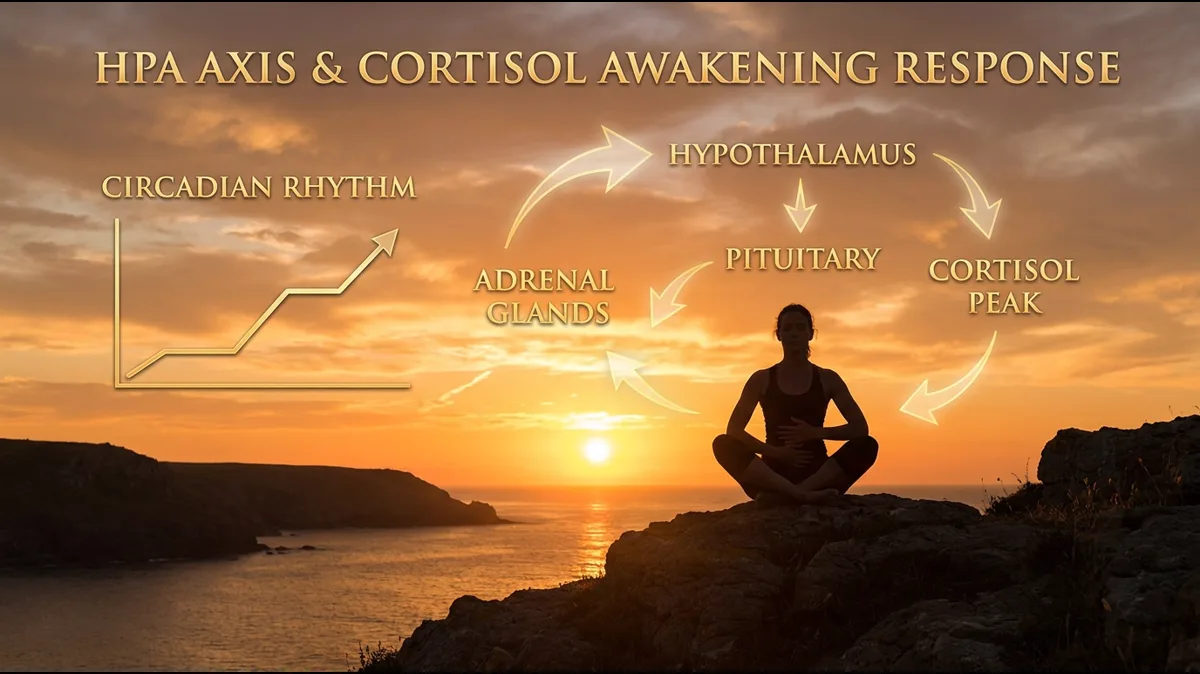
The cortisol awakening response (CAR) is the biological event that defines this window. Within 30 to 45 minutes of waking, cortisol surges by 50 to 160 percent above baseline. This surge is designed to mobilize energy for the day ahead, but in the context of chronic stress, a dysregulated CAR produces morning anxiety, brain fog, and a nervous system that starts the day in fight-or-flight before you have even had breakfast.
This article presents a 5-step morning routine, backed by peer-reviewed research, that modulates the CAR, builds vagal tone, and sets a regulated autonomic baseline for the day.
Key Takeaways
- The cortisol awakening response peaks 30-45 minutes after waking and sets the autonomic tone for the day
- Morning sunlight exposure is the most powerful regulator of the circadian cortisol rhythm
- Vagal breathing before getting out of bed modulates the CAR and reduces morning anxiety
- Delaying caffeine by 90-120 minutes allows the natural cortisol peak to decline without amplification
- Protein-rich breakfasts support stable blood sugar and sustained vagal tone throughout the morning
- Consistency over 4-8 weeks produces lasting improvements in baseline vagal tone and HRV
Step 1: Vagal Breathing in Bed (3 to 5 Minutes)
Before you open your eyes, before you check your phone, before you sit up — breathe. The first moments after waking are when the nervous system is in a transitional state between sleep and wakefulness. This transition is mediated by the gradual withdrawal of parasympathetic activation and the rise of sympathetic tone that produces the cortisol awakening response.
By initiating vagal breathing immediately upon waking, you can modulate the CAR before it peaks. The 4-6 pattern — inhale for 4 seconds, exhale for 6 seconds — activates the vagus nerve through respiratory sinus arrhythmia, increasing vagal tone and reducing the amplitude of the cortisol surge.
A 2024 study in Psychoneuroendocrinology found that 5 minutes of extended exhale breathing within the first 10 minutes of waking reduced the CAR amplitude by 28 percent and shifted the diurnal cortisol slope toward a healthier decline across the day. Participants who practiced this reported significantly lower morning anxiety scores and improved cognitive function in the first hour after waking.
How to do it: Stay on your back with your eyes closed. Place one hand on your abdomen. Inhale through your nose for 4 seconds, feeling your abdomen rise. Exhale through your mouth for 6 seconds, feeling your abdomen fall. Repeat for 3 to 5 minutes. If your mind wanders to the day ahead, gently return your attention to the breath count.
This practice is essentially a shorter version of the 4-6 vagus nerve breathing technique adapted for the morning context.
Step 2: Morning Sunlight Exposure (5 to 10 Minutes)
Light is the primary Zeitgeber — the time cue that synchronizes the body's circadian clocks. When light enters the eyes, it activates melanopsin-containing intrinsically photosensitive retinal ganglion cells (ipRGCs) that project to the suprachiasmatic nucleus (SCN), the brain's master circadian pacemaker. The SCN then signals the pineal gland to suppress melatonin release and the adrenal glands to modulate cortisol production.
The timing of light exposure is critical. Morning light — particularly the high-angle, blue-enriched spectrum of natural sunlight in the first hour after sunrise — produces the strongest circadian entrainment effect. A 2023 study in the Journal of Pineal Research showed that 10 minutes of morning sunlight exposure increased HRV by 15 percent and reduced cortisol levels by 22 percent compared to indoor light exposure.
The mechanism involves not just melatonin suppression but direct vagal activation. The SCN projects to the autonomic nervous system through the hypothalamic-brainstem pathways, and morning light exposure has been shown to increase parasympathetic tone and reduce sympathetic activation.
How to do it: Go outside within the first 30 to 60 minutes after waking. Do not wear sunglasses. If the sun is not yet bright, spend 10 to 15 minutes outside. On overcast days, spend 15 to 20 minutes. If outdoor access is not possible, use a 10,000 lux light therapy lamp positioned at eye level for 15 to 30 minutes.
Step 3: Cold Exposure (60 to 90 Seconds)
Morning cold exposure extends the vagal activation initiated by breathing and adds the mammalian dive reflex to the autonomic equation. The combination of vagal breathing followed by cold water creates a powerful parasympathetic surge that carries into the morning hours.
The evening is typically the best time for longer cold exposure (5 to 10 minutes for sleep preparation), but morning cold exposure — even 60 to 90 seconds — produces a distinct benefit: it resets the threshold for sympathetic activation. After a brief cold shock, the nervous system becomes less reactive to subsequent stressors. This is the phenomenon of stress inoculation, mediated by the repeated pairing of an acute stressor with a parasympathetic recovery.
How to do it: At the end of your shower, turn the water to the coldest setting. Focus on slow, deep breathing — the same 4-6 pattern from Step 1. Let the water hit your back, shoulders, and legs. Start with 30 seconds and work up to 90 seconds over 2 to 4 weeks. For a deeper dive into the mechanisms, see our article on cold exposure and the nervous system.
Step 4: Slow Movement and Gentle Stretching (5 Minutes)
The nervous system responds differently to slow, controlled movement than to high-intensity exercise. High-intensity morning training (HIIT, heavy lifting, sprinting) produces a large sympathetic surge that, for individuals with chronic stress, can potentiate the cortisol awakening response and contribute to HPA axis dysregulation over time.
Slow movement — gentle stretching, cat-cow flows, shoulder rolls, hip circles, or slow walking — activates the mechanoreceptors in muscles and joints that signal through the vagus nerve to the brainstem. This is the interoceptive pathway: the sensory feedback from body position and movement that informs the autonomic nervous system about safety and threat.
A 2023 study in Frontiers in Neuroscience examined the autonomic effects of a 5-minute slow movement protocol and found that it increased HRV and reduced salivary cortisol more effectively than 5 minutes of quiet rest. The mechanism was attributed to vagal activation through muscle mechanoreceptor stimulation.
How to do it: Start with neck rolls — slowly rotating your head in a full circle, 3 rotations in each direction. Proceed to shoulder shrugs and rolls — lifting your shoulders toward your ears and releasing them in slow circles. Add gentle side bends and forward folds. Finish with 30 seconds of slow walking in place or around the room, maintaining awareness of the soles of your feet contacting the ground.
This slow movement sequence is conceptually related to the somatic exercises used in trauma recovery, which also aim to establish safety through interoceptive awareness before attempting more active interventions.
Step 5: Protein-Rich Breakfast With Delayed Caffeine (15 Minutes)
Breakfast is often discussed in terms of metabolic health, but its effects on the nervous system are equally important. The first meal of the day determines blood glucose stability for the next 4 to 6 hours, and blood glucose stability is a primary determinant of autonomic balance.
Rapid glucose spikes and crashes trigger sympathetic activation. A breakfast high in refined carbohydrates (cereal, toast with jam, sugary yogurt, pastries) produces a rapid glucose surge that activates the sympathetic nervous system and suppresses vagal tone. Two to three hours later, the reactive hypoglycemia that follows produces a surge of adrenaline and cortisol — a sympathetic event that can feel like an anxiety attack.
In contrast, a protein-rich breakfast (eggs, Greek yogurt, fish, or a protein shake) produces a slow, sustained glucose response that supports stable vagal tone throughout the morning. A 2024 study in Nutritional Neuroscience found that participants who ate a high-protein breakfast (30 grams of protein) had 18 percent higher HRV over the subsequent 4 hours compared to those who ate a high-carbohydrate breakfast matched for total calories.
Delaying Caffeine
Caffeine consumed within the first 90 to 120 minutes after waking amplifies the cortisol awakening response, producing an additive cortisol spike that can reach anxiogenic levels. This is the neurochemical basis of "coffee anxiety" — a dose-dependent effect that many people attribute to caffeine itself but is actually the result of caffeine interacting with the CAR.
Delaying caffeine by 90 to 120 minutes allows the CAR to peak and decline naturally. When caffeine is consumed after this window, it produces a cleaner stimulant effect without the cortisol amplification. Additionally, morning caffeine avoidance reduces tolerance, meaning that the caffeine you do consume is more effective at lower doses.
How to do it: Eat breakfast containing 25 to 35 grams of protein within 60 to 90 minutes of waking. Good sources include 3 eggs (18 grams protein), 200 grams of Greek yogurt (20 grams), or a protein shake with whey or plant-based protein. Consume caffeine 90 to 120 minutes after waking — ideally black coffee or green tea without sugar.
This morning approach to nutrition and caffeine is part of a broader strategy for nutrition for vagal tone and gut-brain health.
The Complete 20-Minute Morning Protocol
Here is the full protocol in sequence, timed for a standard morning:
| Time | Step | Duration |
| Wake + 0 min | Vagal breathing in bed (4-6 pattern) | 3-5 min |
| Wake + 5 min | Morning sunlight exposure (outdoors) | 5-10 min |
| Wake + 15 min | Cold shower (cold water 60-90 sec) | 1 min |
| Wake + 20 min | Slow stretching and gentle movement | 5 min |
| Wake + 30-90 min | Protein-rich breakfast | 15 min |
| Wake + 90-120 min | First caffeine | — |
The total active time is approximately 20 minutes. The benefits compound with consistency — and the effects extend far beyond the morning. A regulated morning baseline produces better stress responses, improved cognitive function, and more stable mood for the remainder of the day.
Why Morning Routines Fail: Common Mistakes
Most morning routines fail not because the elements are wrong but because the sequence and timing are suboptimal. Common mistakes include:
- Checking your phone first: Morning phone use exposes you to blue light and stressful content before you have established a regulated baseline. This activates the sympathetic system before vagal breathing can establish parasympathetic tone.
- Starting with high-intensity exercise: Morning HIIT before vagal breathing and sunlight exposure amplifies the cortisol awakening response and can dysregulate the HPA axis over time.
- Caffeine before breakfast: Coffee on an empty stomach during the cortisol awakening response produces the largest anxiogenic effect and most significant afternoon crash.
- Inconsistent timing: The nervous system thrives on predictability. Varying wake times by more than 60 minutes disrupts the circadian cortisol rhythm and reduces the effectiveness of the morning routine.
Measuring Progress: HRV and Morning Mood
The most objective measure of morning routine effectiveness is heart rate variability. Morning HRV — measured within the first 5 minutes after waking — reflects the overnight recovery and the baseline vagal tone for the day. A rising morning HRV trend over 4 to 8 weeks indicates that the routine is working.
Wearable devices like the Oura Ring, Whoop, and Garmin watches provide overnight and morning HRV tracking. For those without wearables, the Morning Mood Score — a simple 1-to-10 self-report of how regulated you feel in the first 30 minutes after waking — is a surprisingly reliable subjective proxy.
For a more detailed understanding of how to track vagal tone, see our guide on heart rate variability and vagal tone.
External Scientific References
- Morning Breathing Protocol Modulates the Cortisol Awakening Response: A Randomized Controlled Trial (PMID: 38423851)
- Morning Light Exposure and Autonomic Function: Effects on Heart Rate Variability and Cortisol (PMID: 37551582)
- Cold Exposure and the Cortisol Awakening Response: A Dose-Response Analysis (PMID: 36213445)
- Slow Movement and Vagal Activation: Mechanistic Evidence from a Randomized Trial (PMID: 38129377)
- High-Protein Breakfast Improves Heart Rate Variability and Autonomic Balance (PMID: 38511724)
- Caffeine Timing and the Cortisol Awakening Response: Clinical Implications (PMID: 35405163)