
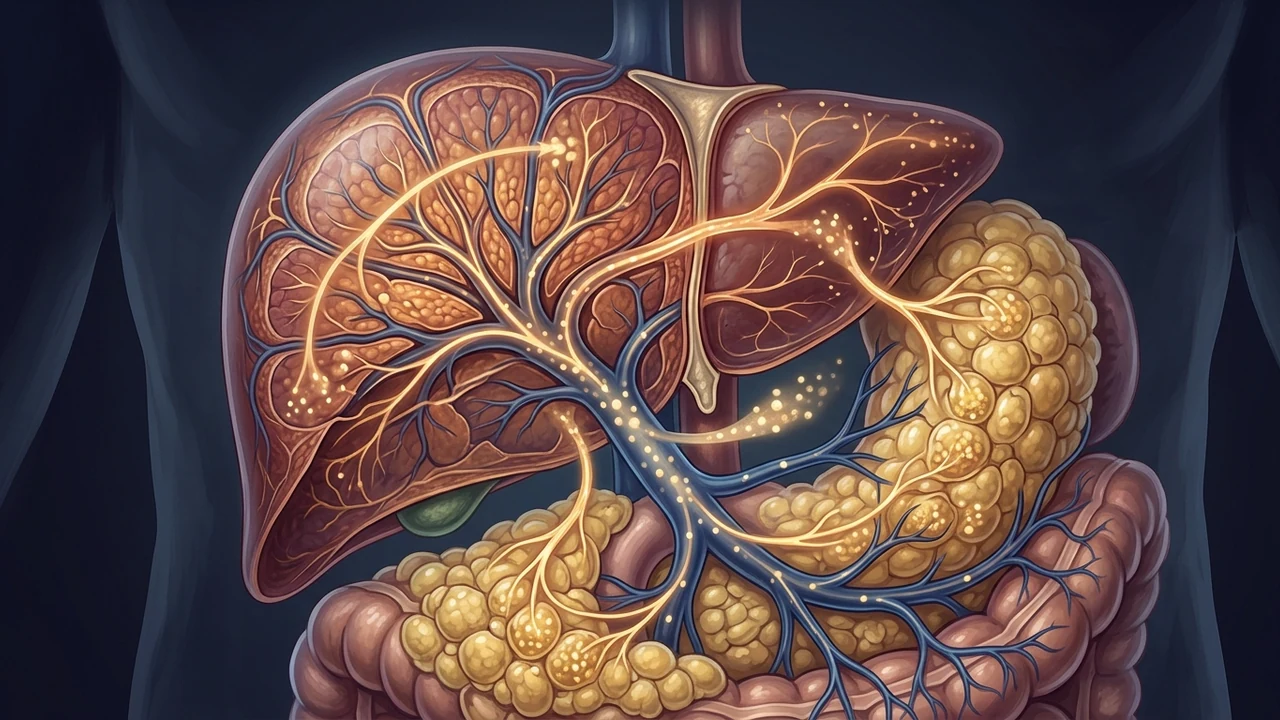
1. The Priority of Hepatic Acetate Clearance
When alcohol (ethanol) enters the bloodstream, the liver treats it not as a nutrient, but as a toxic xenobiotic that must be cleared immediately. Hepatocytes utilize the enzymes Alcohol Dehydrogenase (ADH) and Aldehyde Dehydrogenase (ALDH) to metabolize ethanol into acetaldehyde, and subsequently into acetate.
This detoxification process dramatically shifts the intracellular redox state, skyrocketing the NADH/NAD+ ratio inside liver cells. High NADH signals the liver that abundant energy is present, which completely paralyzes the enzyme Carnitine Palmitoyltransferase-1 (CPT-1)—the primary transporter required for fatty acids to enter mitochondria for beta-oxidation. As a consequence, whole-body fat burning drops by as much as 73% for several hours following consumption. To explore the broader systemic barriers to abdominal fat loss, read our foundation guide on how alcohol triggers nocturnal cortisol and belly fat.
2. De Novo Lipogenesis: Turning Ethanol Byproducts into Visceral Fat
Because beta-oxidation is paralyzed and acetate cannot be fully oxidized in the Krebs cycle, the excess acetyl-CoA generated from alcohol is routed into de novo lipogenesis (DNL). The liver begins packaging these newly synthesized fatty acids into triacylglycerols.
Because the liver is anatomically drained by the hepatic venous system and connected via the splanchnic network to the mesenteric and omental circulation, these newly synthesized triglycerides are predominantly deposited right into the visceral fat depots that surround the abdominal organs. This is the exact biochemical genesis of the classic metabolic "beer belly"—a hard, protruding abdomen filled with deep visceral fat rather than soft subcutaneous tissue.
3. The 3:00 AM Hypoglycemic Cortisol Rebound
Alcohol initially acts as a central nervous system depressant by allosterically modulating GABA-A receptors, leading many people to mistakenly believe it is a "sleep aid." However, alcohol's metabolic breakdown in the middle of the night wreaks havoc on autonomic sleep architecture:
- Inhibition of Hepatic Gluconeogenesis: The elevated NADH/NAD+ ratio prevents the liver from converting pyruvate, lactate, and glycerol into glucose. As hepatic glycogen stores deplete during the night, blood sugar begins a steep downward slide.
- The Emergency Adrenal Counter-Regulatory Surge: In response to dropping nocturnal blood sugar, the brain perceives an existential threat to cerebral glucose supply. Between 2:00 AM and 4:00 AM, the brainstem and pituitary trigger a massive emergency release of epinephrine (adrenaline) and cortisol.
- Sudden Tachycardia & Parasympathetic Collapse: The patient jolts awake with a racing heart, sweating, and high alertness. Slow-wave restorative sleep is permanently truncated, and Heart Rate Variability (HRV) collapses to single digits.
4. Comparison Table: Sedation vs. Natural Restorative Sleep
| Sleep Parameter | Natural Non-Alcoholic Sleep | Alcohol-Induced Sedation (1-2 Drinks) |
|---|---|---|
| Stage 3/4 Slow-Wave Sleep (SWS) | 18% – 25% of total night; steady | Artificially compressed in early night, fragmented later |
| Nocturnal Growth Hormone Pulse | Robust, high-amplitude pulse at sleep onset | Suppressed by up to 70% via elevated hepatic cortisol |
| Heart Rate Variability (RMSSD) | High vagal parasympathetic dominance (> 40ms) | Severe vagal withdrawal; sympathetic overdrive (< 18ms) |
| Blood Glucose Stability | Smooth, steady overnight glycemic baseline | Nocturnal hypoglycemia triggering 3 AM adrenal spike |
| Fatty Acid Beta-Oxidation | High; mobilizes stored visceral fat | Inhibited by 73%; drives de novo lipogenesis |
5. Cortisol Awakening Response (CAR) Disruption
Under normal circadian regulation, the Cortisol Awakening Response (CAR) produces a sharp, transient 50% rise in cortisol within 30 to 45 minutes of waking to promote alertness, followed by a steady diurnal decline. Alcohol flattens and distorts this curve:
Because cortisol surged prematurely at 3:00 AM to rescue blood sugar, morning waking cortisol is often exhausted and blunted, leaving the individual with profound brain fog, fatigue, and intense cravings for refined carbohydrates. Simultaneously, baseline evening cortisol remains pathologically elevated, creating the dreaded "tired and wired" state that prevents natural sleep the following night.
6. The Clinical Protocol to Mitigate Alcohol's Metabolic Damage
For individuals who choose to consume alcohol, implementing strict physiological counter-measures minimizes the visceral fat storage cascade:
- The 4-Hour Buffer Rule: Never consume alcohol within 4 hours of bedtime. This allows the liver to complete the majority of acetate clearance and alcohol dehydrogenase metabolism while you are still awake and upright, preventing the 3:00 AM hypoglycemic surge.
- Pre-Bed Complex Glycogen Priming: Consume a small serving of complex, slow-digesting carbohydrates paired with fat (e.g., half an avocado or a spoonful of raw almond butter) before sleep to stabilize hepatic glycogen and blunt the midnight adrenaline spike.
- Electrolyte & Aldosterone Support: Alcohol suppresses antidiuretic hormone (ADH/vasopressin), leading to severe nocturnal hypovolemia and magnesium loss. Supplement with 400 mg of bioavailable magnesium bisglycinate and 500 mg of sodium electrolytes before bed.
- Targeted Vagal Neuromodulation: Practice 10 minutes of exhalation-focused physiological sighs (2 rapid inhales through the nose, long slow exhalation through the mouth) upon waking to restore parasympathetic vagal brake authority over the heart.