
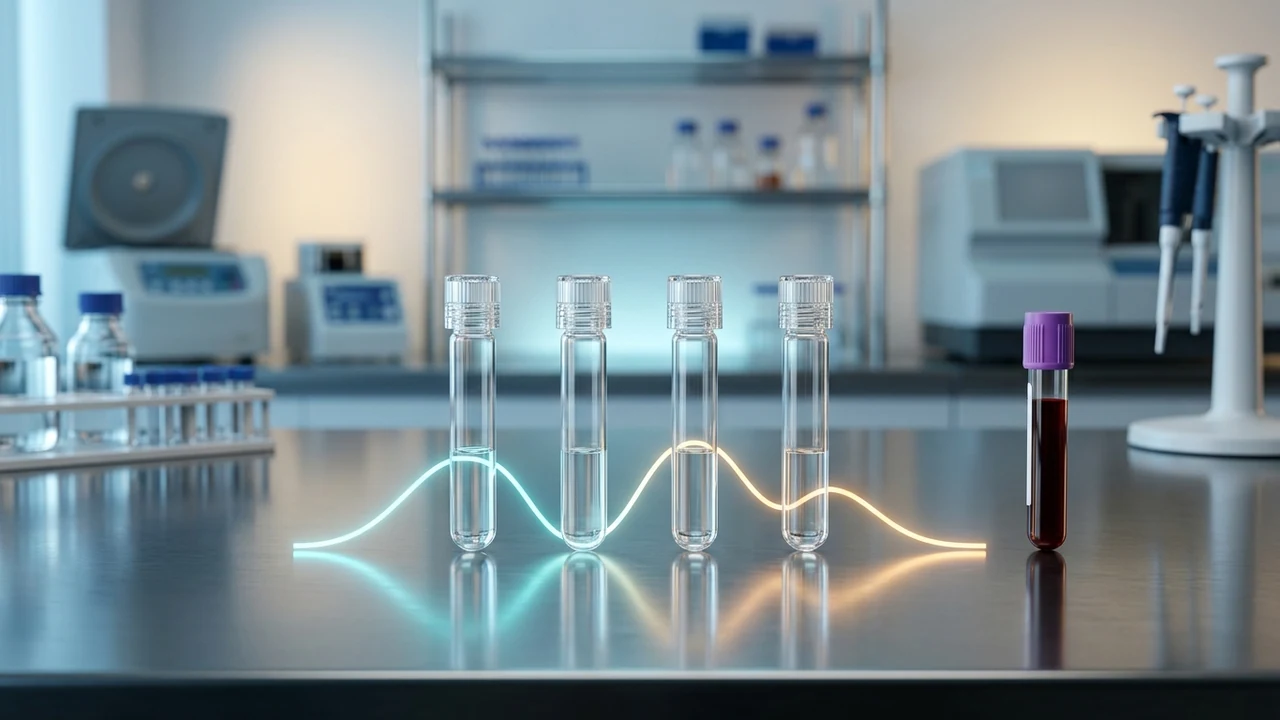
1. The Fatal Flaw of the Single Morning Blood Draw
When a patient visits a conventional physician complaining of chronic exhaustion and stubborn abdominal weight gain, standard protocol is to order an 8:00 AM fasting serum cortisol test. If the result lands anywhere within the enormous standard laboratory reference range (typically 6.0 to 18.0 mcg/dL), the patient is told their adrenal function is "completely normal."
This diagnostic conclusion is fundamentally flawed for two critical physiological reasons:
- Free vs. Bound Hormone: Approximately 90% to 95% of cortisol in blood is bound to Corticosteroid-Binding Globulin (CBG) and albumin. Bound cortisol is biologically inert—it cannot pass through cell membranes to bind glucocorticoid receptors. A serum blood draw measures total cortisol, completely obscuring how much active free hormone is actually acting on metabolic tissues.
- The Snapshot Fallacy: Cortisol is released in episodic, ultradian pulses and follows a dynamic 24-hour circadian curve. A single morning blood draw captures one fleeting second of the day, revealing nothing about the rate of morning rise, afternoon clearance, or nocturnal recovery. To understand how to interpret hormonal weight resistance clinically, explore our diagnostic monograph on clinical testing for high cortisol and visceral fat.
2. The Superiority of 4-Point Salivary Cortisol Testing
Salivary hormone testing revolutionized clinical neuroendocrinology by providing a non-invasive method to evaluate free, biologically active steroid hormones across the full diurnal cycle:
Steroid hormones diffuse freely from capillaries into salivary gland acinar cells via passive intracellular diffusion. Enzymes in saliva do not alter cortisol, and protein-bound CBG is far too large to pass into saliva. As a result, salivary cortisol correlates directly with the free, unbound, active hormone that interacts with glucocorticoid receptors in visceral adipose tissue and the brain.
3. The 4 Critical Daily Time Points & Normative Ranges
A comprehensive functional cortisol evaluation requires mapping four strategic time points across the 24-hour circadian cycle:
| Collection Time Point | Physiological Significance | Optimal Functional Range (Salivary Free) |
|---|---|---|
| 1. Waking (Within 5 min) | Basal awakening baseline; sets the circadian rhythm | 12.0 – 22.0 nmol/L |
| 2. Morning +30 to +45 min (CAR) | Cortisol Awakening Response; tests hippocampal/HPA resilience | 18.0 – 32.0 nmol/L (50% – 75% rise above waking) |
| 3. Afternoon (12:00 – 1:00 PM) | Midday metabolic baseline; reflects stress tolerance | 5.0 – 10.0 nmol/L |
| 4. Evening / Bedtime (10:00 PM) | Nocturnal parasympathetic transition; permits deep sleep | 1.0 – 3.5 nmol/L (must drop to baseline floor) |
4. The 3 Classic Dysregulated Cortisol Curves That Freeze Weight Loss
When analyzing 4-point salivary or dried urine (DUTCH) test results, patients with stubborn belly fat almost universally display one of three pathological diurnal curve patterns:
- The "Inverted / Reversed" Curve: Waking cortisol is abnormally low (flat morning baseline), but evening cortisol fails to drop, spiking high at 10:00 PM. The patient feels exhausted all day, but experiences sudden alertness at bedtime. High nocturnal cortisol completely inhibits slow-wave sleep and locks visceral fat cells in storage mode all night.
- The "Exhausted / Flattened" Curve: Cortisol levels are chronically depressed below the lower reference range at all four points, with zero Cortisol Awakening Response. This represents advanced allostatic overload (cellular cortisol resistance). The body is in a state of severe energy conservation, down-regulating thyroid conversion and metabolic rate to survive.
- The "Monotonically High" Curve: Cortisol remains pinned above the upper limit morning, noon, and night. This state of severe hypercortisolemia accelerates visceral fat deposition, drives muscle proteolysis, and causes rapid progression toward metabolic syndrome.
5. The Cortisol Awakening Response (CAR): The Ultimate Resilience Metric
The Cortisol Awakening Response (CAR) is a distinct neurobiological phenomenon triggered by the transition from sleep to waking. Light entering the retina stimulates the suprachiasmatic nucleus (SCN), which signals the hippocampus and adrenal glands to produce a sharp, transient surge in cortisol within 30 to 45 minutes of eyes opening.
The CAR acts as a biological "mini-stress test" that reveals how well the hippocampus can regulate the adrenal glands. A blunted or absent CAR indicates severe hippocampal burnout, while an exaggerated CAR indicates acute, unmanageable psychological stress. Both extremes severely impair insulin sensitivity and visceral lipolysis throughout the subsequent day.
6. How to Prepare for an Accurate Salivary or Urinary Test
To avoid false positives or skewed readings on your diurnal cortisol panel, adhere strictly to these clinical collection protocols:
- No Caffeine or Stimulants on Collection Day: Caffeine stimulates the adrenal medulla and cortex, artificially elevating salivary cortisol readings by up to 40%.
- Avoid Vigorous Exercise: Do not perform strenuous workouts on the day of testing or the evening prior, as acute exercise induces temporary ACTH spikes.
- Rinse Mouth with Cold Water: Do not brush your teeth with toothpaste or floss within 30 minutes of collection, as microscopic gingival bleeding introduces blood into saliva, falsely elevating free cortisol readings.
- Maintain a Normal Daily Routine: Do not take a vacation or choose an unusually relaxing day to take the test. The goal is to capture your nervous system's real-world response to your typical daily environment.