
1. The Paralyzed Stomach: Defining Gastroparesis
In a healthy gastrointestinal tract, the human stomach is a muscular dynamic pump: it receives ingested food, churns it with hydrochloric acid and pepsin into liquid chyme, and precisely meters it through the pyloric sphincter into the duodenum within 90 to 120 minutes.
In Gastroparesis, this motor pump fails. Food remains trapped in the gastric lumen for four, six, or even twelve hours. Trapped meals ferment, produce noxious gases, trigger severe gastroesophageal reflux, and form solid indigestible masses known as bezoars.
While frequently misdiagnosed as functional dyspepsia, irritable bowel syndrome, or an eating disorder, gastroparesis is fundamentally an autonomic neurological disease governed by failure of the vagus nerve.
2. The Vagal Motor Circuit: Receptive Relaxation vs. Antral Grinding
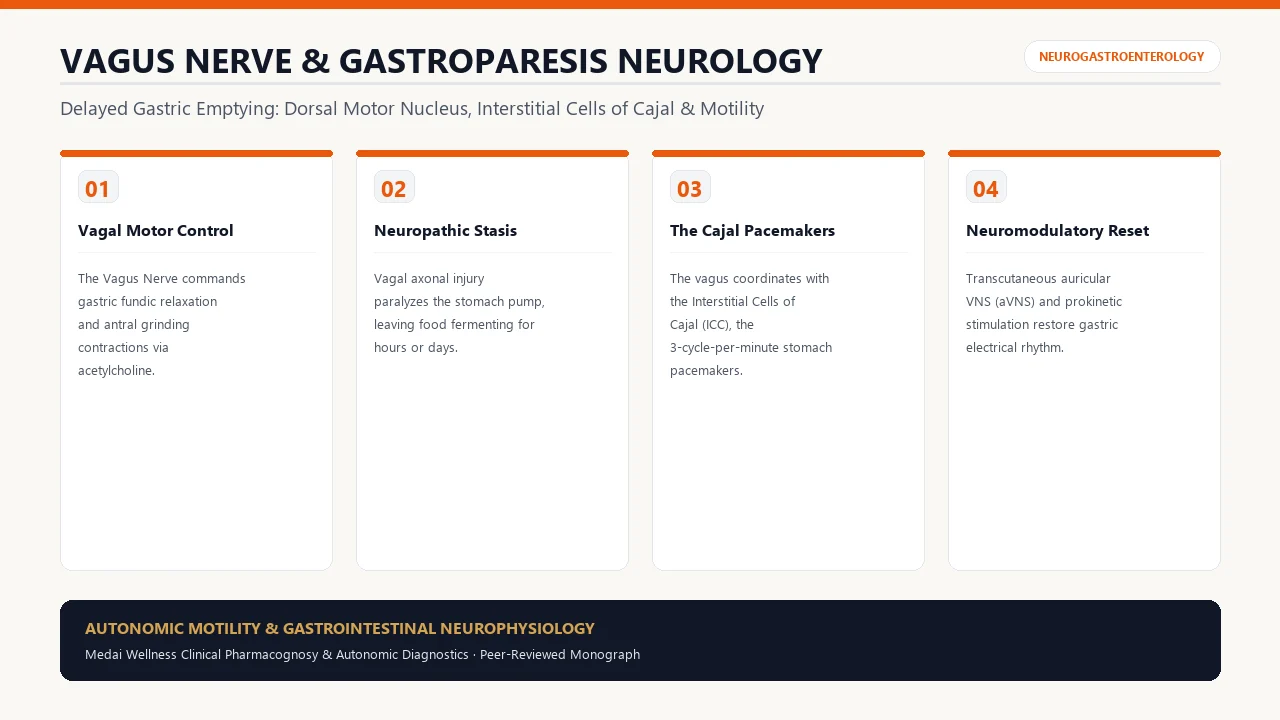
The vagus nerve (Cranial Nerve X) coordinates two essential phases of gastric digestion:
- Receptive Fundic Relaxation: As food enters the esophagus, vagal inhibitory fibers release nitric oxide (NO) and Vasoactive Intestinal Peptide (VIP), prompting the proximal fundus of the stomach to stretch and relax, accommodating up to 1.5 liters of volume without increasing internal intragastric pressure. When vagal fibers are damaged, this relaxation fails, causing immediate, excruciating fullness after just three bites of food (early satiety).
- Antral Milling and Pyloric Gating: Vagal excitatory motor fibers release acetylcholine onto muscarinic \(M_3\) receptors, generating powerful peristaltic crushing waves that grind solid food down to particles smaller than 2 millimeters before opening the pylorus.
3. The Interstitial Cells of Cajal (ICC): The Stomach's Electrical Pacemaker
Just as the heart possesses the Sinoatrial node to set its electrical rhythm, the stomach possesses specialized pacemaker cells embedded within its muscular layers: the Interstitial Cells of Cajal (ICC).
The ICC generate an intrinsic basal electrical rhythm of 3 slow waves per minute. The vagus nerve acts as the master conductor of this electrical orchestra. When vagal tone is severed or blunted, the ICC undergo apoptosis and loss of cellular networks, causing gastric dysrhythmias (tachygastria or bradygastria) that completely halt peristalsis.
4. Primary Etiologies: Post-Viral, Diabetic, and Dysautonomia
Gastroparesis stems from three predominant clinical pathways:
| Etiology Type | Underlying Neurological Mechanism | Clinical Characteristics |
|---|---|---|
| Post-Viral Vagal Neuropathy | Viral infection (EBV, COVID-19, CMV) triggers autoimmune cross-reactivity against vagal axonal fibers. | Abrupt onset following flu-like illness; high potential for recovery over 12–24 months with neuro-rehabilitation. |
| Diabetic Autonomic Neuropathy (DAN) | Chronic hyperglycemia causes microvascular endoneurial ischemia and sorbitol accumulation, damaging vagus nerve trunks. | Slow progressive onset in long-standing Type 1 or Type 2 diabetes; frequently accompanied by cardiovascular dysautonomia. |
| Dysautonomia / POTS-Linked | Impaired visceral splanchnic blood flow and autoimmune anti-ganglionic acetylcholine receptor antibodies. | Commonly seen in young women with joint hypermobility (Ehlers-Danlos) and POTS. |
5. Clinical Symptom Profile and Diagnostic Scintigraphy
The clinical presentation of gastroparesis is marked by a classic symptom cluster:
- Early satiety (feeling painfully full after a few ounces of food).
- Persistent postprandial nausea and episodic vomiting of undigested food consumed hours earlier.
- Severe upper abdominal bloating and epigastric burning pain.
- Fluctuating blood glucose in diabetics (unpredictable delays in carbohydrate absorption).
- Diagnostic Gold Standard: The 4-Hour Gastric Emptying Scintigraphy (GES) test, where the patient consumes a radiolabeled scrambled egg meal. Retention of > 10% of the meal in the stomach at 4 hours confirms the diagnosis.
6. Clinical Protocols to Restore Gastric Vagal Motility
To rehabilitate the vagal-gastric circuit:
- Transcutaneous Auricular VNS (aVNS): Stimulating the cymba conchae of the left ear for 20 minutes before meals activates the dorsal motor nucleus, increasing antral contraction amplitude and accelerating gastric emptying.
- Standardized Ginger Root (Gingerols): 1,000–1,500 mg of standardized ginger extract acts on 5-HT3 and cholinergic receptors, stimulating gastric emptying velocity naturally without pharmaceutical side effects.
- Small, Low-Fiber, Pureed Meals: Dense insolube plant fiber and high fat significantly delay gastric emptying. Shifting toward nutrient-dense smoothies, pureed soups, and easily digested proteins reduces mechanical stomach workload.
Frequently Asked Questions
Why does gastroparesis cause severe panic attacks?
Because 80% to 90% of vagus nerve fibers are sensory afferents transmitting signals from the stomach upward to the brainstem. Gastric distension and stasis fire continuous warning signals into the nucleus tractus solitarius and amygdala, triggering intense biological panic and dread.
Can vagus nerve damage heal over time?
Yes. Peripheral autonomic nerves possess neuroplastic capacity to regenerate (at an average rate of 1 mm per day). In post-viral gastroparesis, clinical studies document substantial symptomatic recovery in over 50% of patients within 18 to 24 months with proper nutritional and vagal therapy.
Are prokinetic medications like metoclopramide safe?
While pharmaceuticals like metoclopramide (Reglan) stimulate dopamine D2 receptors to force gastric emptying, they carry black-box FDA warnings for irreversible tardive dyskinesia. Non-pharmacological vagal stimulation and natural prokinetics are prioritized as first-line therapies.