
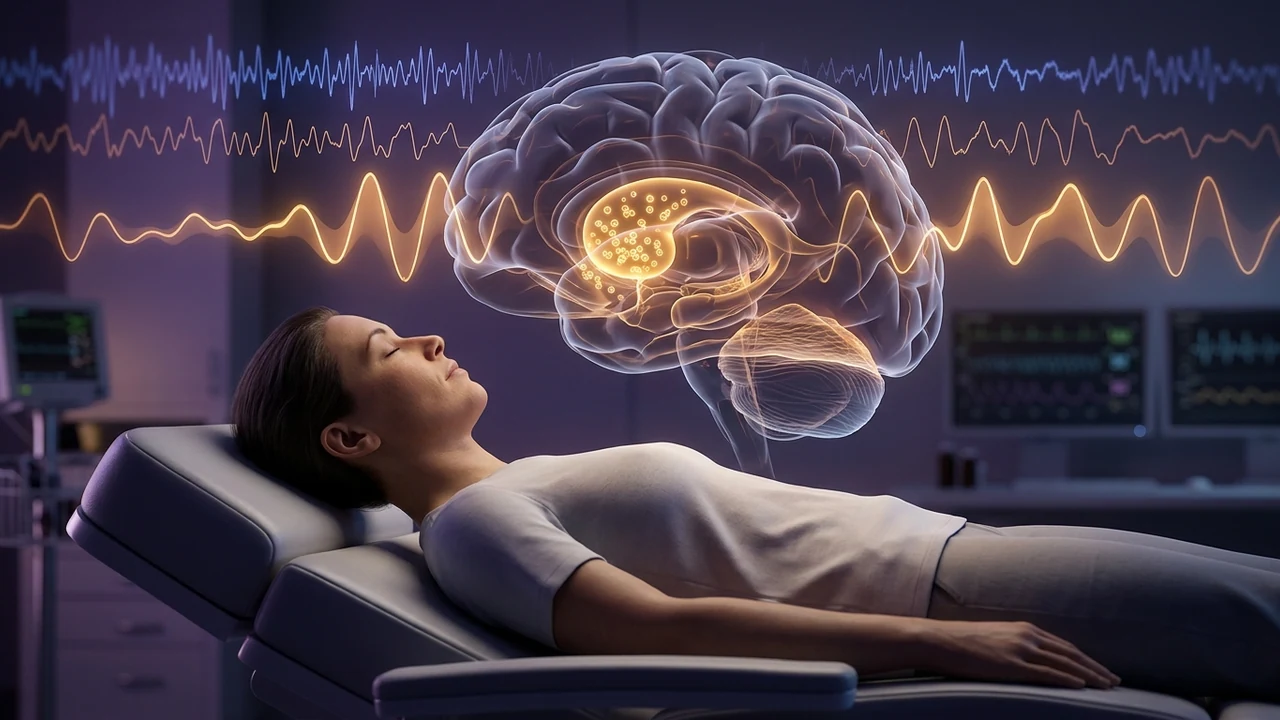
The Science of Frequency-Filtered Vocal Music
Standard musical recordings contain a wide acoustic spectrum ranging from deep bass rumbles (20 Hz - 200 Hz) to shimmering high-frequency overtones (8,000 Hz - 20,000 Hz). In a healthy, well-regulated nervous system, the brain effortlessly distinguishes between relevant foreground sounds (such as a friend's voice) and background room noise.
However, when a patient is stuck in chronic sympathetic hyperarousal or dorsal vagal freeze, the middle ear's stapedius muscle loses its tonic contraction. As a consequence, low-frequency ambient sounds pass through the ossicles uninhibited, masking the frequencies of human speech. The SSP's proprietary algorithm directly counteracts this by passing vocal-rich popular music through dynamic variable acoustic filters:
- Low-Cut Filtering: The algorithm aggressively cuts frequencies below 500 Hz to 800 Hz, removing the predatory acoustic rumble that keeps the amygdala on high alert.
- Formant Amplification (1,000 Hz - 4,000 Hz): The algorithm accentuates the exact acoustic frequencies corresponding to human female and male vocal formants, mimicking the prosodic cadence of a parent soothing an infant.
- Modulated Dynamic Sweeps: Rather than holding a static filter, the software continuously modulates the frequency envelope, sweeping between narrower and wider bandwidths. This forces the middle ear ossicular chain to continuously adapt, functioning as resistance physical therapy for the microscopic stapedius muscle.
The Neural Circuit: From Middle Ear to Nucleus Ambiguus
The therapeutic impact of acoustic filtering extends far beyond the ear canal. The neural circuit linking auditory processing to visceral calming involves a tight reflex loop:
Acoustic sound waves enter the cochlea, generating action potentials in the auditory nerve (Cranial Nerve VIII) that project to the cochlear nuclei and superior olivary complex. These auditory centers share monosynaptic connections with the facial motor nucleus (CN VII) and the trigeminal motor nucleus (CN V), which control middle ear muscle tension.
Crucially, because the facial motor nucleus is functionally unified with the Nucleus Ambiguus (CN X) in the brainstem, exercising the stapedius muscle sends reciprocal afferent signals that trigger the release of acetylcholine at the cardiac sinoatrial node. This is why patients undergoing filtered acoustic therapy experience not only sharper hearing, but spontaneous deceleration of resting heart rate, deepened respiration, and marked relief from chronic somatic freeze. For patients navigating profound autonomic dissociation, read our detailed analysis on recovering from dorsal vagal shutdown.
| Acoustic Stage | Frequency Bandwidth | Primary Physiological Mechanism | Expected Patient Experience |
|---|---|---|---|
| Hour 1 - 2 (Gentle Filtering) | Wide-spectrum vocal bands (800 - 5,000 Hz) | Desensitization of hyperactive acoustic startle reflexes | Mild calm, feeling present, softening of facial tension |
| Hour 3 - 4 (Maximal Modulation) | Narrow-band dynamic vocal sweeps (1,000 - 3,500 Hz) | Intense micro-resistance exercise for the stapedius muscle | Possible emotional processing, tiredness, autonomic shifts |
| Hour 5 (Integration) | Gradual expansion back to wider acoustics | Consolidation of resting stapedius tone and social engagement | Enhanced vocal prosody, clear speech discernment, calm focus |
Clinical Indications: Who Needs Acoustic Filtering?
Published clinical trials by Porges, Kolacz, and colleagues demonstrate that filtered auditory interventions produce significant therapeutic outcomes across several challenging autonomic presentations:
- Autism Spectrum & Sensory Overload: Over 60% of autistic individuals suffer from painful auditory hypersensitivity. Clinical trials demonstrated a statistically significant reduction in auditory defensiveness and improved spontaneous social interaction following 5 hours of filtered music.
- PTSD & Trauma Hyperarousal: Traumatized nervous systems are locked into low-frequency threat detection. Restoring the high-frequency vocal filter enables patients to feel safe enough to engage in somatic and relational therapy. Learn more in our guide to clinical polyvagal theory applications.
- Post-Concussion & Dysautonomia: Mild traumatic brain injury often disrupts brainstem sensory gating. Filtered acoustics assist in recalibrating central auditory pathways.
Practical Considerations and Home Implementation
Because filtered acoustic therapy can evoke emotional processing or autonomic shifts as defensive armor softens, clinical administration requires careful titrating:
- Over-Ear Headphones Required: Earbuds or open-back headphones should never be used, as ambient room noise will bleed in and cancel the calibrated filtering. Closed-back, circumaural headphones that seal around the ear are mandatory.
- Titration Speed: Highly sensitive patients should not consume 60 minutes in a single sitting. Titrating at 10 to 15 minutes per day allows the autonomic nervous system to integrate the shifts without overwhelming the patient.