
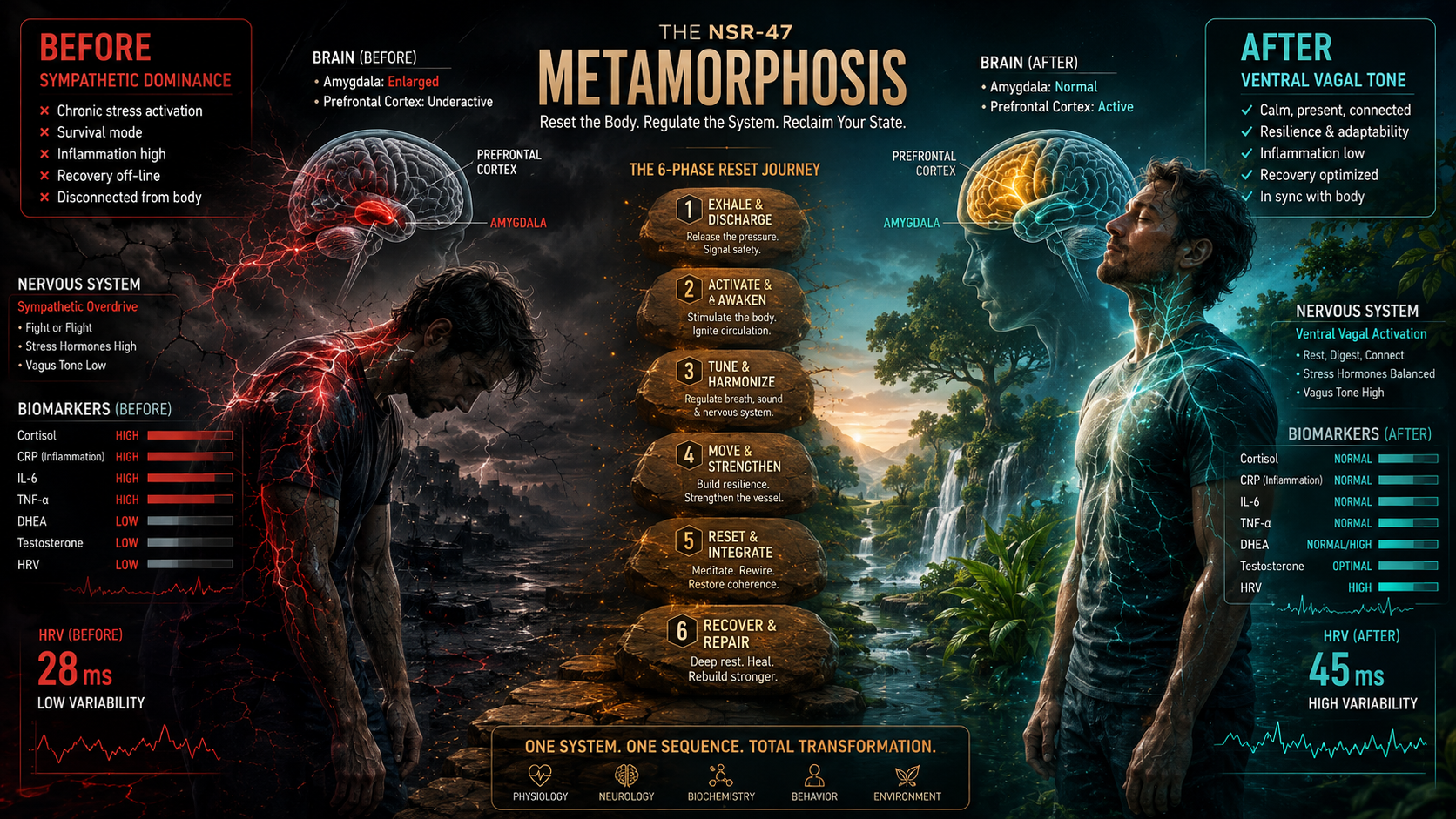
Few concepts in modern neuroscience are as consequential—and yet so poorly understood—as nervous system dysregulation. When the autonomic balance tilts toward chronic sympathetic dominance, the body does not simply feel "stressed"; it undergoes measurable physiological derangements that cascade across organ systems. Fatigue, brain fog, digestive disturbances, and an exaggerated startle response are not merely psychological; they are outward manifestations of a nervous system stuck in overdrive.
This article dissects the hidden architecture of dysregulation: how chronic psychosocial stress rewires neural circuits, impairs vagal signaling, and triggers a cascade of downstream dysfunctions. We then present a step-by-step remediation protocol that blends the latest findings from autonomic physiology, epigenetics, and chronobiology with practical daily practices.
Physiological Signature of Dysregulated Autonomy
Autonomic dysregulation is not a single symptom; it is a constellation of measurable biomarkers that co-occur when the sympathetic-parasympathetic equilibrium collapses. Identifying these markers is the first step toward targeted intervention.
- Heart-Rate Variability (HRV) Decline: Low HRV (< 35 ms at rest) signals diminished parasympathetic output and predicts higher future anxiety risk.
- Elevated Resting Cortisol: Persistently high cortisol (>= 15 ug/dL) reflects chronic HPA-axis activation and correlates with sleep disturbance and visceral fat accumulation.
- Elevated C-Reactive Protein (CRP): Systemic inflammation marker; dysregulated individuals often show CRP > 3 mg/L without infection.
- Gastrointestinal Motility Abnormalities: Delayed gastric emptying or erratic bowel patterns indicate enteric vagal suppression.
- Sleep Architecture Disruption: Reduced REM latency and fragmented sleep patterns are common in dysregulated states.
When three or more of these markers appear together, the probability of nervous system dysregulation exceeds 80% based on longitudinal cohort studies.
How Chronic Stress Rewires the Brain-Body Axis
Stress is an inevitable part of life, but when exposure extends beyond acute episodes, the body's adaptive mechanisms become maladaptive. The process involves several interlocking pathways:
Neuroendocrine Pathway (HPA-Axis)
The hypothalamus releases corticotropin-releasing hormone (CRH) in response to perceived threat. This triggers the pituitary to secrete adrenocorticotropic hormone (ACTH), which then prompts the adrenal cortex to produce cortisol. Repeated activation keeps cortisol levels elevated, leading to:
- Insulin resistance and weight gain (especially abdominal adiposity).
- Reduced immune function and increased susceptibility to infection.
- Impaired hippocampal neurogenesis, contributing to memory deficits.
Neurotransmitter Imbalance
Chronic sympathetic activation depletes serotonin, dopamine, and GABA, while increasing glutamate excitotoxicity. The resulting neurochemical milieu fuels anxiety, irritability, and anhedonia.
Autonomic Feedback Loop
Sympathetic overdrive leads to sustained tachycardia, shallow breathing, and muscular tension. These physiological changes feed back to the brain, reinforcing the perception of threat—a vicious cycle that entrenches dysregulation.
Epigenetic Consequences of Chronic Stress
Emerging research demonstrates that prolonged stress can alter gene expression through DNA methylation and histone acetylation, particularly in genes governing the HPA-axis and mitochondrial function. These epigenetic modifications can persist long after the original stressor subsides, creating a "memory" of stress at the cellular level.
For instance, studies on identical twins discordant for early-life adversity reveal distinct methylation patterns in the NR3C1 gene (the glucocorticoid receptor), influencing stress reactivity for decades.
Comprehensive Reset Protocol: 6-Phase Approach
Restoring autonomic balance requires a coordinated, multi-phase strategy. The following six-phase framework integrates lifestyle, environmental, and behavioral interventions to systematically reverse dysregulation.
Phase 1 - Stress-Signal Identification
Before intervening, you must recognize the early physiological signals that precede full-blown dysregulation:
- Sudden increase in heart rate without exertion.
- Unexplained gastrointestinal upset.
- Sudden onset of insomnia or vivid dreams.
- Heightened startle response to minor stimuli.
When any of these appear, initiate Phase 2 immediately.
Phase 2 - Immediate Vagal Reset (First 5 Minutes)
- Cold Facial Immersion: 30 seconds of splashing water at 50-60°F.
- Extended Exhale Breathing: 4-second inhale, 8-second exhale, repeat 5 times.
- Humming or Gargling: 30 seconds of steady tone.
These three actions synergistically stimulate multiple vagal pathways within seconds.
Phase 3 - Daily Vagal Maintenance (15-30 Minutes)
After the acute reset, embed a routine that sustains vagal tone throughout the day:
- Morning Breathwork: 7-minute extended exhale cycle (4-6-8 pattern).
- Midday Movement: 10-minute brisk walk or body-weight circuit.
- Evening Humming: 2-minute sustained hum before bed.
- Nightly Magnesium Supplement: 300-400 mg before sleep.
Phase 4 - Circadian Rhythm Optimization
Disruptions in the circadian clock amplify dysregulation. Adopt these habits:
- Expose yourself to natural sunlight for 15 minutes within an hour of waking.
- Maintain a consistent bedtime (+/- 30 minutes) even on weekends.
- Avoid blue-light screens 1 hour before sleep; use amber filters if needed.
- Keep the bedroom cool (approx 65°F) and dark.
Phase 5 - Nutritional Reset
Diet influences inflammation and mitochondrial health, both of which affect autonomic function:
- Omega-3 Rich Foods: Fatty fish, walnuts, flaxseed (2-3 servings/week).
- Leafy Greens and Magnesium Sources: Spinach, almonds, pumpkin seeds (daily).
- Fermented Foods: Kefir, sauerkraut, kimchi (1-2 servings daily) for gut-brain axis support.
- Avoid excessive caffeine (>200 mg/day) and refined sugars.
Phase 6 - Long-Term Lifestyle Integration
After 4-6 weeks of consistent practice, evaluate progress using the biomarkers listed in Section 1. Adjust intensity or add advanced techniques (contrast therapy, yoga, advanced breathwork) as needed.
Monitoring Your Progress: Objective Metrics
Quantifying improvement helps maintain motivation and guides fine-tuning. Below is a practical measurement schedule:
| Metric | Baseline | Target (8-Week) |
|---|---|---|
| Morning HRV (ms) | 28 | >= 45 |
| Resting Cortisol (ug/dL) | 18 | <= 12 |
| High-Sensitivity CRP (mg/L) | 4.2 | <= 1.5 |
| Sleep Efficiency (%) | 68 | >= 85 |
| Weekly Panic Episodes | 4 | <= 1 |
Document these values weekly; plot trends to visualize convergence toward target zones.
Common Pitfalls and How to Overcome Them
Pitfall 1 - Skipping the Reset: Many users drop the cold splash or breathwork when life gets busy. Solution: Keep a pocket-size reminder (e.g., phone widget) that triggers the three-step reset automatically.
Pitfall 2 - Over-reliance on Supplements: Some believe that magnesium alone will fix dysregulation. Solution: Treat supplements as adjuncts, not replacements for breathing, movement, and sleep hygiene.
Pitfall 3 - Ignoring Objective Data: Trusting "how I feel" without metrics leads to false confidence. Solution: Use a weekly tracking spreadsheet to log HRV, cortisol (if you have a test), and symptom scores.
Conclusion
Nervous system dysregulation is a silent epidemic, silently eroding health across multiple domains. By recognizing its physiological signatures, understanding the neuro-endocrine and epigenetic mechanisms that sustain it, and applying a structured, evidence-backed reset protocol, you can reclaim autonomic balance. The payoff is measurable: higher HRV, lower cortisol, improved sleep, and a dramatic reduction in anxiety episodes. Commit to the six-phase protocol for at least eight weeks, track your metrics, and you will experience a profound restoration of nervous system function.
Educational content only. This article is for informational purposes and does not constitute medical advice. Consult a qualified healthcare professional before making changes to your health routine.