
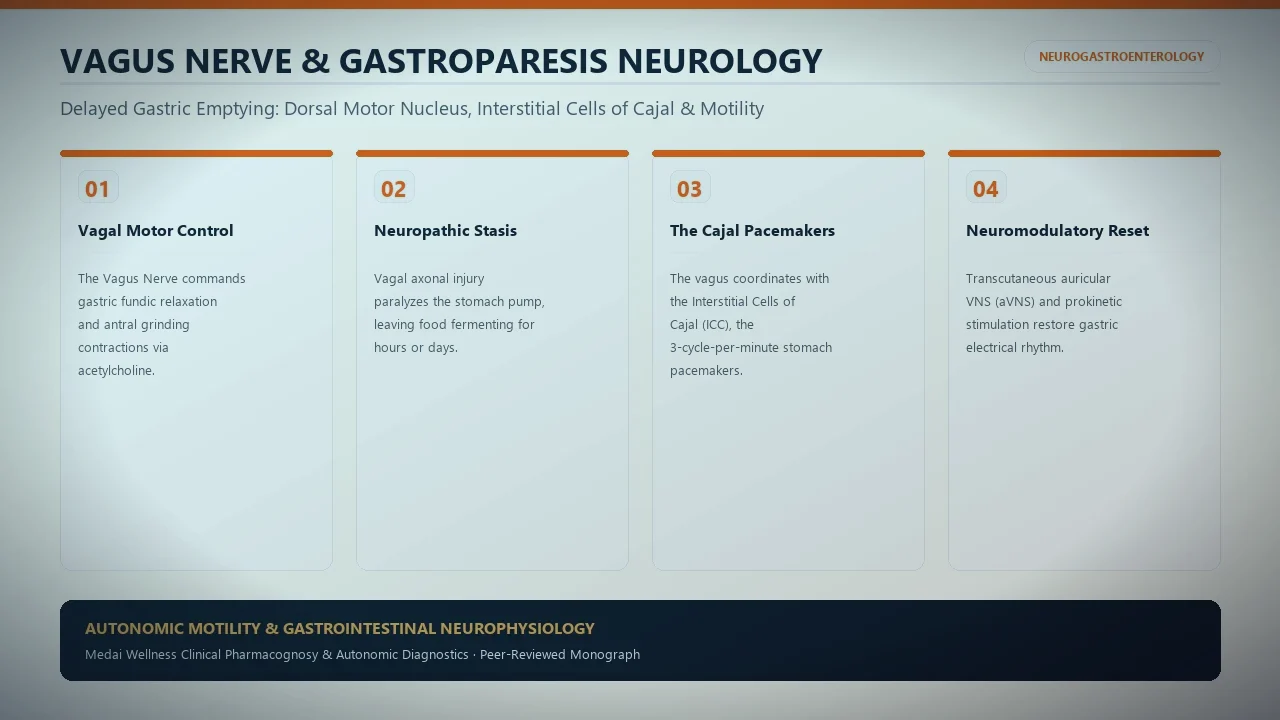
1. What Is Post-Viral Enteric Neuropathy? The Aftermath of Infection
Gastroparesis is a clinical syndrome characterized by objectively delayed gastric emptying of solids in the complete absence of mechanical gastric outlet obstruction. While historically attributed predominantly to longstanding Type 1 or Type 2 diabetes mellitus, post-infectious and post-viral gastroparesis now accounts for approximately 20% to 30% of all diagnosed cases.
Common triggering pathogens include SARS-CoV-2, Epstein-Barr Virus (EBV), Cytomegalovirus (CMV), Varicella-Zoster Virus (VZV), Norovirus, and Rotavirus. Following infection, the acute pathogen is cleared from the systemic circulation, but an inflammatory autoimmune aftermath lingers within the enteric nervous system (ENS) and the vagus nerve.
2. Pathophysiology: Vagal Ganglionitis and Loss of Cajal Pacemakers
Full-thickness gastric biopsies conducted by the Gastroparesis Clinical Research Consortium (NIDDK GpCRC) have uncovered the cellular pathology underlying post-viral stomach paralysis:
- Myenteric Infiltration (Ganglionitis): CD3+ and CD8+ T-lymphocytes and activated Mac-1 macrophages infiltrate the myenteric plexus between the circular and longitudinal muscle layers, producing localized cytotoxic inflammation.
- Depletion of Interstitial Cells of Cajal (ICC): The pacemaker network suffers dramatic structural depletion. Immunostaining reveals a loss of c-kit (CD117) receptor expression and disruption of gap junctions, extinguishing the stomach’s bioelectrical pacing.
- Loss of Neuronal Nitric Oxide Synthase (nNOS): Inhibitory NANC motor neurons are selectively damaged, abolishing the nitric oxide signal required for pyloric relaxation. The pyloric sphincter clamps down in tonic spasm (pylorospasm), forming a physiological roadblock to gastric emptying.
3. Autoimmune Cross-Reactivity in Dysautonomia and Gastroparesis
Why does the immune system attack the enteric nervous system after a viral infection? The mechanism is molecular mimicry. Viral surface proteins share structural homology with peripheral autonomic nerve receptors.
Specialized neuro-immunology testing in post-viral gastroparesis often reveals circulating autoantibodies:
- Anti-Ganglionic Nicotinic Acetylcholine Receptor (gAChR) Antibodies: Block synaptic transmission across autonomic sympathetic and parasympathetic ganglia.
- Anti-Muscarinic M3 Receptor Antibodies: Directly block acetylcholine from binding to smooth muscle and parietal cells, stopping contractions.
- Anti-Voltage Gated Potassium Channel (VGKC) Complex: Induces hyperexcitability and sensory dysregulation in visceral afferents.
4. Clinical Course: Post-Viral vs. Diabetic Gastroparesis
In our comprehensive clinical guide to gastroparesis and post-viral vagus nerve damage, understanding the prognosis provides profound hope to devastated patients:
| Clinical Characteristic | Post-Viral Enteric Neuropathy | Diabetic Gastroparesis |
|---|---|---|
| Onset Mode | Abrupt, following acute viral/flu-like illness | Slow, insidious progression over 10 to 20 years |
| Histopathology | Inflammatory ganglionitis; viable neuronal architecture | Microvascular ischemia, axonal loss, permanent fibrosis |
| Regenerative Capacity | High (ICC networks and axons can re-sprout) | Low (typically progressive or permanent) |
| Long-Term Resolution | 50% to 70% experience significant clinical recovery | Requires lifelong glycemic and symptom management |
5. Objective Diagnostics: 4-Hour Gastric Emptying and Autonomic Testing
Confirming post-viral gastroparesis requires standardized objective testing:
- 4-Hour Gastric Emptying Scintigraphy (GES): The gold standard. The patient consumes a standardized low-fat, technetium-99m labeled egg white meal. Images taken at 1, 2, 3, and 4 hours quantify retention. Retention of greater than 10% of the meal at 4 hours establishes abnormal delayed emptying.
- Wireless Motility Capsule (SmartPill): Ingestible sensor that measures pH, temperature, and pressure throughout the entire GI tract, identifying multi-segment transit delays.
- Comprehensive Autonomic Reflex Testing: Heart Rate Variability (HRV) deep breathing, Valsalva ratio, and quantitative sudomotor axon reflex testing (QSART) to detect systemic dysautonomia.
6. Neuro-Regenerative Protocols: Stimulating Enteric Nerve Repair
Supporting neuro-regeneration within the enteric nervous system requires targeted biochemical substrates and neuromodulation:
- Alpha-Lipoic Acid (ALA) & Benfotiamine: High-dose ALA (600–1,200 mg daily) and fat-soluble vitamin B1 (benfotiamine 300 mg) reduce axonal oxidative stress and promote microvascular blood flow to peripheral nerves.
- Acetyl-L-Carnitine (ALCAR) & Lion's Mane (Hericium erinaceus): Stimulate nerve growth factor (NGF) synthesis and accelerate peripheral axon sprouting and myelin sheath stabilization.
- Transcutaneous Vagus Nerve Stimulation (taVNS): Delivering 25 Hz auricular electrical stimulation to the left tragus suppresses systemic neuro-inflammation via the cholinergic anti-inflammatory pathway and stimulates dorsal motor nucleus efferent output.
- Dietary Mechanical Accommodation: Small, pureed, low-fat, low-fiber meals consumed 5 to 6 times daily reduce gastric mechanical workload while nerves regenerate.