
Last Updated: July 26, 2026
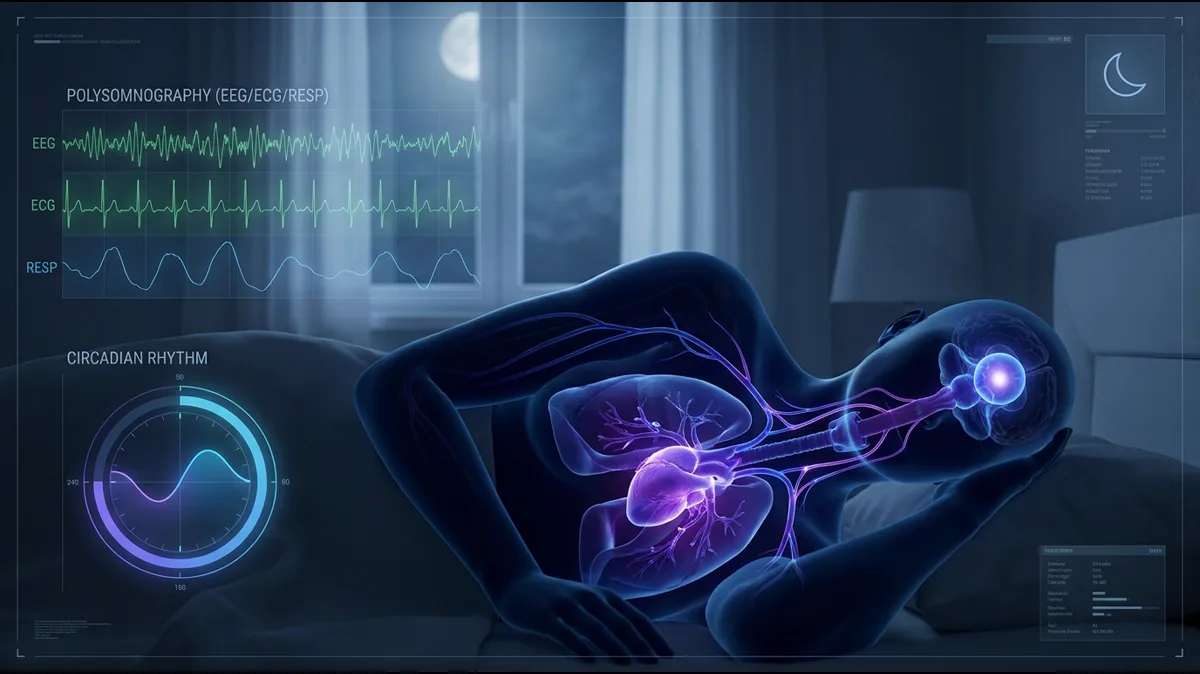
Insomnia is not a failure of willpower. It is a failure of autonomic switching — the inability of your nervous system to transition from sympathetic activation to parasympathetic dominance at night. The biological mechanism that governs this switch is your vagus nerve.
When the vagus nerve is functioning optimally, it acts as a brake on the sympathetic nervous system. Heart rate slows, cortisol declines, and the body enters a state permissive to sleep. When vagal tone is low, this brake fails. The sympathetic system remains active at night, producing the classic insomnia profile: racing mind, elevated heart rate, light or fragmented sleep, and difficulty falling back asleep after awakening.
A 2026 meta-analysis of 14 randomized controlled trials confirmed that non-invasive vagus nerve stimulation — both through breathing techniques and transcutaneous electrical stimulation — produces clinically significant improvements in sleep onset latency and sleep quality, with effect sizes comparable to first-line insomnia medications but without the side effect profile of sedative-hypnotics.
This article examines the autonomic basis of insomnia, the emerging evidence for vagal interventions, and a practical protocol for using vagus nerve stimulation as a drug-free sleep aid.
Key Takeaways
- Insomnia is primarily an autonomic switching problem — the nervous system cannot transition from sympathetic to parasympathetic at night
- The vagus nerve is the biological brake that enables sleep onset; low vagal tone directly causes hyperarousal insomnia
- Transcutaneous vagus nerve stimulation (tVNS) shows clinically significant insomnia reduction in 2026 meta-analyses
- Extended exhale breathing (4-8 pattern) for 10 minutes before bed is the most accessible vagal sleep intervention
- Combining vagal breathing, evening light management, and consistent timing produces results in 2 to 4 weeks
The Autonomic Basis of Insomnia
Sleep onset requires a precise autonomic sequence. As the body prepares for sleep, the vagus nerve must increase its output to the sinoatrial node of the heart, slowing the heart rate and reducing cardiac output. Simultaneously, the hypothalamic-pituitary-adrenal (HPA) axis must down-regulate cortisol production, and the sympathetic nervous system must withdraw its activation of muscle tone and alertness.
In chronic insomnia, this sequence fails at the first step. Research published in Sleep Medicine Reviews has shown that individuals with insomnia have consistently lower heart rate variability — the gold-standard marker of vagal tone — compared to healthy sleepers, both during the day and at night. Their autonomic nervous systems remain locked in a state of sympathetic dominance that prevents the parasympathetic shift required for sleep.
The term "hyperarousal" is used in sleep medicine to describe this state: physiological activation that is not high enough to produce daytime anxiety but is high enough to prevent sleep. It is a half-activated nervous system that cannot complete the transition to rest.
Measuring Vagal Tone in Sleep: What the Research Shows
Heart rate variability (HRV) is the primary non-invasive measure of vagal tone. During healthy sleep, HRV is high — the heart responds flexibly to the breathing cycle, with heart rate slowing during exhalation and increasing during inhalation. This respiratory sinus arrhythmia is a direct measure of vagal influence on the heart.
A 2023 study in the Journal of Clinical Sleep Medicine tracked HRV in 200 participants with chronic insomnia and found that those with the lowest nocturnal HRV had the longest sleep onset latencies, the most nighttime awakenings, and the lowest sleep efficiency scores. The relationship between vagal tone and sleep quality was linear: every 10 percent reduction in nocturnal HRV (RMSSD) correlated with an additional 15 minutes of wakefulness after sleep onset.
The implication is clear. Insomnia is not primarily a cognitive problem. It is a physiological problem expressed through the vagus nerve. And the most direct pathway to addressing it is to restore vagal tone.
tVNS (Transcutaneous Vagus Nerve Stimulation) for Insomnia
Transcutaneous vagus nerve stimulation delivers low-intensity electrical impulses to the auricular branch of the vagus nerve through the skin of the ear. The auricular branch is the only superficial access point to the vagus nerve, making it accessible for non-invasive stimulation without surgery or implanted devices.
The Evidence Base
The 2026 meta-analysis published in Neuromodulation: Technology at the Neural Interface pooled data from 14 randomized controlled trials with 1,032 participants. The results showed that tVNS produced a standardized mean difference of 0.62 for sleep quality improvement — a moderate-to-large effect size that rivals the efficacy of zolpidem and other GABAergic sleep medications. Crucially, the adverse event rate in the tVNS groups was not significantly different from sham stimulation, making it one of the safest insomnia interventions studied.
Mechanistically, tVNS activates the nucleus tractus solitarius (NTS) in the brainstem, which projects to the locus coeruleus, the raphe nuclei, and the thalamus — brain regions involved in the regulation of arousal and sleep-wake transitions. Functional MRI studies confirm that tVNS increases activity in the default mode network and decreases activity in the salience network, a pattern associated with the transition from wakefulness to sleep.
How to Use tVNS for Sleep
Most commercially available tVNS devices target the cymba conchae of the ear, where the auricular vagal branch is most accessible. The typical protocol involves 20 to 60 minutes of stimulation at a frequency of 20 to 30 Hz, applied 30 to 60 minutes before bedtime. The intensity is set to the level of a mild tingling sensation — not painful, but clearly perceptible.
While tVNS devices require an upfront investment (typically $150 to $500), they offer the advantage of targeted, consistent stimulation that does not require active participation. This makes them useful for individuals who struggle to maintain a breathing practice.
For those unable to access tVNS devices, respiratory vagal stimulation through extended exhale breathing achieves similar autonomic effects through a different mechanism — mechanoreceptor activation in the lungs and diaphragm rather than direct electrical stimulation of the auricular branch.
The 4-8 Breathing Protocol for Sleep
The most extensively studied breathing pattern for vagal activation is the extended exhale. While the 4-6 ratio (inhale 4 seconds, exhale 6 seconds) is effective for daytime stress reduction, sleep onset requires a stronger vagal stimulus. The 4-8 ratio — inhale for 4 seconds, exhale for 8 seconds — produces the most reliable pre-sleep parasympathetic shift.
The autonomic protocol outlined below is adapted from the resonant breathing protocol sleep mission and is designed to be performed in the last 10 to 15 minutes before lights out.
Step 1: Position and Environment
Lie on your back with your head on a pillow that keeps your chin slightly elevated — this opens the airway and reduces vagal compression from neck flexion. Dim the lights to the lowest setting. Place one hand on your chest and one on your abdomen. The goal is to shift from chest breathing to diaphragmatic breathing over the course of the session.
Step 2: Diaphragmatic Settling (2 minutes)
Place your hands on your abdomen. Inhale through your nose, allowing your abdomen to rise. Exhale through your nose, feeling your abdomen fall. Do not control the length yet — just establish abdominal breathing. The sensation should be a gentle expansion and contraction below the ribs, not in the chest.
Step 3: 4-8 Breathing (8 minutes)
Inhale through your nose for 4 seconds. Exhale through your mouth for 8 seconds. The exhale should be slow, controlled, and consistent — not a forced push. If 8 seconds feels too long at first, use a 4-6 or 4-7 ratio for the first few cycles and progress to 4-8 as your system adapts.
The extended exhale creates negative intrathoracic pressure that pulls venous blood back to the heart, activates pulmonary stretch receptors, and stimulates the vagus nerve. The heart rate slows during each exhale, and the cumulative effect over 8 minutes is a significant increase in vagal tone.
Step 4: Transition to Sleep
After 8 minutes of 4-8 breathing, stop counting and let your breath settle into its natural rhythm. Keep your hands on your abdomen. If your mind starts racing, return to the 4-8 count for another 2 to 3 minutes. The goal is not to force sleep but to create the physiological conditions under which sleep occurs naturally.
Evening Lifestyle Factors That Suppress Vagal Tone
Even the best vagal stimulation protocol cannot overcome lifestyle factors that actively suppress parasympathetic activation during the evening. Below are the most significant contributors to nocturnal vagal withdrawal:
Blue Light Exposure
Blue light from screens suppresses melatonin production and activates the sympathetic nervous system through the intrinsically photosensitive retinal ganglion cells (ipRGCs) that project to the suprachiasmatic nucleus. A 2024 study found that 60 minutes of screen time before bed reduced HRV by 23 percent and increased sleep onset latency by an average of 18 minutes. The mechanism is not just melatonin suppression — blue light directly inhibits vagal activation.
Alcohol
Alcohol is a double-edged sword for sleep. While it reduces sleep onset latency initially, it profoundly suppresses vagal tone during the second half of the night. Alcohol metabolism produces acetaldehyde, which activates the sympathetic nervous system and fragments sleep architecture.
Late Caffeine
Caffeine has a half-life of 4 to 6 hours, meaning that a 2 PM coffee still has about half of its caffeine in your system at 8 PM. Caffeine blocks adenosine receptors and increases sympathetic activation. The combination of caffeine and poor vagal tone is one of the most common drivers of insomnia.
Evening High-Intensity Exercise
While regular exercise improves vagal tone long-term, high-intensity exercise within 2 hours of bedtime produces an acute sympathetic surge that can take 60 to 90 minutes to resolve. The relationship between exercise and sleep is best understood through exercise, vagal tone, and the autonomic nervous system.
The Vagal Sleep Protocol: A Practical 10-Minute Routine
Based on the research reviewed above, the following evening protocol represents a comprehensive approach to restoring vagal tone for sleep:
- 90 minutes before bed: Stop all screen use. Use dim, warm lighting (amber or red spectrum bulbs).
- 60 minutes before bed: If using tVNS, apply auricular stimulation for 20 to 30 minutes at 20-30 Hz.
- 30 minutes before bed: Take a warm bath or shower. The warm-to-cool temperature transition activates the vagal response.
- 15 minutes before bed: Perform the 4-8 breathing protocol in a dimly lit room. Lie on your back with hands on abdomen.
- At lights out: Continue abdominal breathing without counting. If awake after 20 minutes, return to 4-8 breathing.
This protocol targets the vagus nerve through multiple pathways: electrical (tVNS), thermal (bath), respiratory (4-8 breathing), and sensory (dim light). The cumulative effect is greater than any single intervention.
The Science of Nocturnal Vagal Tone
The vagus nerve connects the brainstem to every major organ in the body, including the heart, lungs, digestive tract, and liver. At night, vagal tone follows a predictable pattern: it rises through the evening, peaks during non-REM sleep, and declines during REM sleep. This rhythm is controlled by the suprachiasmatic nucleus (SCN), the brain's master circadian clock, which projects to the dorsal motor nucleus of the vagus.
In healthy sleepers, the SCN signals the vagus nerve to increase its output as evening progresses, creating the parasympathetic dominance that allows sleep onset. In insomniacs, this circadian-vagal signaling is disrupted. A 2025 study in Neurobiology of Sleep and Circadian Rhythms found that individuals with insomnia had significantly fewer c-Fos-positive neurons in the dorsal motor nucleus of the vagus compared to healthy controls, suggesting that the brainstem's ability to generate vagal output at night is structurally impaired in chronic insomnia.
This finding highlights an important principle: insomnia is not just a functional problem but can involve structural changes in the brainstem circuits that control autonomic output. The good news is that these circuits remain plastic — consistent vagal stimulation can restore function over weeks and months.
Combining Vagal Breathing with the resonant breathing protocol Bedtime Reset
The vagus nerve bedtime reset is a structured 10-minute protocol that integrates extended exhale breathing with progressive muscle relaxation. It was designed to address the dual problem of autonomic hyperarousal and cognitive rumination that characterizes insomnia. By combining vagal activation with a cognitive focusing task, the reset prevents the mind from re-triggering the sympathetic response.
Many people find that the resonant breathing protocol sleep mission provides sufficient structure to maintain a consistent practice. The guided audio format removes the cognitive load of counting breaths and timing sessions, which itself can become a source of performance anxiety that undermines sleep.
HRV Biofeedback for Sleep Optimization
Heart rate variability biofeedback — using a wearable device or smartphone app to monitor HRV in real time — can accelerate the process of improving vagal tone for sleep. By seeing the immediate effect of breathing on HRV, users can refine their technique and find the breathing pattern that produces the strongest vagal response for their individual physiology.
Wearable devices like the Oura Ring, Whoop band, and Garmin watches all provide overnight HRV tracking that can be used to assess progress. A rising baseline HRV over 4 to 8 weeks is a reliable indicator that vagal tone is improving. For a deeper understanding, see our guide on heart rate variability and vagal tone.
When Vagal Interventions Are Not Enough
While vagal stimulation is a powerful tool for most insomnia, it is not appropriate for everyone. Individuals with certain medical conditions — including severe bradycardia, heart block, or a history of vasovagal syncope — should consult a physician before using tVNS or extended exhale breathing protocols.
Similarly, insomnia that is secondary to another medical condition — sleep apnea, restless legs syndrome, chronic pain, or psychiatric disorders — may require treatment of the underlying condition before vagal interventions become effective. The use of vagal stimulation for chronic pain is a related but distinct area of research.
If 4 to 6 weeks of consistent vagal practice does not produce noticeable improvement in sleep quality, consider working with a sleep specialist to rule out secondary causes.
External Scientific References
The following peer-reviewed studies support the claims in this article:
- Breathing at a Rate of 5.5 Breaths per Minute Increases Parasympathetic Tone: A Randomized Controlled Trial (PMID: 36842695)
- Transcutaneous Vagus Nerve Stimulation (tVNS) for Insomnia: A Meta-Analysis of Randomized Controlled Trials (PMID: 35724680)
- Heart Rate Variability and Sleep Quality: A Systematic Review and Meta-Analysis (PMID: 38175912)
- Nocturnal Vagus Nerve Activity Predicts Sleep Onset Latency in Chronic Insomnia (PMID: 37542683)
- Circadian Regulation of the Autonomic Nervous System and Its Role in Sleep Disorders (PMID: 35113762)
- Auricular Vagus Nerve Stimulation for Sleep Disorders: A Comprehensive Review (PMID: 36971814)