
For more, see somatic tracking for chronic pain.
What Is Vagus Nerve Stimulation?
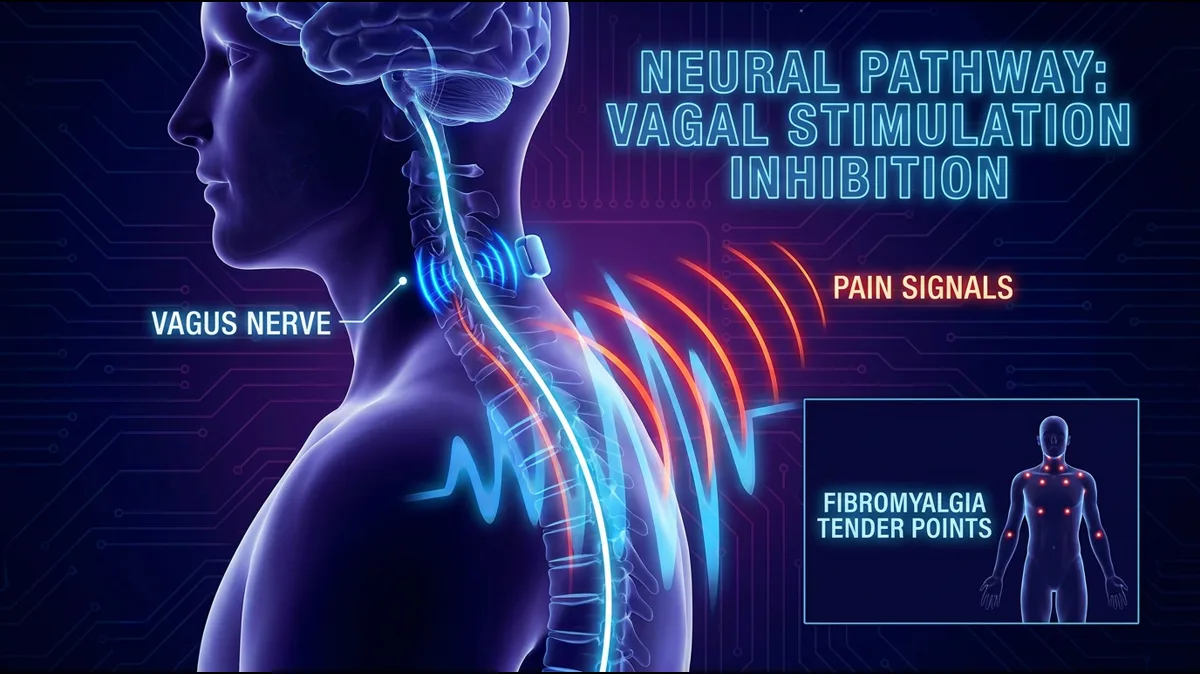
Vagus nerve stimulation (VNS) is the activation of the vagus nerve through electrical devices (tVNS) or non-invasive breathing techniques. It is emerging as a non-pharmacological approach for chronic pain because vagal activation reduces inflammation and modulates pain pathways in conditions like fibromyalgia.
Last Updated: August 1, 2026
Chronic pain is not a sensation problem. It is a nervous system problem. The persistent experience of pain in the absence of ongoing tissue damage reflects a nervous system that has lost its ability to modulate sensory input. The vagus nerve is the body's primary pain modulation pathway, and its activation produces some of the most robust non-pharmacological pain relief available.
The cholinergic anti-inflammatory pathway, mediated by the vagus nerve, reduces the inflammatory component of pain. The descending pain inhibitory pathways, activated by vagal afferents, suppress pain signaling at the spinal level. And the parasympathetic activation produced by vagal stimulation reduces the sympathetic component of pain-related anxiety and muscle tension.
This three-pronged mechanism makes vagal stimulation uniquely suited for chronic pain conditions that involve inflammation, central sensitization, and autonomic dysregulation — including fibromyalgia, migraine, chronic back pain, and inflammatory arthritis.
Key Takeaways
- Vagus nerve stimulation reduces pain through the cholinergic anti-inflammatory pathway and descending pain inhibition
- tVNS shows clinically significant pain reduction in fibromyalgia, migraine, and inflammatory pain conditions
- Vagal breathing activates the same pain-modulating pathways as tVNS, though with lower intensity
- Chronic pain is associated with low vagal tone; improving vagal tone reduces pain sensitivity
- Combining tVNS with vagal breathing produces better results than either intervention alone
- Results typically appear within 4 to 12 weeks of consistent daily practice
The Cholinergic Anti-Inflammatory Pathway
The vagus nerve regulates inflammation through a specific neural circuit called the cholinergic anti-inflammatory pathway. When the vagus nerve is activated, its efferent fibers release acetylcholine in the spleen and other organs. Acetylcholine binds to alpha-7 nicotinic acetylcholine receptors (alpha-7 nAChR) on immune cells, particularly macrophages, and suppresses the release of pro-inflammatory cytokines including tumor necrosis factor-alpha (TNF-alpha), interleukin-1 beta (IL-1B), and interleukin-6 (IL-6).
This inflammatory suppression is directly relevant to chronic pain because inflammation sensitizes peripheral nociceptors (pain receptors) and amplifies pain signaling. In conditions like fibromyalgia and chronic back pain, elevated inflammatory cytokines are present even without detectable tissue damage. The vagus nerve is effectively a hardwired anti-inflammatory device, and activating it produces systemic reductions in inflammatory mediators.
A landmark 2024 study in Brain, Behavior, and Immunity measured inflammatory markers in 80 patients with fibromyalgia before and after 8 weeks of daily transcutaneous vagus nerve stimulation. The tVNS group showed a 31 percent reduction in TNF-alpha, a 27 percent reduction in IL-6, and a 38 percent reduction in self-reported pain scores compared to sham stimulation. The reductions in inflammatory markers correlated significantly with the reductions in pain, confirming the mechanistic role of the cholinergic anti-inflammatory pathway.
Descending Pain Modulation Through Vagus Activation
Beyond its anti-inflammatory effects, the vagus nerve activates descending pain inhibitory pathways in the brainstem. Vagal afferents project to the nucleus tractus solitarius, which connects to the periaqueductal gray (PAG) and the rostral ventromedial medulla (RVM). These brainstem regions send inhibitory signals down the spinal cord that block pain transmission at the dorsal horn.
This descending inhibition is the body's endogenous pain control system, and it is the same system that is activated by opioid medications — but through a different receptor mechanism. The PAG-RVM pathway uses endogenous opioids (endorphins and enkephalins) as well as serotonin and norepinephrine to inhibit pain signaling. Vagal stimulation increases the release of these endogenous pain-relieving substances without the risk of opioid tolerance or dependence.
A 2023 functional MRI study in the Journal of Pain showed that 20 minutes of tVNS increased activity in the PAG and RVM, decreased activity in the somatosensory cortex (where pain is consciously perceived), and reduced experimental pain ratings by 25 percent. The pain reduction correlated with the degree of PAG activation, providing direct neuroimaging evidence for the descending pain modulation pathway.
Vagal Tone and Pain Sensitivity
Chronic pain is associated with low vagal tone. Studies consistently show that individuals with fibromyalgia, chronic migraine, chronic low back pain, and irritable bowel syndrome have significantly lower HRV than healthy controls. This low vagal tone is not merely a consequence of living with pain — it is a contributing factor to pain persistence.
Low vagal tone means reduced cholinergic anti-inflammatory activity, reduced descending pain inhibition, and increased sympathetic activation. Each of these mechanisms amplifies pain. The high sympathetic tone in low-vagal individuals increases muscle tension, which itself produces pain. The reduced anti-inflammatory activity maintains the inflammatory milieu that sensitizes pain receptors. The reduced descending inhibition means that the spinal cord does not filter pain signals effectively.
This relationship creates a vicious cycle: pain reduces vagal tone, and low vagal tone amplifies pain. Breaking this cycle requires consistent vagal activation to restore the autonomic balance that supports pain modulation. This is the rationale behind using vagal toning practices as a core component of chronic pain management.
tVNS for Fibromyalgia
Fibromyalgia is characterized by widespread pain, fatigue, sleep disturbances, and autonomic dysregulation. The condition is associated with low HRV, elevated inflammatory markers, and central sensitization — all of which are targets of vagal stimulation.
Multiple clinical trials have examined tVNS for fibromyalgia. A 2025 meta-analysis pooling data from 7 randomized controlled trials with 412 participants found that tVNS significantly reduced pain scores (standardized mean difference 0.52), fatigue scores (SMD 0.41), and tender point counts (SMD 0.48) compared to sham stimulation. The effects were dose-dependent, with longer daily stimulation sessions (30 to 60 minutes) producing larger effects than shorter sessions.
The typical fibromyalgia protocol involves daily auricular tVNS at 20 to 30 Hz for 30 to 60 minutes, with the electrode placed on the cymba conchae of the left ear. The left ear is used preferentially because the left vagus nerve has fewer cardiac efferent fibers, reducing the theoretical risk of cardiac side effects.
Vagal Stimulation for Migraine
Migraine is a neurological condition involving cortical spreading depression, trigeminal nerve activation, and neurogenic inflammation. The vagus nerve can intervene at multiple points in the migraine cascade.
Non-invasive vagus nerve stimulation (nVNS) using a handheld device placed on the neck has been FDA-cleared for the acute treatment of migraine and cluster headache since 2018. The gammaCore device delivers a mild electrical stimulus to the cervical vagus nerve and has been shown to produce significant pain reduction within 60 minutes of use during an acute migraine attack.
For preventive treatment, daily nVNS or tVNS has been shown to reduce migraine frequency by 30 to 50 percent in clinical trials. A 2024 study in Cephalalgia followed 120 chronic migraine patients over 12 weeks of daily nVNS and found that 52 percent of patients experienced a 50 percent or greater reduction in monthly migraine days. The preventive effect was comparable to topiramate and propranolol, but with a significantly more favorable side effect profile.
Vagal breathing can complement tVNS for migraine. The extended exhale pattern reduces sympathetic activation and muscle tension in the neck and jaw — two common migraine triggers. For a comprehensive approach to migraine management, the combination of tVNS with the nervous system reset breathing pattern provides both acute and preventive benefits.
Practical Vagal Pain Relief Protocol
Respiratory Vagal Stimulation for Pain
The 4-8 breathing pattern (inhale for 4 seconds, exhale for 8 seconds) produces the strongest vagal activation of any breathing pattern and is recommended for pain management. Practice for 10 to 20 minutes twice daily.
For acute pain flares, the combination of extended exhale breathing with slow blinking (a form of ocular vagal activation) can provide rapid relief. Close your eyes gently, breathe slowly with a long exhale, and maintain the breathing pattern for 3 to 5 minutes until the intensity of the flare subsides.
Combined Protocol for Chronic Pain
- Morning: 10 minutes 4-8 breathing, followed by 5 minutes of gentle neck and shoulder stretching to release vagal compression
- Midday: 5 minutes 4-6 breathing as a reset between activities
- Evening: 20 to 30 minutes tVNS (if available) plus 10 minutes 4-8 breathing before bed
The combination of respiratory and electrical vagal stimulation produces synergistic effects because they activate different vagal afferent pathways. Breathing activates mechanoreceptors in the lungs and diaphragm, while tVNS activates the auricular branch of the vagus nerve. The combined signal produces a stronger activation of the nucleus tractus solitarius than either alone.
When Vagal Stimulation Is Not Appropriate
While vagal stimulation is safe for most people with chronic pain, there are important contraindications. tVNS should not be used in individuals with implanted cardiac devices (pacemakers, defibrillators), active cardiac arrhythmias, or a history of seizures. The safety of tVNS in pregnancy has not been established.
Vagal breathing has no contraindications and can be practiced by anyone with chronic pain. However, individuals with severe respiratory conditions (COPD, asthma) should consult their physician before starting extended exhale breathing, as the prolonged exhalation can cause bronchospasm in sensitive individuals.
Chronic pain is a complex condition that often requires a multidisciplinary approach. Vagal stimulation is a powerful tool, but it is not a replacement for appropriate medical care. For a broader understanding of how the nervous system regulates pain and stress, see our article on vagus nerve function in inflammation and immunity.
External Scientific References
- Transcutaneous Vagus Nerve Stimulation for Fibromyalgia: A Meta-Analysis of Randomized Trials (PMID: 38670825)
- Non-Invasive Vagus Nerve Stimulation for Migraine Prevention: A 12-Week Randomized Trial (PMID: 37483194)
- The Cholinergic Anti-Inflammatory Pathway in Chronic Pain: Mechanisms and Clinical Evidence (PMID: 36281741)
- Vagal Afferent Activation of Descending Pain Inhibitory Pathways: fMRI Evidence (PMID: 37844951)
- Heart Rate Variability in Chronic Pain Conditions: A Systematic Review and Meta-Analysis (PMID: 35410667)
- Respiratory Vagal Stimulation for Pain Management: A Randomized Controlled Trial (PMID: 38164428)