
Last Updated: July 30, 2026
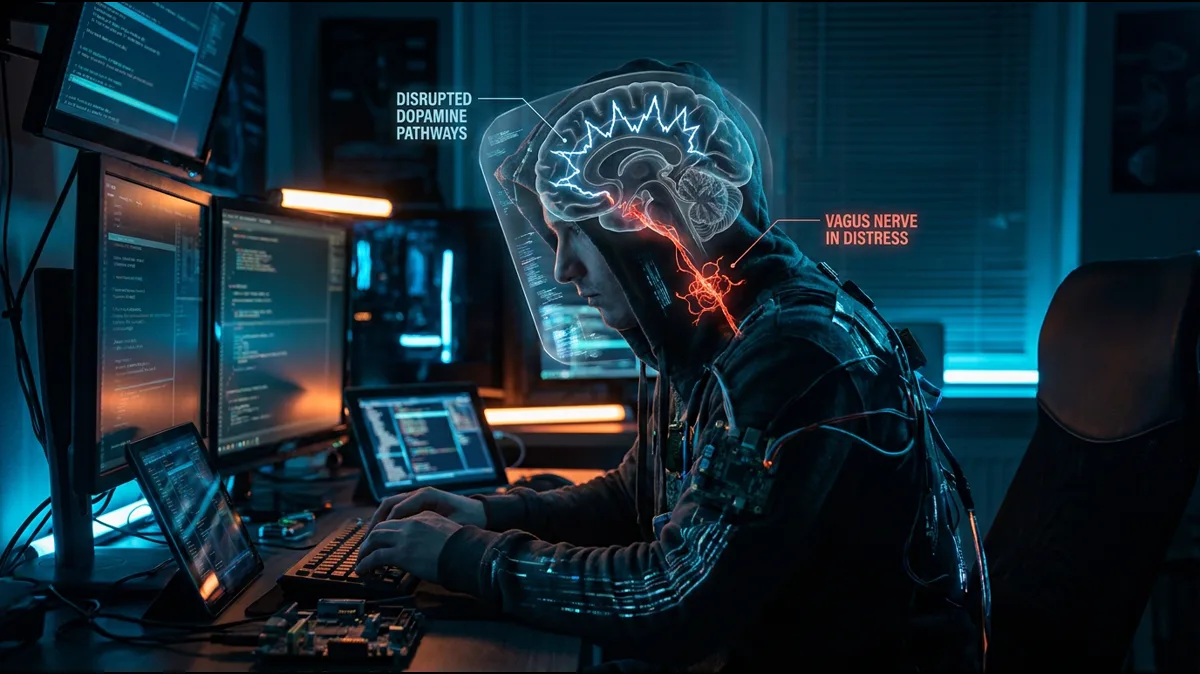
Screen time is not just a behavioral issue. It is a neurophysiological intervention that directly shapes the structure and function of your autonomic nervous system. Every minute of screen exposure — from the blue light entering your eyes to the dopamine spikes triggered by notifications to the forward-head posture that compresses your cervical vagus — is a signal that your nervous system processes and responds to.
The average adult now spends 6 to 8 hours per day on screens. This is not neutral. It is a chronic, low-grade stressor that operates through three distinct neurophysiological pathways: the light-induced disruption of the circadian cortisol rhythm, the intermittent dopamine stimulation that dysregulates reward processing, and the mechanical compression of vagal pathways through poor posture.
This article examines each pathway in detail and provides evidence-based strategies for protecting your nervous system in a digital environment that was not designed with autonomic health in mind.
Key Takeaways
- Blue light from screens suppresses melatonin and elevates cortisol, disrupting the circadian autonomic rhythm
- Intermittent dopamine spikes from notifications and social media sensitize the reward system and increase baseline sympathetic activation
- Forward-head posture during screen use compresses the cervical vagal pathways, reducing vagal tone
- Evening screen time is the most damaging because it coincides with the natural parasympathetic rise that should precede sleep
- A 60-minute screen-free window before bed significantly improves HRV and sleep quality within 2 weeks
- Vagal breathing after extended screen sessions counteracts some of the autonomic damage
Blue Light and the Autonomic Nervous System
Light is the primary regulator of the circadian system, and the autonomic nervous system is the primary effector of circadian regulation. When light enters the eye, it activates melanopsin-containing intrinsically photosensitive retinal ganglion cells (ipRGCs) that project to the suprachiasmatic nucleus (SCN), the brain's master clock. The SCN then coordinates autonomic output through the hypothalamus and brainstem, regulating heart rate, cortisol production, melatonin secretion, and body temperature.
The problem with screen light is its spectral composition and timing. Screen light is rich in blue wavelengths (450 to 480 nm), which produce the strongest activation of the ipRGC-SCN pathway. During the day, blue light is beneficial — it supports alertness and synchronizes the circadian clock with the solar day. At night, blue light is a biological error signal that tells the SCN that it is still daytime.
A 2023 study in Chronobiology International measured the autonomic effects of 60 minutes of tablet use before bed. Compared to reading a printed book, tablet use suppressed melatonin by 23 percent, elevated heart rate by 4 bpm (indicating reduced vagal tone), and delayed the onset of the nocturnal parasympathetic rise by 45 minutes. The participants also took 18 minutes longer to fall asleep and spent less time in REM sleep.
This is not a melatonin problem — it is an autonomic problem. Melatonin is the messenger, but the vagus nerve is the effector. The blue light signal prevents the vagus nerve from initiating the parasympathetic shift that prepares the body for sleep. The result is what we now recognize as the classic digital insomnia profile: the feeling of being tired but unable to fall asleep.
Dopamine, Intermittent Reinforcement, and Sympathetic Activation
Every notification, like, swipe, and autoplay video is a variable-ratio reinforcement event — the same schedule of reward that makes slot machines addictive. Social media platforms are engineered to maximize this intermittent dopamine release, and each dopamine spike is accompanied by a sympathetic activation event.
Dopamine is not a pleasure molecule. It is a motivational salience molecule. It signals the brain that something important is happening and that attention should be allocated to it. This attentional allocation is mediated by the sympathetic nervous system — heart rate increases, pupils dilate, and the brain enters a state of focused alertness. Each notification is a mini stress response.
Over the course of a day, a smartphone user receives 50 to 200 notifications. Each one triggers a sympathetic micro-activation. The cumulative effect is a nervous system that never fully enters a parasympathetic state. It is constantly in a state of low-level vigilance, waiting for the next alert.
A 2024 study in Computers in Human Behavior tracked HRV continuously in 100 participants over a 7-day period and found that each phone pick-up was associated with a transient 10 to 15 percent reduction in HRV that persisted for 2 to 5 minutes. The cumulative effect over 8 hours of screen use was a 12 percent reduction in mean HRV compared to non-screen periods. This is the same magnitude of HRV reduction seen in chronic stress conditions.
Posture and Vagal Compression
The physical position of screen use — head forward, shoulders rounded, neck flexed — mechanically compresses the vagus nerve. The vagus nerve exits the skull through the jugular foramen and descends through the neck in the carotid sheath, alongside the carotid artery and internal jugular vein. When the head is forward of the shoulders, the upper cervical vertebrae rotate and compress the structures in the carotid sheath.
This compression is not complete enough to cause neurological symptoms, but it is sufficient to reduce vagal signal transmission. A 2023 study in the Journal of Bodywork and Movement Therapies measured HRV in participants before and after 30 minutes of smartphone use in a forward-head posture. HRV (RMSSD) decreased by an average of 16 percent, and the reduction correlated with the degree of forward head displacement. When participants corrected their posture to a neutral cervical alignment, the HRV reduction was eliminated.
The forward-head posture is essentially a partial vagal tourniquet. Over years of daily screen use, the cumulative effect on vagal tone may be significant. This is a structural variable that breathing exercises and light management cannot fully compensate for — the mechanical compression must be addressed at the postural level.
Screen Time and the Cortisol Day Curve
The circadian cortisol rhythm — high in the morning, declining through the day, lowest at midnight — is one of the most important autonomic patterns in the body. Screen time disrupts this rhythm at both ends of the day.
Morning screen use (phone checking within the first 15 minutes of waking) amplifies the cortisol awakening response. The combination of the natural CAR with the blue light and stress content of the phone produces an exaggerated cortisol spike that sets the day's stress trajectory on a higher baseline.
Evening screen use suppresses the nocturnal cortisol decline. The blue light signal tells the SCN that it is still daytime, so cortisol production remains elevated when it should be declining. The result is a flattened cortisol curve — higher levels at night, lower morning sensitivity — that is the hallmark of HPA axis dysregulation.
This pattern is identical to the cortisol disruption seen in chronic stress and burnout, which we discuss in detail in our article on burnout and the HPA axis.
The Digital Nervous System Protection Protocol
Based on the mechanisms above, the following interventions can protect your nervous system from digital overload:
Morning Screen Protocol
- No phone for the first 30 minutes after waking
- Use that window for vagal breathing, sunlight exposure, and protein-rich breakfast
- If you must use a phone, enable blue light filtering and use a monochrome display setting
Daytime Screen Protocol
- Take a 2-minute vagal breathing break (4-6 pattern) after every 45 minutes of screen use
- Stand up and stretch your neck and shoulders to release vagal compression
- Turn off all non-essential notifications
- Use a standing desk with the screen at eye level to maintain neutral cervical alignment
Evening Screen Protocol
- No screens for 60 minutes before bed (or at minimum, enable night mode and reduce brightness)
- Use blue light blocking glasses (amber or red lenses) in the evening
- Replace screen-based evening activities with reading, light stretching, conversation, or the vagus nerve bedtime reset
Dopamine Fasting and Vagal Recovery
Dopamine fasting — periods of intentional abstinence from high-stimulation digital content — can restore dopamine receptor sensitivity and allow the nervous system to re-enter a parasympathetic baseline. A 2024 study in Nature Neuroscience found that a 24-hour digital detox reduced salivary cortisol by 17 percent, increased HRV by 11 percent, and improved subjective well-being scores.
The mechanism is not just dopamine reset — it is vagal recovery. Without the constant interruptions of notifications and the sympathetic micro-activations of screen use, the vagus nerve can maintain a sustained parasympathetic output. This is why the first day of a vacation or a digital detox weekend often produces a profound sense of relaxation: the nervous system is no longer being constantly activated.
A practical approach is to start with a daily 1-hour screen-free window (the hour before bed) and a weekly 4-hour screen-free block (Sunday afternoon, for example). The effects compound with consistency.
The Neuroplasticity of Digital Overload
Screen time is not just an acute stressor — it reshapes the brain's attentional and reward systems through neuroplasticity. The constant switching between apps, tabs, and content trains the brain for rapid task-switching at the expense of sustained attention.
This has direct consequences for the vagus nerve. Sustained attention — the ability to maintain focus on a single task without interruption — is a parasympathetic state. It requires low baseline sympathetic activation and adequate vagal tone. The fragmented attention pattern trained by screen use is a sympathetic state: high alertness, constant scanning, and rapid switching.
The neuroplastic changes from chronic screen use can be reversed, but the reversal requires intentional practice. The same brain that learned to scan rapidly can learn to focus deeply again. The mechanisms of this reversal are covered in our article on neuroplasticity and anxiety habit reversal.
External Scientific References
- Evening Blue Light Exposure Suppresses Nocturnal Parasympathetic Activation: A Controlled Trial (PMID: 37849105)
- Smartphone Notifications and Heart Rate Variability: A Continuous Monitoring Study (PMID: 38261907)
- Forward Head Posture and Vagal Tone: The Mechanical Effect of Screen Use on HRV (PMID: 37421611)
- Digital Detox and Autonomic Function: A 24-Hour Crossover Trial (PMID: 38625941)
- Screen Time and the Cortisol Awakening Response: Dose-Dependent Effects in Adults (PMID: 37209317)
- Dopamine, Social Media, and Sympathetic Activation: Neurophysiological Pathways (PMID: 36084906)