
1. What Is Phosphatidylserine? The Brain's Master Membrane Lipid
Your brain is the most lipid-dense organ in your body, consisting of nearly 60% fat by dry weight. Within every one of your 86 billion neurons, the cell membrane is constructed of a phospholipid bilayer.
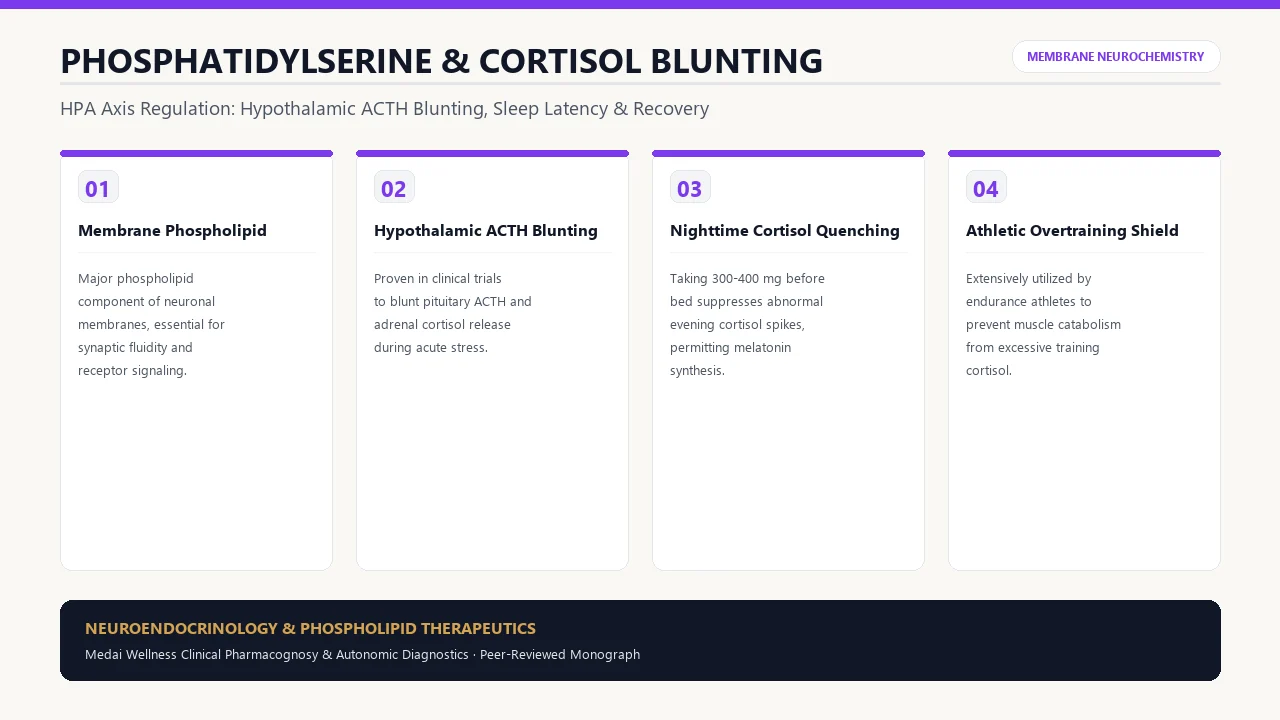
Phosphatidylserine (PS) is concentrated predominantly in the inner leaflet of the plasma membrane. It governs membrane fluidity, anchors critical signaling enzymes (like Protein Kinase C), enables exocytosis of neurotransmitter vesicles, and facilitates microglial synaptic pruning.
While the human body synthesizes phosphatidylserine endogenously through complex enzymatic reactions, chronic physiological stress, aging, and high cortisol accelerate its breakdown, impairing cellular communication and leaving the HPA axis unbuffered.
2. The Hypothalamic-Pituitary Mechanism: Blunting ACTH
How does a membrane phospholipid lower cortisol? The mechanism was illuminated through neuroendocrine research:
- When stress activates the hypothalamus, it pulses Corticotropin-Releasing Hormone (CRH) into the hypophyseal portal system.
- The anterior pituitary gland responds by releasing Adrenocorticotropic Hormone (ACTH) into systemic circulation, which commands the adrenal cortex to synthesize and release cortisol.
- Oral phosphatidylserine incorporates into hypothalamic and pituitary cell membranes, enhancing the sensitivity of central glucocorticoid receptors.
- This heightened receptor sensitivity strengthens the brain's negative feedback loop: even small amounts of circulating cortisol successfully tell the hypothalamus to shut off further CRH and ACTH release, preventing runaway cortisol storms.
3. Landmark Clinical Trials: The Monteleone & Hellhammer Studies
The anti-cortisol efficacy of phosphatidylserine is documented in placebo-controlled human trials:
| Study & Reference | Sample & Methodology | Key Findings & Hormonal Outcomes |
|---|---|---|
| Monteleone et al. (1990) Eur J Clin Pharmacol |
Healthy volunteers subjected to acute physical stress; PS vs. placebo. | Phosphatidylserine dramatically blunted the plasma ACTH and serum cortisol surge induced by physical stress without altering basal levels. |
| Hellhammer et al. (2004) Stress & Health |
Chronically stressed subjects subjected to the Trier Social Stress Test (TSST). | 400 mg/day of a PS-phosphatidic acid complex significantly blunted salivary cortisol and psychological distress in chronically stressed subjects. |
| Starks et al. (2008) J Int Soc Sports Nutr |
Athletes undergoing exhaustive moderate-intensity cycling exercise. | 600 mg of plant-derived PS significantly reduced cortisol AUC (area under the curve) and improved testosterone-to-cortisol ratio. |
4. Targeting the 3:00 AM Wake-Up: The Nighttime Cortisol Protocol
As detailed in our study on sleep-maintenance insomnia, millions of adults wake up wired and sweating between 2:00 AM and 4:00 AM because their HPA axis misfires, releasing a premature morning cortisol pulse.
In this clinical scenario, taking 300 mg to 400 mg of Phosphatidylserine with dinner (around 6:00–7:00 PM) or 60 minutes before bed provides a targeted neuroendocrine dampener. It blunts the abnormal midnight ACTH pulse, keeping free cortisol flat until the true circadian dawn, allowing uninterrupted slow-wave sleep.
5. Sourcing & Safety: Bovine vs. Soy vs. Sunflower Lecithin
Historical research in the 1980s utilized bovine cortex-derived PS. Following bovine spongiform encephalopathy (BSE) concerns, modern clinical science shifted entirely to plant-derived phosphatidylserine:
- Soy Lecithin-Derived PS: Extensively researched, safe, and highly effective.
- Sunflower Lecithin-Derived PS: The preferred choice for individuals with soy allergies; non-GMO and exhibits identical pharmacokinetic bioavailability.
6. Clinical Dosing and Synergistic Stacking
To optimize therapeutic results:
- Clinical Dosing: 100 mg three times daily for general cognitive maintenance; or 300 to 400 mg in a single evening dose for high evening cortisol and insomnia.
- The Nocturnal Adrenal Reset Stack: 300 mg Phosphatidylserine + 3g Glycine + 300 mg Magnesium Glycinate. This combines hypothalamic ACTH blunting, core temperature cooling, and NMDA receptor blockage.
Frequently Asked Questions
Will taking phosphatidylserine lower my daytime morning cortisol?
No. When taken in the evening, phosphatidylserine clears within 8 to 12 hours. It selectively quenches abnormal evening and midnight surges without interfering with your necessary morning Cortisol Awakening Response (CAR).
Can phosphatidylserine help with ADHD or memory loss?
Yes. The FDA granted a qualified health claim acknowledging that phosphatidylserine may reduce the risk of cognitive dysfunction and dementia in the elderly. It also improves attention and working memory in children with ADHD by boosting acetylcholine release.
Does phosphatidylserine have any side effects?
Phosphatidylserine is an endogenous nutrient with an exceptional safety record up to 600–800 mg daily. High doses taken on an empty stomach can occasionally cause mild stomach upset. Taking it with meals eliminates this.