
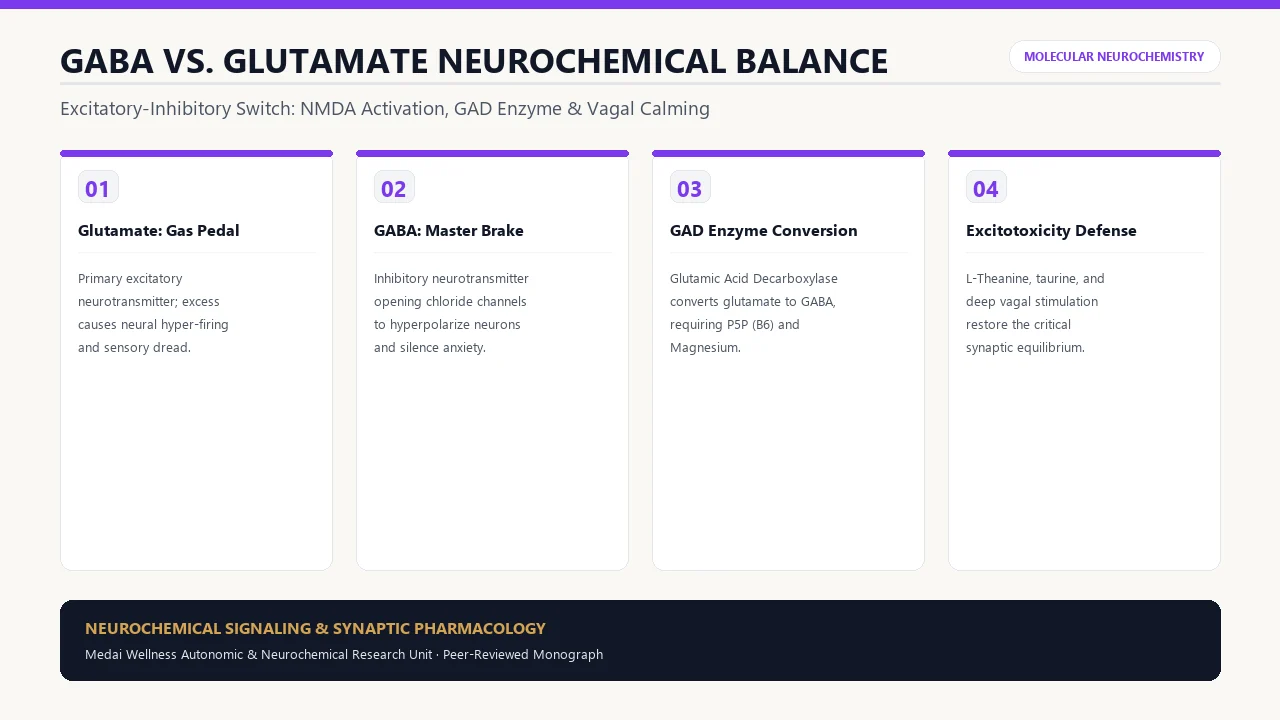
1. The Biological Gas and Brake Pedals of the Brain
Every single sensation, thought, memory, and emotional reaction in your brain is sculpted by the delicate equilibrium between two simple amino acid derivatives: Glutamate and GABA. Together, they regulate over 80% of all neurotransmission in the human cerebral cortex.
Glutamate is the brain's primary excitatory neurotransmitter. It sparks neuronal action potentials, enables synaptic plasticity, and encodes long-term memory in the hippocampus. GABA (gamma-aminobutyric acid) is the primary inhibitory neurotransmitter. It dampens firing rates, filters out sensory noise, relaxes muscle spindles, and enables calm emotional reflection.
When this ratio is balanced, you experience sharp cognitive focus without agitation, and peaceful relaxation without depressive stupor. But when the balance tips toward glutamate dominance, the nervous system enters an uncalibrated state of neurological alarm.
2. The Glutamate Storm: What Happens During Excitotoxicity
In a healthy synapse, astrocytes rapidly clear glutamate from the synaptic cleft using excitatory amino acid transporters (EAATs). However, under conditions of chronic stress, hypoxia, or systemic neuroinflammation:
- Astrocyte Dysfunction: Astrocytes become impaired and fail to reabsorb glutamate, leaving high concentrations lingering in the synaptic cleft.
- NMDA Receptor Overactivation: Excess glutamate excessively stimulates N-methyl-D-aspartate (NMDA) and AMPA receptors on postsynaptic neurons.
- Calcium Influx: Chronic NMDA gating forces a massive, uncontrolled influx of intracellular calcium ions.
- Mitochondrial Breakdown: Intracellular calcium overload damages neuronal mitochondria, generating reactive oxygen species (ROS), activating inflammatory caspases, and inducing synaptic pruning. This state is known clinically as excitotoxicity.
Patients experiencing excitotoxicity do not just feel anxious—they report excruciating sensory sensitivity where bright lights, grocery store fluorescent aisles, and multi-speaker conversations feel like physical shocks to the brain.
3. The GAD Enzyme: The Conversion Bottleneck
The remarkable biochemical truth is that GABA is synthesized directly from glutamate through an enzymatic reaction catalyzed by Glutamic Acid Decarboxylase (GAD) (specifically GAD65 and GAD67 isoforms):
Glutamate + GAD Enzyme (Pyridoxal-5-Phosphate + Magnesium) → GABA + CO2
If this conversion bottleneck is impaired, glutamate accumulates to toxic levels while GABA production plummets. Common causes of GAD dysfunction include:
- Vitamin B6 Deficiency or Malabsorption: GAD strictly requires the active, phosphorylated coenzyme form of vitamin B6: Pyridoxal-5-Phosphate (P5P).
- Autoantibodies Against GAD: In certain autoimmune dysfunctions (such as Stiff-Person Syndrome or autoimmune thyroiditis), anti-GAD antibodies neutralize the enzyme.
- Genetic Polymorphisms: Variations in GAD1 or GAD2 genes reduce basal enzyme velocity.
- Chronic Neuroinflammation: Microglial inflammatory cytokines (such as TNF-alpha and IL-1beta) downregulate GAD gene expression while upregulating NMDA receptor density.
4. Symptoms of Glutamate Dominance vs. Healthy GABA Tone
| Functional Domain | Glutamate Dominance (Excitotoxicity) | Optimal GABA/Glutamate Balance |
|---|---|---|
| Cognitive State | Racing thoughts, inability to shut off brain, catastrophizing | Clear executive focus, quiet mental presence |
| Sensory Processing | Photophobia, sound sensitivity, crowded room overwhelm | Effortless sensory filtration and gating |
| Neuromuscular Tone | Fasciculations (muscle twitches), teeth grinding, jaw tension | Relaxed skeletal musculature, smooth motor control |
| Sleep Architecture | Fragmented light sleep, vivid distressing dreams | Deep slow-wave Delta sleep (Stage 3/4) |
| Emotional Resilience | Sudden acute panic attacks, persistent impending doom | Stable parasympathetic buffering, high threshold for distress |
5. Free Glutamates, MSG, and Excitatory Food Triggers
While bound glutamic acid in whole protein foods is absorbed slowly and safely, free unbound glutamates cross compromised gastrointestinal and blood-brain barriers rapidly, triggering acute glutamate surges in sensitive individuals. Common hidden dietary triggers include:
- Monosodium Glutamate (MSG) and hydrolyzed yeast extracts.
- Aged and fermented cheeses (Parmesan, Gouda, Roquefort).
- Cured meats and commercially prepared bone broths cooked for >24 hours (high free glutamate).
- Soy sauce, tamari, and hydrolyzed vegetable proteins.
6. Evidence-Based Protocols to Restore GABA Tone
To safely restore the GABA/Glutamate axis without developing tolerance or dependence:
- Co-Factor Replenishment (P5P + Magnesium): Supplement with Pyridoxal-5-Phosphate (P5P, 25–50 mg) and bioavailable Magnesium Glycinate or Threonate (300–400 mg) to optimize endogenous GAD enzyme velocity.
- Competitive NMDA Blockade with L-Theanine: L-Theanine (200–400 mg) acts as an antagonist at glutamate receptors, blunting excessive calcium influx while stimulating GABA release.
- Taurine Neuromodulation: Taurine (500–1,500 mg) is a structural analog of GABA that binds to GABA-A and glycine receptors, providing potent neuroprotective inhibition against excitotoxicity.
- Vagus Nerve Stimulation: Auricular vagal stimulation (aVNS) increases central GABA levels in the nucleus tractus solitarius (NTS) and locus coeruleus, re-establishing parasympathetic restraint.
Frequently Asked Questions
Does taking oral GABA supplements actually cross the blood-brain barrier?
The blood-brain barrier possesses limited permeability to exogenous GABA due to active efflux transporters. However, oral GABA acts on peripheral GABA receptors in the enteric nervous system (gut), sending calming signals to the brain via the vagus nerve. Liposomal or sublingual forms may exhibit enhanced absorption.
How do benzodiazepines affect the GABA/Glutamate balance?
Benzodiazepines are positive allosteric modulators of GABA-A receptors, forcing them open. However, chronic use causes receptor downregulation and uncoupling, leading to severe rebound glutamate excitotoxicity when doses wear off.
What is the fastest way to stop an acute glutamate storm?
Consuming 200–400 mg of L-Theanine with 500 mg of Taurine and bioavailable Magnesium, paired with physiological sighing (double inhale through nose, extended exhale through mouth), rapidly blocks NMDA excitability and stimulates parasympathetic tone.