
1. The Fermentation Factory: What Are SCFAs?
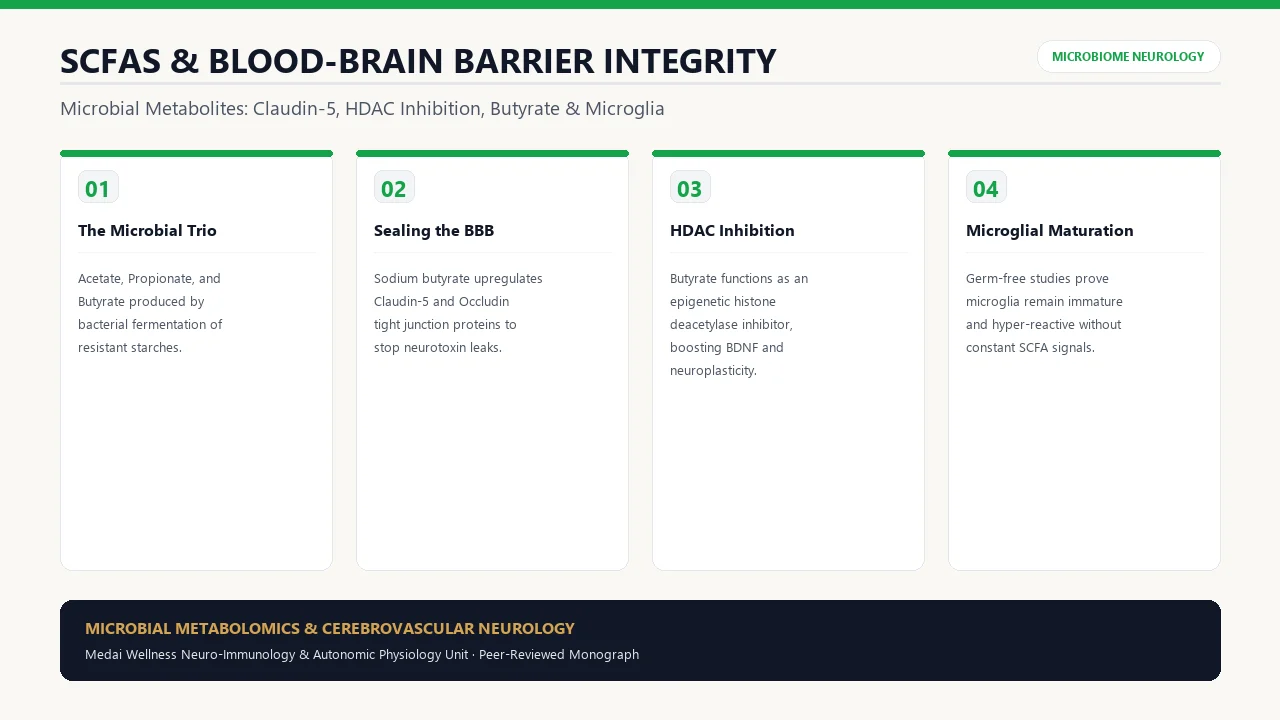
The human genome contains fewer than 20 genes dedicated to carbohydrate-active enzymes capable of digesting complex plant polysaccharides. In stark contrast, the trillions of anaerobic bacteria residing in the human cecum and colon possess thousands of these digestive enzymes.
When you consume dietary soluble fiber, prebiotic oligosaccharides, or resistant starch, these carbohydrates escape upper digestive breakdown and arrive intact in the large intestine. Here, bacterial phyla—primarily Firmicutes and Bacteroidetes—ferment these fibers into Short-Chain Fatty Acids (SCFAs): aliphatic carboxylic acids containing fewer than six carbon atoms.
2. How Butyrate Seals the Blood-Brain Barrier
In 2014, landmark research published in Science Translational Medicine by Braniste et al. fundamentally altered neurobiology. The researchers demonstrated that germ-free mice—raised in completely sterile isolators lacking gut bacteria—exhibited profound hyperpermeability of the Blood-Brain Barrier (BBB) from intrauterine life through adulthood.
The lack of gut microbes resulted in severe downregulation of the tight junction transmembrane proteins Claudin-5 and Occludin in brain endothelial cells. When the researchers transplanted a normal gut microbiota—or administered pure sodium butyrate alone—the tight junctions re-formed, sealing the blood-brain barrier and preventing neurotoxic macromolecular leakage.
Butyrate binds to specific G-protein coupled receptors—GPR41 (FFA3) and GPR43 (FFA2)—on cerebrovascular endothelial cells, promoting the phosphorylation and molecular assembly of tight junction complexes.
3. Epigenetic Power: Histone Deacetylase (HDAC) Inhibition
Beyond structural barrier defense, butyrate is one of nature's most potent endogenous Histone Deacetylase (HDAC) inhibitors:
- Circadian Endocrine Diagnostics: Explore our research on cortisol levels chart by time of day.
- Foundational Neurobiology: Review our clinical analysis on the physiological sigh and autonomic anxiety reset.
- Histone deacetylases remove acetyl groups from histone proteins, causing DNA to wrap tightly around histones, silencing gene transcription.
- By inhibiting Class I and Class II HDACs, butyrate increases histone hyperacetylation, opening chromatin structures.
- This epigenetic disinhibition activates the promoter regions of critical neuroprotective genes, most notably Brain-Derived Neurotrophic Factor (BDNF) in the frontal cortex and hippocampus.
- Elevated BDNF stimulates synaptogenesis, accelerates fear extinction, and reverses stress-induced dendritic atrophy in the prefrontal cortex.
4. Microglial Maturation: Why the Brain Needs Microbial Signals
In a healthy individual, microglia maintain a surveillance phenotype, constantly pruning aberrant synapses and resolving minor cellular debris without triggering inflammatory alarms. Research shows that microglia in SCFA-deficient animals display an aberrant, immature morphology and respond to minor systemic challenges with massive, uncontrolled neuroinflammatory over-reactions.
SCFAs, particularly acetate and butyrate, continuously inform microglia via systemic circulation, maintaining them in a mature, calibrated state resistant to hyper-reactivity.
5. The Three Master SCFAs: Acetate, Propionate, and Butyrate
| Short-Chain Fatty Acid | Primary Bacterial Producers | Key Neurological & Systemic Functions |
|---|---|---|
| Butyrate (C4) | Faecalibacterium prausnitzii, Roseburia, Eubacterium rectale | Primary energy fuel for colonocytes; HDAC inhibitor; seals BBB via Claudin-5; upregulates BDNF. |
| Propionate (C3) | Bacteroidetes, Akkermansia muciniphila | Hepatic gluconeogenesis regulation; crosses BBB via monocarboxylate transporters (MCTs); modulates neuro-inflammation. |
| Acetate (C2) | Most anaerobic gut commensals, Bifidobacteria | Most abundant SCFA (60%); crosses BBB directly to regulate hypothalamic appetite centers and central glial lipid synthesis. |
6. Clinical Protocol to Maximize Endogenous SCFA Production
While oral butyrate supplements exist (such as calcium-magnesium butyrate), the most powerful therapeutic strategy is cultivating your endogenous microbial fermentation engine:
- Cooled Resistant Starches: Cooked and cooled white potatoes, basmati rice, or green banana flour contain high concentrations of Type 3 Resistant Starch (RS3), which ferments directly into butyrate in the ascending colon.
- Soluble Prebiotic Fibers: Inulin, Partially Hydrolyzed Guar Gum (PHGG, 5g daily), and acacia fiber feed Bifidobacterium and butyrate-producing commensals without causing excessive bloating.
- Polyphenol Synergy: Polyphenols found in pomegranate (ellagitannins), blueberries (anthocyanins), and green tea (EGCG) feed Akkermansia muciniphila, thickening the protective mucosal lining and boosting propionate/acetate ratios.
Frequently Asked Questions
Can I just take a butyrate supplement instead of eating fiber?
Oral butyrate supplements are beneficial for acute mucosal healing, but they are rapidly absorbed in the upper GI tract unless enteric-coated. Feeding your colon with resistant starches generates sustained, continuous SCFA production directly where your microbiome resides.
How quickly does a high-fiber prebiotic diet improve blood-brain barrier integrity?
Preclinical and translational studies indicate changes in gut microbiota composition occur within 48 to 72 hours of dietary modification, with measurable upregulation of tight junction proteins and reduction in peripheral cytokine leakage observable within 2 to 4 weeks.
Can too much propionate cause anxiety?
In rare instances of extreme gut dysbiosis (such as severe Clostridia overgrowths), excessive unbuffered propionate can accumulate and disrupt mitochondrial metabolism. SCFA balance requires diversity—a rich ecosystem produces an optimal 60:20:20 ratio of acetate, propionate, and butyrate.